Thursday, October 01, 2020

Many more prisoners identifying as Ngapuhi

Corrections Volume Report 2019-20 has just been released. I had a quick scan through for anything particularly noticeable. These two graphs caught my eye:

(The Ngapuhi number is 609 - off the graph.)

The immediate inference is that iwi-affiliated offending and imprisonment is going through the roof. But consider this graph:


This is a conundrum. The iwi-identifying number is increasing whereas the Maori number is decreasing.

4,907 prisoners are Maori. 2,498 state one of the iwi affiliations above. About half.

My conclusion is that prisoners are increasingly identifying with an iwi. I wonder why? Bet there is some sort of incentive. Sudden radical changes in data are usually driven by a specific, but not necessarily obvious reason.

Is the Ngapuhi Treaty settlement actually going to happen??

But the plot thickens. In 2018, from the Minister:

Mr Davis said Māori make up over 50 percent of the prison population, and he wants that number reduced.

"Of that 50 percent, half again, are from Ngāpuhi, my own tribe, so this is personal.

"My tribe of Ngāpuhi is probably the most incarcerated tribe in the world, per head of population, so we really have to look at what we're going to do differently as a country, to turn these figures around."

Yet the just-released stats show there were 668 Ngapuhi prisoners in 2018.

Perhaps Mr Davis is encouraging the trend in order to validate his claim?


Wednesday, September 30, 2020

What was so offensive?

 I wrote the following letter to the DomPost which they published today:


You may well ask, clobbering ball for who?

My original letter said the statistic is "quickly becoming a clobbering ball for disaffected feminists."

The left of politics is dominated by them.

Censorship... 

Or paranoia on my part because they simply couldn't fit the extra three words in:-)

Tuesday, September 29, 2020

Labour: No target, no commitment, no improvement

The last National government set a series of Better Public Service targets. One was reducing working age benefit numbers to 220,451 by 2018. 

The National government was overt and explicit that reducing welfare dependency was desirable. Bill English was acutely aware of the role it plays in the many negative outcomes adults and children experience.


Labour took over in September 2017 and abandoned the targets. This particular administration has never committed to reducing benefit dependency.

And here's what happened next. I've picked up the line from December 2016 where the BPS graph finishes, and used the same scale on the vertical axis. 

A low of 273,387 was reached in March 2018 - 6 months after Labour took over. (A miss on National's  target by over 50,000.)

Since, the numbers have steadily risen (allowing for seasonal variation) well before the Covid response.


Name suppression

 Did anyone else notice that the killer of a New Zealand police officer in Croydon was named almost immediately whereas the killer of a New Zealand police officer in West Auckland still has name supression?

Sunday, September 27, 2020

It's the trend that matters

There is glee at poll numbers which show Labour can govern alone.

But look at the trend. 

Labour down 10.8% points.

The Thursday poll preceding the leaders debate was similar. Labour down 5 points. That's what I think really threw the Labour leader and led to a tense, unconfident performance.

There's just under three weeks to go and the rate of fall is sharp.

Neither place is comfortable - on a low number rising or high number falling.

But I'm a stickler for trends.

Stuff stubbornly refuse to issue "any correction or clarification"

Last week I posted about one of Stuff's 'The Whole Truth' columns which attempted to fact-check Judith Collins' claim that 400 people a week are losing their jobs. The BFD subsequently picked up my post and a BFD reader complained to Stuff about their column. Stuff then went back and conflated their original workings with the grants data I had used (which is publicly available). The editor in charge of The Whole Truth project wrote to the complainant:

 "The total number of people granted either the JS benefit or CIRP since the beginning of lockdown (using figures from the week ended 27/3/20) is 136,724 (103,772 JS and 32952 CIRP). The number of people who have gone off one of those benefits into work ("cancelled into work") is 31,854."

The latter number is then subtracted. Subtracting "cancellations into work" is wrong. The people cancelling a benefit in any given week are not the people losing their jobs. This type of calculation might be made to estimate the jobs the economy is losing (net difference between jobs dis-established and jobs created) but it doesn't tell us how many people are losing their jobs each week. For argument's sake, hypothetically, 100 people might have found a job last week but that doesn't alter the fact that 400 people lost one.

Recall Stuff's original article states:

"It was a refrain she [Judith Collins] had repeated several times throughout the debate - 400 people a day are losing their jobs under the current government."

Back to Stuff's reply to the BFD reader:

"You then need to subtract the number of people who have been transferred from JS to CIRP or vice versa (5887) so you're not double-counting."

That leaves a total of 98,984 people either still receiving JS or CIRP or have had it cancelled/ended for another (unknown) reason. This equates to 572 people a day (173 days between 23 March and 11 September). This assumes that of those, the 36,300 people who were on a benefit but are not anymore are all still jobless.

However, as outlined in the post, this likely overestimates the number of people who are on a benefit because they have lost their jobs, because it counts all Jobseeker recipients. We highlighted 'work-ready' recipients, subtracting those on the JS benefit for a health or disability reason. Normally, the proportion of 'work-ready' JS recipients is about 57 per cent; this has increased to about 65 per cent during Covid.

Re-running the numbers using 65 per cent of the Jobseeker total, you end up with 62,670 people either still on CIRP or JS or who've gone off it for a reason other than finding a job. This is 362 people a day - pretty much the conclusion our original post arrived at (355 jobs a day).

So now they have reverted back to the initial data they used which is net numbers of people on the Jobseeker Benefit. Not grants.

Having found a way back to their original guestimate- albeit via a different method - the editor goes on the say,

"In our view, the substance of the original post is not affected by these alternative calculations...For this reason, I do not intend to update the post or issue any correction or clarification."

They should.

I'll try to be succinct.

The data they used in their second attempt, the data that matters,  shows 136,724 grants of JS or CIRP over 173 days. Subtract the transfers between the two - 5,887 - which leaves 130,837. Divide that by 173 days and the number is 756. I repeat, cancellations are irrelevant.

Additionally, on the plus side (indicating a higher number), Stuff does not know how many people have lost their jobs and

1/ gone on an emergency benefit (for eg non-residents)

2/ gone on a sole parent benefit because they are single with dependent children under 14

3/ gone on Super full-time

4/ returned to a Supported Living Payment (disabled people also work despite not being required to)

5/ not gone on any benefit because they have savings, a secondary source of income into the household, or other reason

6/ returned to or taken up study and gone onto a student allowance

This is not an exhaustive list of alternatives to going on either Jobseeker or CIRP.

On the minus side, there are overseas returnees going on the Jobseeker benefit. They too may have lost their jobs (mainly in Australia) though it might be a stretch to claim Judith was including those people. And there will be people transferring to a Jobseeker benefit from other benefits eg when a sole parent's youngest turns 14 the parent is transferred from Sole Parent Support to Jobseeker.

Finally, from a journalistic integrity viewpoint, Stuff's email acknowledges "...her claim of '400 jobs lost per day' is likely to be within the right ballpark of what is happening."

Yet the original Stuff article begins in bold with this line:

Many jobs are being lost as a result of the Covid-19 pandemic. But not 400 a day.


It could be less. It could be more. Many more.

Stuff  need to acknowledge that the way they calculated how many people a week are losing their jobs was inadequate and therefore, inconclusive. Their article cannot represent 'The Whole Truth' when so many pieces of the jigsaw are missing.

Saturday, September 26, 2020

Blinkers where they shouldn't be

An article discussing the 'right to silence' laws on the back of another clamour to have it removed in the case of child abuse deaths quotes  "law expert and recent Parole Board appointee Khylee Quince".

Abolishing the right to silence would also have “huge gender implications”, she says.

“No one abuses children without abusing mothers. It could make things worse for people ... in relationships of violence and coercive control where their whole lives are really framed around managing violence of a male partner or a male member of the household.”

In many instances, those women, or extended family, will have sought help previously or tried to raise red flags, and failed.

I wonder if she sits on any women's prison parole boards? Perhaps not.

Since first data was collected in 1967 women have been killing children too.


Granted mothers are more likely to kill their babies shortly after birth or in a murder/suicide situation but they are not exempt from killing them through abuse or neglect. Note also the relatively high number of non-mother female caregivers responsible for CAN deaths.

The telling number though is the one related to step-fathers. And deaths are just the tip of the abuse iceberg.

Of course, the use of the term 'step-father' here is quite a departure. Step-fathers used to describe men that married and took on their new wife's children, usually after she was widowed. More recently, after divorce. That's a committment.

Today 'step-fathers' are just as  likely to be shiftless, ill-motivated, individuals looking for regular sex and somewhere to park themselves rent-free. 


Thursday, September 24, 2020

PM's perilous promise

Am I a bad person?

Because I would not don the hijab. Ever. It's not my culture, it has no meaning for me and while I accept someone else has reasons for wearing it, I don't share them.

True tolerance for each other would be demonstrated through side- by- side wearing of the hijab and going bare-headed.

The Al Noor mosque people are star-struck by Jacinda and she is besotted by them, and their terrible personal tragedies.

The senseless and violent murders that took away their family and friends forever were an evil act and must be an agony to live with. Our shared humanity as parents, children, brothers and sisters, tells us that.

But the risk of a repeat will never be eliminated by introducing hate speech laws. It could even be aggravated.

Yet that is what Jacinda promised the Muslim advocates for such a law change today. Down in Christchurch. In her hijab.

In France judges have ruled against implementation of recently introduced hate speech laws finding they did in fact impinge on freedom of speech:

The court said this [tech regulation] created an incentive for risk-averse platforms to indiscriminately remove flagged content, whether or not it was clearly hate speech.

The law’s provisions “therefore infringe upon the exercise of freedom of expression and communication in a way that is not necessary, suitable, and proportionate,” the court said in a statement.

New Zealand is still a free country (I write, with many 'buts' bumping around in my brain). And we will need to fight to remain so. We must not change our laws to appease groups whose safety will not be improved by the process. The PM must not emotionally over-identify with one group at great cost to the other. They need to learn, along with every other citizen, that laws have limitations in terms of desired effect, and that tolerance and persuasion are far more powerful impulses.

Boys, mistrust and violence

 A reader sent me this US 'City Journal' article, Breaking Things,  about boys, mistrust and violence.

We didn’t really believe that the adults in our lives cared about what we did. Seth got thrown out of his house and wouldn’t tell us why. Josh and Brandon’s dad had been divorced five times, and he was always traveling for work. My adoptive mother had recently moved to another town. When I called her every two weeks or so, I lied that my grades were good and that I was doing all my homework. Maybe if we did something severe enough, they would give us their attention. Maybe if we got into enough trouble, or needed enough help, they would be more like the parents we wanted. On some level, we had stopped caring about ourselves in order to get them to care for us. When adults let their children down, kids learn to make choices that let themselves down. Our disappointment with adults led us to believe that rules weren’t actually legitimate. They were invented by adults to keep us from having fun. Why should we listen? 

...Many pundits and commentators focus on economic deprivation or sociocultural factors—above all, racism—to explain the recent wave of urban anger, triggered by Floyd’s awful death. But the data show that American society has fewer people in poverty and less bigotry compared with decades past; and police use of force is far less pervasive than it was during higher-crime periods. What has been getting far worse, however, is family life. Stable families have been in free fall over the last few decades. In 1960, the out-of-wedlock birthrate in the U.S. was 3 percent. In 2000, it was about 30 percent. Today, it is 40 percent. (This figure obscures class divisions: for college graduates, only one out of ten children is born out of wedlock. For those with only a high school diploma, six out of ten are born to unmarried parents.)

The lack of stable families has contributed to the widespread mistrust of others and lack of social relationships among young people. It has, I believe, given rise to a sense of nihilism even in an era of relative material abundance, which has characterized some of the violent upheavals.


I concur with the writer. It's childhood stability that protects against negative social outcomes. The main change in my thinking about it over twenty years is that a stable lone parent is better than a lone parent who goes through a series of relationships. And better than a two parent family where the parents are at war with each other. Above all children need  a parent or caregiver who prioritises them above all else.

Wednesday, September 23, 2020

Stuff fact-checks Judith Collins' claim "400 people a day are losing their jobs"

 After looking solely at Jobseeker Benefit and Covid Income Relief Payment numbers the Stuff journalist says,

Many jobs are being lost as a result of the Covid-19 pandemic. But not 400 a day.

Towards the conclusion of the first leaders’ debate, Judith Collins said “the fact” that 400 people are losing their jobs every day is the thing that matters most to her this election.

It was a refrain she had repeated several times throughout the debate - 400 people a day are losing their jobs under the current government.

There is no argument that many, many people are out of work because of Covid-19; either laid off or on severely reduced hours. But are 400 people really losing their jobs every day?


The writer did not take this graph into account.


1,350 of the 4,123 grants were transfers from CIRP. That still leaves 555 jobs a day in a five day week (396 in a 7 day week).


Then there were an additional 1,206 CIRP grants suggesting a further 241 redundancies (or 172 in a 7 day week).

The trap the journalist has fallen into is looking only at net numbers - the difference between grants and cancels. Neither does she consider that some who lose their job will go on other benefits such as the emergency and sole parent support benefits. Or they might not even go on a benefit if it was a part-time second household income job.

Some grants will also be to people returning from overseas but they are still often people who have lost their jobs - just not in this economy!

If anything Judith may be understating it. Substantially.

Tuesday, September 22, 2020

Jacinda vs Judith: What a reveal

There's a lady on her way to the UN world stage. Jacinda told how the world is acclaiming and depending on us to lead climate change.

Judith on the other hand has NZ's interests first, especially farmers and small business owners.

The commentators following are quite critical of Jacinda seeming passionless. Not living up to her 'great communicator' reputation.

Ardern is simply not up to criticism and quick riposte. She kept looking to her right after questions. I don't know if those posing the questions were on set or on screen. But she needs physical affirmation.

She's spent too much time amongst accolytes. 

Judith hasn't.


Finding the answer you want and making the pieces fit

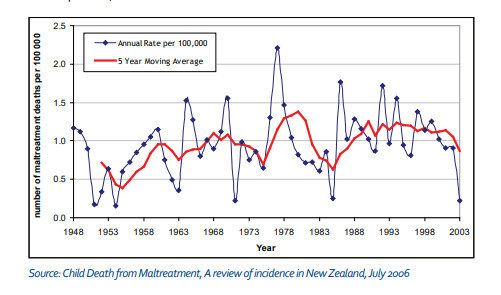
 Two more child abuse deaths and people start writing columns blaming social inequality. Here's an example published today:

But the issue is much more complicated than blaming dysfunctional parenting and family dynamics. Child abuse is more likely to happen in societies with high levels of social inequality.

Intentional maltreatment death rates more than doubled in New Zealand in the 1980s - co-incidentally the same decade that neo-liberal economic policies were rolled out. The focus on neoliberal policies is on economic growth, with the idea that the 'trickle down' effect will lift all people.

It doesn't quite work like that. Since the 1980s we have had increasing levels of social inequality, child poverty and child abuse and deaths. Correlation is not necessarily causation, but in this case research demonstrates a strong link between social inequality and abuse.

Let's stop there. The writer is roughly correct in one respect: "Intentional maltreatment death rates more than doubled in New Zealand in the 1980s."

After halving in the prior period.


The writer wants neolibralism to be the explanation for this scourge but it isn't.


Sunday, September 20, 2020

Changing demographics could sort the housing crisis

We will have to wait a while but won't demographics eventually fix the housing crisis?

We have a very top-heavy population pyramid. NZ had the largest baby boom in the western world with respect to family size.

And the fastest growing household type is single.

I assume this reflects more widows/widowers, family breakdown and fewer people ever partnering.

The second  two trends will probably continue but as they do, more people are going to die (as a % of the population).

Fertility is trending down quite rapidly.

More deaths and fewer births will eventually solve the housing crisis.

Many of those retirement villages will be repurposed and more rental properties should be come available as inheritors become inadvertant landlords.

I  haven't however factored in immigration which could utterly negate my theory.

My guess is NZ will continue to attract and encourage high levels of foreign-born incomers because we want and need them.

So I have probably just written a pointless post. 


Saturday, September 19, 2020

Beliefs that fly in the face of evidence

 According to the British Adam Smith Institute:

It is a truth universally acknowledged that the UK is in something of a housing crisis. Home ownership has been declining for half a century. 90% of 25-34 year olds face average regional housing prices 3 to 4 times their income, up from less than half 20 years ago. Rent as a share of income has been rising, making the prospect of saving for mortgage deposit increasingly remote. 

Odd. Afterall the United Kingdom has a capital gains tax, apparently the solution to our housing crisis.

Unable to gain popular support for one here, Ardern still believes NZ should do the same:

Despite ruling out ever introducing a capital gains tax, Prime Minister Jacinda Ardern still believes New Zealand should have one.

Asked on Newshub Nation if she had "betrayed" Labour supporters by canning plans to introduce one after the 2020 election, Ardern said no.

"I've certainly not had that feedback from people that they take that view," she told host Simon Shepherd on Saturday morning.

"Did I believe in it? Yes. Still do."


Friday, September 18, 2020

Stuff: "Little evidence of child poverty coming down"

Stuff is writing a series called 'The Whole Truth' running up to the election. It aims to fact-check campaign claims, party policies and achievements. Today they feature a piece on child poverty which also appears in the Dominion Post. I've included the entire short piece (because it is the simplest summation of the measures I've read) and added  a few of my own comments:

"There is little evidence, on the Government’s own measures, of child poverty coming down.

As one of her Government’s earliest acts, Prime Minister Jacinda Ardern brought in the Child Poverty Act in 2018. It established ways of measuring poverty and laid out a series of targets against them.

There are three primary measures of poverty in the Act, two of which are income-based.

For these income measures, a mathematical model is used to “equivalise”, or flatten, the incomes of different households.

This allows a consistent measure to be applied across households of all different sizes. Larger households need more income to manage than smaller households do.As a result, there is no specific income figure under which all households are said to be living in poverty.

However, the government’s first measure for child poverty does say that a child is living in poverty if they’re in a home with an income less than half the average, equivalised disposable household income, before housing costs are deducted. 

(The average disposable household income, before housing costs, is currently $46,700 a year, according to Stats NZ.)

What do the numbers look like using this measure?

Ardern set a 2020/21 target of lifting 70,000 children above this line. That would mean shrinking the 2018 measure of 16.5 per cent of children to 10 per cent.

As of June 2019, the latest available figures, this measure was down by only 1.6 percentage points to 14.9 per cent. Instead of 183,500 children in poverty, there were 168,500.

There is another, similar sort of measure, which has recorded similar results to date.

Again, a child is considered in poverty if they’re in a home with an income less than half the average, equivalised disposable household income, but this time after housing costs are deducted.

(The average disposable housing income after housing costs is $35,800 a year.)

The target for this measure is a 4 per cent shift, or lifting 40,000 children from poverty. 

The 253,800 impoverished children first counted by this measure in 2018 reduced 2 percentage points in the year to June 2019, to 235,400 children.

A third measure goes more directly at material hardship. It defines a child as impoverished if they live in a home that lacks six or more key indicators, such as a home that lacks shoes, fresh fruit or vegetables, the ability to see a doctor, or the ability to pay power bills.  

This measure is favoured by Children’s Commissioner Judge Andrew Becroft, who says it’s a better measure of a child’s life at home. 

On this measure, the number of children in poverty has increased by 4100 in the year to June 2019, up 0.4 percentage points to 13.4 per cent. 

The shifts on all three measures are so small that they fall within the margins of error for each. 

And due to the lag in the data, it’s hard to know how recent events have affected New Zealand’s poorest children.

Despite this, Ardern has frequently cited a Treasury estimate that the number of children in poverty would reduce between 10 per cent and 12 per cent due to policies like the 2018 Families Package."

She also claims that poverty has fallen on 7 of the 9 measures. However only one of the small reductions is outside of the margin of error (-2% vs + or -1.9%). The margin of error exists because the results come from a survey of just 20,000 households. 

StatsNZ itself says, "...most of the changes likely reflect the expected uncertainties present in all sample surveys."

The Minister for Child Poverty Reduction also ignores that more children are now on benefits. That was the case BEFORE Covid. At December 2019 there were 12,000 more children on benefits than at December 2017. The number of children on welfare should actually represent one of the measures.

The writer, Thomas Manch, has unusually mentioned the equivalisation method. This means a large family with a relatively high income can appear in the poverty data. A household income gets equivalised down progressively based on household members.

Finally, the data is only till June 2019 - almost 15 months old. If the June 2020 data is released pre-election the PM will undoubtedly blame her lack of progress on Covid.

And that will represent yet another obfuscation.

Thursday, September 17, 2020

Where does NZ's GDP drop sit comparatively?

NZ's  GDP fell by 12.2% in the June Quarter.

Here are some other country comparisons:

(Click on source for interactive image)

The yellow bar (10.7%) represents the average of the G7 countries: Canada, France, Germany, Italy, Japan, the UK and US


Taxation out. Revenue Raising in.

Have you noticed that Labour no longer has a Tax Policy - only a Revenue Policy? Grant Robertson uses the term constantly. Now I see the Greens have joined in with a press release entitled, All Healthy, Now We Need To Revenue Raise.

They sound like a charity talking about the need to fundraise. But that involves persuading people to part with their money for a worthy cause.

Revenue raising requires legislated forcible removal of poeple's wealth for expenditure they may not agree with or benefit from. 

How stupid do they think we are?

Tax wasn't love and neither is revenue raising.

Wednesday, September 16, 2020

PREFU forecasts

Forecasts of Jobseeker and Emergency benefit numbers over the next few years are very fluid.

According to today's PREFU:

"The number of Jobseeker Support and Emergency Benefit recipients is expected to increase by 89,000 by 2020/21 compared with 2019/20 and then increase further in 2021/22 to peak at 279,000, before reducing to 246,000 recipients by 2023/24, 84,000 (an increase of 52%) more recipients than 2019/20." P56

That immediately struck me as lower than prior forecasts. This chart shows the earlier BEFU forcast:


Personally I still think it is too early to make any reasonable projections. 

You might argue the PREFU projection is more optimistic in the short term (more politically palatable?) but it is more pessimistic in the longer term.


Monday, September 14, 2020

Stop the world, I wanna get off

I've become a huge golf fan. Because I started playing. 

A close childhood friend came from Australia to celebrate our sixtieth birthdays together and she brought me her old clubs. Checked them in on her flight ensconsed in a bag and carrier. 

Briefly, around 32, I played for a few months and introduced her to the game. Then I got married, had a family and never held a club again. But she did. And she brought me her old clubs (replaced by a new supa dupa set) to rekindle my interest and entice me to go on an Australian golfing holiday with her at some future date.

So I joined the Hutt Park Club which has a slightly rumpty 9 hole course with a primary retail operation and driving range. Now I am addicted.

Every night I watch various instalments of the Master's Tournament. The players are my characters. It's like watching movies. Who will beat adversity this time? Who will hold his nerve this time?

Anyway, I'll get to the point of my post.

I'm watching the crowds following Tiger Woods ... in any of the five years in which he won the Green Jacket. And soaking up the sheer exuberance of the fans, his family and Tiger himself when he finally let's the emotion erupt at the 18th.

Is this jubilant, pressing crowd, thousands spread across the course, a thing of the past?

Are we ever going to come back to our senses as a world and relish what we love?

Golf is currently my thing. But you must have had that moment when you stopped in your tracks and said to yourself, "Is pre-Covid the freest we were ever going to be?"

Because it's not just Covid. We're are all well aware of it.

It's social media mindless collectivism which is powerful beyond reason. Think about that. Power beyond reason.

What is going to happen to Comedy in this aggressive, angry, anti-self expression age? When on-line self-appraised 'benign' bullies wield more power than those they wrongly label 'racists, xenophobes and misogynists.'

As we are progressively  sometimes literally held responsible for the so-called sins of our great grand fathers and denied the products of their culture, what great new standard is it we will all be made to hold ourselves to?

Can we not be imperfect humans, irrevant humans, irascible humans, imaginative humans from here on in?

If not, I'll vacate far more happily than should be the case.


Sunday, September 13, 2020

Damien Grant on cannabis legalisation

Good discussion from Damien Grant, a committed libertarian. I must be getting intellectually lazy because I want someone to convince me which way to vote instead of making my own mind up. And Grant seems like a good candidate coming down on the 'yes' side due only to the immorality of prohibition, my major impetus towards the same decision. But in the process he highlights the sheer nuttiness of the proposed legislation. This in particular rankles with me. With regard to the new governmental agency to be established, the Cannabis Regulatory Authority :

The Authority must prioritise non-for-profit applicants for licences and applicants that can “...demonstrate a commitment to delivering social benefit to the community or communities…”

I mean, why? The idea is to end the failed prohibition of marijuana by allowing pot-heads to buy their weed from a shop rather than a criminal gang, not tack onto a simple retail operation a range of social justice obligations.

More of the virtue signalling lunacy the Kiwibank is indulging in. Who knows what sort of legislation will develop once given the Green light. I keep feeling as if I am being sold a lemon. What's worse, a useless Green lemon.

So sorry Damien. I am still on the friggin' fence.

I may abstain.

Saturday, September 12, 2020

Labour's welfare plan: Recycled policy which flies in face of evidence

 According to RNZ today:

Under Labour's welfare plan, the training incentive allowance for higher skilled courses would be reinstated, and people on a benefit and working part-time would be able to earn more.

The training incentive allowance (TIA) was scrapped because of Treasury advice to the first Welfare Working Group (Rebstock 2009):

Fifty-one percent of DPB recipients participating in an intervention took the Training Incentive Allowance, which MSD found to have no effect on the time a beneficiary was likely to spend off benefit – in fact the study found there was a chance TIA slightly increased the average time spent on benefit. MSD did note there was a chance that TIA may have an unobserved long-term impact (after seven years) on time spent off benefit.

The TIA allowed people people to extend their study and spend more time dependent. Given National's goal was to reduce dependency it was decided to spend the money elsewhere. From memory in more basic skills training aimed at getting more people, particularly poorly educated mothers, into the workforce.

Labour would also increase abatement thresholds so people could earn more in part-time work - up to $160 a week, before their benefit is reduced, about eight hours on the minimum wage. At the moment benefits start reducing for any earnings over $90 a week for someone on Jobseeker support.

The thresholds would also increase for Sole Parent Support the Supported Living Payment.

"This will enable people to keep more of what they earn and increase the financial incentive to stay in or take up part-time work."

It actually encourages people to cap their work hours and spend the rest of the time on welfare. Instead of people becoming independent of welfare they take advantage of a mix.

Labour is truly devoid of new ideas in the welfare area and has spent three years simply undoing measures that National had implemented for good reasons in the previous nine. 

But it's even worse. They have undone policies championed by the last Labour government, such is the influence of the Green party.


Friday, September 11, 2020

Working age benefit receipt nudges up to 12.1%

Working age benefit receipt has nudged up to 12.1%. At the height of the GFC it reached 12.4%

In the week to September 4 a further 1,702 people went on a jobseeker benefit.

However 6,203 came off the Covid Income Relief payment (that's the difference between grants and cancels weekly.)

It seems odd that the two numbers aren't closer until you read that,

There were 7,538 cancels off CIRP for the reason ‘End of Entitlement’ during the week ending 4 September 2020. A CIRP client may not have received their full entitlement at the time of the cancellation, and will receive the remainder of the entitlement over subsequent pay-dates.

So there seems to be some lag in the system meaning cancellations won't immediately lead to a transfer to a Jobseeker benefit. And some people who have been recieving the CIRP won't qualify for the Jobseeker benefit either.

It's all a bit of a mess.

Thursday, September 10, 2020

Labour is no friend to low income Maori and beneficiaries

 I've spoken out against benefit dependence for a couple of decades. It's not personal. I have no bone to pick with individuals. My opposition has always been to the 'system' which draws people in and traps them, and the cockeyed incentives that reward lack of life-ownership. My idea of getting people off welfare was never to misery them into it. Letting them taste the experience of work and mates and good earning prospects is the best road to long term independence. Not forgetting that some people - a minority - have little choice but to stay on welfare due to accident and illness.

Here are two charts from Stats NZ showing how much of their income Maori and beneficiaries are forking out for rent and cigarettes compared to others. At the March 2020 quarter:


The Labour government kept up the tobacco tax hikes through to 2020 and significantly increased landlord costs driving up rents.

They are no friend of those they pretend to be.


Wednesday, September 09, 2020

Children's Commissioner thinks more children on benefits is OK


Since becoming Children's Commissioner, Andrew Becroft's strong left leanings have become increasingly apparent. In this interview he gets right into blaming Rogernomics and neoliberalism for child poverty. 

But this is the soundbite I heard:

Becroft says the present Government has done more than any previous regimes to help kids out of poverty. 

"We were well-placed to deliver this year, but I guess COVID wrecked all that. I just hope we don't drop the ball next year." 

He cited the Families Package and linking benefits to the average wage as achievements by the current government.

If NZ was "well-placed to deliver"  earlier this year then the Commissioner must be comfortable with 12,000 more children being on benefits.

At 31 December 2019 there were 206,395 children aged 0-18 reliant on caregiver on a main benefit (185,930), Young Parent Payment (1,531) or Orphan/ Unsupported Child benefit (18,934). That's 6 percent higher than at December 31, 2017.

Of the 59,637 births during 2019 10,882 babies were welfare-dependent by year end. Nearly one in five. Over half - 57% - were added to an existing benefit.

New Zealand's child poverty problem cannot be solved when high numbers of children live in non-working homes. Raising benefits and reducing the income margin between work and welfare will only incentivise more people to opt for welfare. This normalises benefit dependency for their children and the habit becomes inter-generational.

In 2008 Finance Minister Michael Cullen said, "...it is desirable to create a margin between being dependent on a benefit and being in employment....

The Labour Party isn’t the party that says living on a benefit is a preferred lifestyle. Its position has always been that the benefit system is a safety net for those who are unavoidably unable to participate in employment. From its history, the Labour Party has always been about people in employment."

The more the current Labour government ignores this, the more intractable the child poverty problem will become.

Same goes for the Children's Commissioner.

Tuesday, September 08, 2020

What we don't know is probably more relevant to policy

 A just-released MSD paper examines the family structure of Maori children.

Two data sources were used, Census and Growing Up in NZ. 

First the Census data:


You will notice that these numbers cannot represent all children. They are too low. The paper explains:

We selected children who were able to be linked across all three censuses by Stats NZ. Overall, 59 percent of the child population aged 0–4 years in 2001 and captured in the linked census files was linked to data in the two subsequent censuses (2006 and 2013). Among tamariki Māori, this drops to 53 percent. Some of the ‘missed’ links can be attributed to demographic factors, such as emigration and mortality, but a larger proportion of these false negatives are likely due to incomplete or inconsistent identifying information on children, which means they are not able to be linked. 

The paper states:

"... the share of tamariki Māori ever living in a family with two-parents only (67.5 percent) was significantly lower than among all Aotearoa NZ children (80.2 percent)."

I am wondering why a comparison wasn't drawn between Maori and non-Maori? So I made another table subtracting the Tamariki Maori data from the All Children data.


Now the gap between Tamariki Māori ever living in a family with two-parents only (67.5 percent) and non-Maori NZ children (84 percent) widens.

Another finding (mine) 50.1% of Maori children aged 0-4 in 2001 were in a non- two parent family. This compares to 30.6% for non-Maori.

But this is still tenuous stuff due to all the missing data.

And it gets worse with the GUiNZ data.

It's probably enough to quote from the paper:

These [GUiNZ] longitudinal data allowed for the examination of family structure over multiple time points across early childhood. In this report, we examine family structure data available at antenatal, and when the focal child was 9-months, 23-months (ie nearly 2-years old) and 45-months old (ie nearly 3.5-years old). Family structure was not available at the 54-month wave (ie when the child was nearly 4.5-years old) – the wave in which child outcomes were measured. In total, we were able to include family structure measures at four time points.
In the externally available GUiNZ dataset, family structure is coded by the GUiNZ research team into four mutually exclusive groups from a household roster reported by the primary respondent (mostly the biological mother). These are:
1. living with two parents and no other adults
2. living with one parent and no other adults
3. living with one or two parents, and other adults who are kin
4. living with one or two parents, and other adults who are not kin (and potentially other
adults who are kin).
It is important to note four primary limitations in this conceptualisation of family structure. (My emphasis)

I am constantly frustrated by data limitations because relationship status between parents, and parents and children in some cases, is ignored.

I am not a political conservative. But science finds committed parents (mostly manifested through a marriage) stay together more than any other co-producers of children. Their children demonstrably benefit from this. Most sociologists - and governments by extension -  are impervious though.


Monday, September 07, 2020

Low institutional trust by ethnicity


 Despite considerable variation between groups Parliament is the least trusted institution regardless.

Is that directly related to low voter turn-out I wonder? I don't particularly trust parliament but I still vote. I don't trust select committees to be impartial. Neither do I trust the current speaker to be neutral.When OIA responses are severely redacted or reports withheld  I don't trust claims of transparency.

Why is Asian trust the highest? Is it comparative to their country of origin parliaments?

I like graphs that pose more questions than they answer.

Sunday, September 06, 2020

Cruel "benefit cuts"?

 Someone mentioned to me that the government were going to cut benefits. "They're cutting our incomes!"

What??

Turns out they were talking about the "benefit cuts" combined advocates are now calling the end of the winter energy payment.

For instance:

Incomes are scheduled to be cut by up to $63 a week for many of New Zealand’s lowest-income households in less than a month, but Child Poverty Action Group (CPAG) and Auckland Action Against Poverty (AAAP) are both urging the Government to immediately raise family incomes instead, as an ongoing crisis-response measure. Families and couples receiving benefits and New Zealand Superannuation are set to get $63 less a week, and singles $41 less a week, from 1 October when the Winter Energy Payment (WEP) period ends.

But this is disingenuous.

The winter energy payment is a subsidy on higher heating costs through winter.

Those costs reduce as we move into spring and summer. 

Labour can't take a trick at the moment.

The WEP was 'kind'.

But taking it away is 'cruel'.

Friday, September 04, 2020

NZ fertility falls to just 1.69

News flash.

New Zealand's fertility rate has fallen to just 1.69, the lowest in a century. We hovered around replacement rate - better than most western nations - for decades but that pattern is well and truly over.


I wrote a paper about this subject which Family First published last year. Here is a historical graph.


Falling fertility is almost uniform across the developed world. Elsewhere only India (just over replacement level)  and Africa are seeing growth and even in those populations the growth is slowing.


Centrist parties = policy creep

Paid Parental Leave (PPL) is quite a recent development.

In the 1990s you could take unpaid leave up to a year, the circumstances in which my first was born. I was amazed to find the company I worked for had to keep my job available to me for 12 months.

Alliance MP Laila Harre introduced a PPL private members bill but in 1998 it was voted down.

However, after Labour was voted in at the end of the nineties, they adopted it as general policy in 2001 to be introduced soon after.

From there the entitlement has grown incrementally.

Most recently it was extended to 26 weeks.

Now National is effectively promising another extension through their $3-6,000 child services entitlement.

The point of my post is to highlight that having two centrist parties means entitlements can only grow as they vie for your votes by promising ever more.


Thursday, September 03, 2020

Do I have $75 for National's new child policy?

 Right now, not really. At $226 million that's roughly what it will cost each taxpayer (courtesy of my matchbox calculations of 3m payers.)

All new parents can access up to $3,000 in services. National MP Louise Upston told Heather du Plessis Allan this could be, for instance, extra paid parental leave days so you can count on the maximum entitlement being drawn on. For mothers with "higher needs" the entitlement could go as high as $6,000. Not sure how 'higher needs' will be defined.

Now, remember, this is on top of the Best Start policy Labour introduced which gives $3,000 cash annually universally in the first 365 days and to most in the first three years.

Why aren't parents using that funding to 'buy services'?

I mean, where does this largesse end?


Wednesday, September 02, 2020

Have you made up your mind re cannabis vote?

 A Horizon poll says the decision is split 49.5% vs 49.5%.

I am somewhat ashamed to say I am still vacillating.

The age group I fall in exactly reflects the 50/50 split.


One prediction I will make is if traditional voting behaviour holds up, it won't pass. 

BTW the reporter was incorrect in describing ACT's view. ACT does not have a position supporting the change.


Tuesday, September 01, 2020

Expenditure on emergency housing more than doubles in a year

 Yesterday I posted about the unsustainable practice of housing people in emergency housing, namely motels, holiday parks, backpackers, etc. Here are the grants and amounts per quarter up to June 2019:

Here is an update:


Compared to the March 2019 quater the expenditure has more than doubled. In fact it increased 134 percent.

Monday, August 31, 2020

The downsides of technology

Had a collosal melt-down today losing access to my artist blog. For some reason the address it was linked to has disapeared (it was a Windowslive address) so I can't get into it. The blog will stay there 'forever' as I can also never delete it. So I've had to start up a new one linked to yet another email address, Lindsay Mitchell Artwork, for updates. To establish it I've put up some paintings not at the artist site. A very frustrating day also occupied by hand altering artist business cards after Clear decided they would no longer offer email services. Who can afford to throw away hundreds of cards?

An electorate tick for the National candidate

When I get annoyed with National for taking positions I disagree with it makes it harder to support their MPs. But Chris Bishop has been a highly visible and effective local MP and this seals the deal for me:

Hutt South MP Chris Bishop helped Michael shift to a new motel, and also worked with nearby residents. He was “very unimpressed” with the conditions at the lodge.

Bishop commended the ministry for its actions, but said New Zealanders should not be forced to live in motels.

“We’ve got to do better for residents and the people in emergency housing.”

Personally helping  constituents and highlighting a growing and urgent nation-wide problem. 

Putting MSD clients in temporary motel accommodation is not a sustainable win-win. A bad press story featured on page two of the DomPost is bad for the motels, bad for MSD, bad for property owners in the vicinity and invades the privacy of people requiring emergency accommodation amongst whom a few bad apples tarnish their collective reputation. It's a familiar story though. In Rotorua famous Fenton St is now known as MSD Mile. I blogged earlier this year about the extent of the practice.

Increasing homelessness during Labour's innings is a collosal fail. Despite this the cult of Jacinda will probably see the local Labour list  MP re-elected even though she dropped from 19 to 45 in the 2020 rankings.

Saturday, August 29, 2020

The oft repeated error about 1991 benefit cuts


This letter seems to be affirming what mine said about familiy stability - not cash hand-outs - improving a child's prospects. The writer grew up in a state house with security of tenure and a loving mother. Lone parents can also provide stability and security.

But I wanted to take issue with the last section because it's an error often repeated.

Benefits to sole mothers were not cut by 25%. From Tim Garlick's 'Social Developments': "Lone parents faced significant cuts: 10.7 percent for beneficiaries with one child; 8.9 percent for those with two children." 

At the same time means-tested Family Support for beneficiary children was increased and Community Services cards were introduced to subsidise health services for low income. 

In addition the maximum Child Care subsidy increased from $32 to $65 per week to assist parents to take employment.

The latter developments from the reform period have been forgotten over time.


Wednesday, August 26, 2020

John Tamihere romanticising Maori crime

According to John Tamihere, who has regrettably in my view taken the Maori Party down a  full-blown victimhood track:

Māori make up 60% of the prison population in New Zealand Women’s’ Prisons alone.

“We are the most incarcerated indigenous population in the world. This is a national catastrophe and disgrace,” Tamihere said

“80% of those women are there for crimes of dishonesty. They did not wake up and say to themselves today I’m going to steal and be dishonest,” he said.

“They woke up and said I have to put food on my table. I have to get my kids to the doctors. I have to pay for their uniforms. I have to give them things that others take for granted. So they are in prison for crimes of poverty – not dishonesty.

It's a self-deluded romantic apologist view. 

The following stats are exported from customised NZStat data:


2018-19 sentenced population = 519

Which could be classed as 'crimes of dishonesty'?

Robbery etc

Burglary etc

Theft etc

Fraud etc

Offences against justice etc

= 327

63 percent

Dancing on a pinhead John might say when all crimes are taken into account his 80% is true. The graph will show the most serious crime sentenced for.

But semantics aside, do you accept that these crimes were perpetrated to acquire school uniforms and doctor visits for children?

Afterall tens of thousands other Maori mums didn't turn to crime to look after their children.

Something has changed for the better

 There was a period which extended to a few years when the DomPost ignored my letters. People used to ask me why I'd stopped writing them. I didn't. But something has changed and they are now printing my submissions for which I am very grateful.


Tuesday, August 25, 2020

Low income families do not universally appear in poor social statistics

 Another who thinks more money thrown at the problems of the "underclass" will make them go away.

Graeme MacCormick  believes taxing and distributing more to the "underclass" will reduce problems of, "...domestic violence, child abuse, crime and imprisonment rates, childhood poverty, alcohol and other drug abuse, poor health and educational outcomes." He blames the effects of colonisation on the tangata whenua,  the Douglas/Richardson economic reforms, and, if more money is the answer, than obviously, poverty. "Parents need sufficient" he writes "to give their children a positive start in life."

Over the past fifteen or so years this has become a familiar diagnosis and recommended remedy. But as New Zealand has become more ethnically diverse we see new groups emerging that are not necessarily wealthy. Seldom do they appear among the poor social statistics MacCormick describes. He could check negative stats from Oranga Tamariki,  and the Ministries of Health and Education to verify that Asian and Indian children are almost absent. Yet many live in low income homes. The difference? Strong, stable families with intact work ethics. Those characteristics nurture and protect children to a much greater extent than cash hand-outs. 

Monday, August 24, 2020

David Seymour: Quote of the Day


Describing the Prime Minister’s daily address, the ad nauseam “wash your hands and be kind,” tonight's TV3 News had Seymour saying,  


“The last time I was talked to like that was when I attended Horahora kindergarten.”

Relationship between benefit receipt and unemployment

 From MSD:

Trends in main benefit receipt are associated with the official unemployment rate


1. The Depression (D)– 1930s
2. The Wool Bust – (WB) mid-1960s
3. The First Oil Shock – (FOS) mid 1970s
4. The Second Oil Shock – (SOS) 1979 to early-1980s
5. Black Monday and the restructuring events of the 1980s and early 1990s –
(BMER) 1987-1992
6. The Asian Crises – (AC) late 1990s/early 2000s
7. The Global Financial Crises – (GFC) 2008 and arguably ongoing7
8. COVID-19 – (C19)


During the Depression (D) there were no unemployment benefits - just government work schemes.

Then there was a long sustained period of 'full' employment. This was aided by award rates, subsidies and low participation of women in the labourforce. Through stages 3,4 and 5 something unusual happened. The unemployment rate rose steeply paralleled understandably by receipt of benefits. But benefits overshot unemployment by a large margin through the early nineties and the gap has persisted since. Incapacity and sole parent benefits made the difference. If more families had remained intact the two lines would have stayed closer to each other. The male breadwinners set adrift often never worked again and ended up on invalid and sickness benefits which increasingly featured incapacity for psychiatric and psychological reasons adding to the gap.

So the title of the graph, "Trends in main benefit receipt are associated with the official unemployment rate" is on one hand an accurate description. But there were and are other social trends influencing the relationship.


Sunday, August 23, 2020

Outrageous claim from a "trustworthy" source

Michelle Duff claims in an 'analysis' for "trustworthy, accurate and reliable" Stuff:

90 per cent of those who have lost their jobs post-Covid are women

Yesterday I quoted another source that debunked the number.

The shocking revelation – that of the 11,000 fewer people in paid employment, 10,000 of them were women - should be taken with a grain of salt, said KiwiBank economist Mary Jo Vergara, because the level of disruption during lockdown made it hard to conduct the survey.

“But I think the message there is clear - even if you adjust for some anomalies in the data you’d still see over 50 per cent, probably around 60 or 70 per cent of those who lost their jobs, would be women.”

But let's check the claim against MSD data:


(Left click on image to enlarge)

The annual increase uptake of Jobseeker benefit was GREATER for males.

It could be argued that females get locked out of Jobseeker if they have a working partner.

But that did not apply to the Covid Income Relief Payment for people made redundant after March.


The monthly increase uptake of  CIRP was GREATER for males.

And 22% more males than females are receiving CIRP.

This outrageous claim will become an urban myth unless we arm ourselves with the facts and reject it.


Saturday, August 22, 2020

What a whinger

What a whinger Michelle Duff is. Writing a piece about how hard done by women have been during the Covid crisis she says:

" 90 per cent of those who have lost their jobs post-Covid are women"

 Well that's BS for starters. Look at her own link.

 The shocking revelation – that of the 11,000 fewer people in paid employment, 10,000 of them were women - should be taken with a grain of salt, said KiwiBank economist Mary Jo Vergara, because the level of disruption during lockdown made it hard to conduct the survey.

“But I think the message there is clear - even if you adjust for some anomalies in the data you’d still see over 50 per cent, probably around 60 or 70 per cent of those who lost their jobs, would be women.”

While men were the hardest hit in previous recessions, this time around it’s part-time workers in the female-dominated industries – retail and hospitality – who are losing their jobs.

So let's split the difference and call it 60%. Consider though that part-time workers are not as reliant on their income as full-time workers. It is often a benefit or Super top-up, or a contribution to the main household income. If it were men (who usually work full-time) being harder hit (which it may well yet turn out to be) it's very likely that would impact their female partners more than the loss of her part-time job. In any case the Covid Inome Relief Payment was made available to women who had lost part-time jobs and had partners. Forgot to mention that.

Duff goes on to cite a survey which finds,

Around 76 per cent of women said childcare is holding them back, standing in the way of career achievements. 

Well frigging well don't have children. Don't make it everybody else's problem.

...women wanted pay equity, better laws to combat bullying and harassment, and for paid parental leave to be granted to both parents...improving sick leave to include looking after dependants, and funding daycares to provide more flexible hours.

Oddly enough the more women get in respect of legislated work-life balance policies, the fewer children they have. So maybe it is just complaining for the sake of it.

Almost half of all respondents said they had experienced violence or abuse from an intimate partner. 

Each time I see a statistic about the prevalence of violence or abuse from a partner it has increased from the last (which was BTW when recently at the Warehouse Stationary where signs everywhere claimed one in three women experienced such. I was asked to make a donation to the cause and declined).

Mobilising the women’s vote can win elections, with 2017 showing that women are overall more likely to vote than men.

To capture that vote, political parties need to get serious about improving women’s lives.

There it is. Who does identity politics the best? Who was the PM's biographer?

Duff's whining on behalf of 'women' (an imaginary collective) is no more than a blatant effort to gender-gerrymander the election result. 


Friday, August 21, 2020

Child poverty: failing to make a difference


 “Child poverty was a national crisis before Covid-19 and without urgent action, it risks turning into a catastrophe.” 

Anita Baker, Mayor of Porirua


After all the money she has thrown at the problem (see first link above) the PM has made no difference. In Porirua matters are only getting worse. According to the Mayor, "“Whether it’s school attendance, oral health, hospital visits or social housing waiting lists, the report paints a grim picture. These indicators weren’t looking good even before Covid. The danger now is that they accelerate in the wrong direction.” 

Thursday, August 20, 2020

Society's fault too many Maori are in prison?

 Here's a proposition to explore:

"...the extent to which society provides housing, health, and benefits/welfare is a critical factor in whether people avoid the justice system in the first place."

Coming from the current crop of public service apologists this suggests it is the fault of "society" that people are in prison.

It's extracted from a foreword  by the CE of Corrections or  Ara Poutama Aotearoa, a name which has been "... gifted to us after extensive consultation with Māori communities and iwi."

My attention was drawn to this document  after I OIAed Corrections asking why they had ceased publication of Practice: The New Zealand Corrections Journal, a $10,000 six-monthly value-for-money collection of articles penned by those working with prisoners. The answer is the journal has been put on hold while they focus on Hokai Rangi, the new Maori strategy.

But back to the statement. Most people in prison have more than a passing acquaintance with state housing, public health services and the benefit system.

Is it too much or not enough?


Unhealthy health professionals

It is unedifying when one professional attacks another. It might even be described as 'bullying' not that I have much truck with that over-used catchcry.

I listened carefully to Simon Thornley yesterday speaking to Peter Williams on Magic Talk. Williams canvassed the professional relationship between Simon and Rod Jackson, who had a piece in the NZ Herald the same day. At no point did Thornley criticise Jackson but kept firmly on his own course.

Today the Dompost has a lengthy piece canvassing the views of epidemiologists in New Zealand.

[Jackson] has little time for Thornley’s arguments, and says they should not be given any oxygen. “I don't understand why people are pushing these obviously completely wrong messages.”

“He [Thornley] is the only dissenter in the epidemiological community,” he says.

“It’s not like this is a discussion like a boxing match with two equal partners. What you’ve got is every experienced epidemiologist in the country supporting the Government’s elimination approach.

“We are all advising the Government, and we speak with one voice. And you have got a junior epidemiologist who is presenting a different case.”

He uses the word "silly" twice to describe Thornley's views.

For mine I am always glad when someone who has doubts expresses them. Again we are seeing this creeping pattern of thought-supression playing out with Covid 19. 

It's very unhealthy.