Friday, April 02, 2021

Sense out of Britain which seems to be re-gaining its wits faster than some other countries

 According to today's Economist

A commission in Britain that was created after last year’s Black Lives Matter protests to investigate racial disparities concluded that race is less important than social class and family structure in explaining inequality. On schooling, the report found that most children from ethnic-minority groups did as well or better than their white peers. It added that the catch-all term BAME (black, Asian and minority ethnic) was not very useful. The report contradicted the claims of critical race theorists, some of whom claim that white privilege is the prime cause of most disparities.

It's lengthy and I have only scanned through it but the conclusion, which I've reproduced here in full gives some idea of the clarity of thought and open-mindedness demonstrated by the commissioners. You can download the report from:


"We have tried in this report to present a new race agenda for the country, relevant to people from all backgrounds.

Rather than just highlighting minority disparities and demanding the government takes action, we have tried to understand why they exist in the first place.

That has meant some challenging conversations about today’s complex reality of ethnic advantage and disadvantage, a reality no longer captured by the old idea of BAME versus White Britain.

We have focused not just on persistent race-based discrimination but on the role of cultural traditions, including family, within different minority groups, the overlap between ethnic and socio-economic disadvantage, and the agency we have as individuals and groups.

And we believe that perhaps more than previous reports on these issues a degree of optimism is justified. Our agenda is rooted in the significant progress we have made as well as the challenges that remain.

We were established as a response to the upsurge of concern about race issues instigated by the BLM movement. And we owe the mainly young people behind that movement a debt of gratitude for focusing our attention once again on these issues.

But most of us come from an older generation whose views were formed by growing up in the 1970s and 1980s. And our experience has taught us that you do not pass on the baton of progress by cleaving to a fatalistic account that insists nothing has changed.

And nor do you move forward by importing bleak new theories about race that insist on accentuating our differences. It is closer contact, mutual understanding across ethnic groups and a shared commitment to equal opportunities that has contributed to the progress we have made.

Too many people in the progressive and anti-racism movements seem reluctant to acknowledge their own past achievements, and they offer solutions based on the binary divides of the past which often misses the point of today’s world.

We have paid close attention to the data and tried to avoid sweeping statements or over-ambitious targets and recommendations. Instead, our recommendations have tried to account for the messy reality of life and have been aimed, where possible, at everyone who is disadvantaged, not just those from specific ethnic groups.

Many of our recommendations, on Class B drugs or extending school hours for example, are aimed especially at the COVID-blighted generation of young people. Others focus on better use of data and the development of digital tools to promote fairness at work or for keeping young people out of trouble.

We have also acknowledged where we do not know enough and called for further research on what works in promoting fairness at work, and the role of the family and the reasons behind the success of those minority groups that have been surging forward into the middle class and the elite.

We focused our recommendations on the 4 broad categories of change that the Commission wishes to affect – build trust, promote fairness, create agency, and achieve inclusivity – and never assumed that minorities are inert victims of circumstance. As mentioned in the foreword the fact that most of us are successful minority professionals has no doubt shaped this thinking. And our experience of ethnic minority Britain from the inside makes it obvious to us that different groups are distinguished in part by their different cultural patterns and expectations, after all that is what multiculturalism was supposed to be about. It is hardly shocking to suggest that some of those traditions can help individuals succeed more than others.

Beneath the headlines that often show egregious acts of discrimination, the Windrush scandal most recently, incremental progress is being made as our report has shown beyond doubt. Through focusing on what matters now, rather than refighting the battles of the past, we want to build on that progress.

Finally, a thanks to all those individuals and organisations from across the country who gave us their time to to share their perspectives and evidence, and explain how their inspiring projects are helping to build a fairer Britain.

The year 2022 promises to be a special one: a new energy as we are fully released from COVID captivity, The Queen’s 70th Jubilee and the Commonwealth Games in Birmingham. And we hope it will be infused with the spirit of British optimism, fairness and national purpose that was captured by that 2012 Olympic opening ceremony, and has animated this report."

Thursday, April 01, 2021

April 1 marks another egregious error by this government

Indexing benefits to wages last year set a precedent. They've been indexed to inflation since 2001 but indexing to wages had always been resisted.

For many people the margin between income from a benefit and income from work is a cost they are prepared to pay. Fix that margin and they will always be prepared to pay it. Increase the margin and work becomes attractive.

Covid highlighted NZ's heavy reliance on imported workers in areas where benefit dependence is also high. With benefits linked to wages, that's the way it will stay.

The previous Labour government (a godsend compared to this lot) understood the importance of keeping a margin:

 "...it is desirable to create a margin between being dependent on a benefit and being in employment....

The Labour Party isn’t the party that says living on a benefit is a preferred lifestyle. Its position has always been that the benefit system is a safety net for those who are unavoidably unable to participate in employment. From its history, the Labour Party has always been about people in employment."

Michael Cullen, 2008

Not Jacinda's Labour Party.

Wednesday, March 31, 2021

Herbie in stages

 Having a bit of a tidy up when I came across these photos which show the development of one of my favourite subjects and paintings, Herbie:


Tuesday, March 30, 2021

PM's office trys to spin with non-existent data

The PM's office was trying to get data to show that rents have risen in line with wage increases apparently. PM's chief press secretary Andrew Campbell asks in an email mistakenly sent to Stuff:

“Can we get a table rent increases year on year since been in Govt year on year compared to increase in wages and house prices [sic]. My understanding rents have been in line with average wage growth and obviously a lot less than house price growth...Do we know if our rent increases have been in line with increases under National? If they have been that would be good to point out,” he said.

Well you definitely cannot point it out for Auckland or Wellington:


 The PM and her operatives don't fill you with confidence do they?

Sunday, March 28, 2021

Labour thinks landlords are pernicious cash cows

A media report yesterday talked about landlords "threatening" to hike rents in response to to Labour's closing the "loophole" of loan interest deductibility.

Both of those terms are misleading. The first is an effort to paint landlords as thugs. The second, as tax dodgers.

Landlords with mortgaged properties will have no choice but to hike rents or sell. They cannot simply absorb further expenses. For instance, the government never mentions how quickly insurance has escalated.  And rental property insurance is more expensive than owner occupied insurance. Meanwhile rates continue to grow over and above the inflation rate. Not to mention the significant property maintenance costs imposed by this government.

I can't wait to stop being a landlord. The only reason we are hanging in there is because we care about our tenants and don't want to evict them. 


Friday, March 26, 2021

Stark contrast between the birth places of Maori and NZ European babies

Over the ten year period to 2018, births of NZ European babies were reasonably evenly spread across the economic deciles with the fewest being born in the least deprived decile - the poorest neighbourhood.

For Maori babies the reverse is true. The highest percentage are born in the poorest decile.

More than one in four Maori babies is born in the poorest area compared to one in twenty NZ European babies.

What a stark contrast.


Proportion of Maori living in an owner-occupied dwelling increased between 2013 and 2018

 Statistics New Zealand compiled a report called Housing in Aotearoa 2020 which is full of interesting data. This graph painted a slightly different picture from what might be expected.

 Between the 2013 and 2018 census the proportion of Maori, Pacific, and MELAA ( Middle-eastern, Latin American and African) people living in a home they owned actually increased slightly.  Another interpretation could be more people are crowding into owner occupied dwellings. 

And of course, matters will have changed again since 2018.

For context here's the longer view (unfortunately not available by ethnicity):


Thursday, March 25, 2021

Jacinda: "...we’ve come so far, and I know that we can make it through together."

She wrote me, "...we’ve come so far, and I know that we can make it through together."

She did. The PM. Tonight. Just now. Personally addressed to ME.

At fifteen, I wanted to be a song writer. I lacked Jacinda's brilliance though.

Who cares if it doesn't rhyme?

It's so salvational. So reassuring. So, Up Where We Belong.

Jacinda. I believe in you. I Believe I Can Fly.

You might have taken away my freedom, controlled my economy,  exercised your power over mine and triumphed.

But I knew all along that you, magnificent leader, would write a better song lyric than I ever could.

Another root cause of racial disadvantage


(Left click on image to enlarge)

Note a marked reversal in a number of positive trends since 2017.

Source

Saturday, March 20, 2021

Emergency housing costs SIX times more than private rent subsidies

A reader kindly sent me a response she received yesterday from MSD. She'd asked if any cost benefit analysis has been made of Temporary Emergency Accommodation versus paying market rental. The answer was 'no'. Hardly surprising. 

But MSD did supply a document containing some data from March 2020 quarter. Under a heading 'Analysis'  the following observation appears: 

"The spend on Emergency Housing does not represent value for money."

That's the understatement of the year.

I've charted the three main spends:


Subsidising renters in the private market costs just a third of subsidising them in public housing, and a sixth of what's being paid for motels, hotels and the like. 

Any cost/benefit analysis will show that government should get out of housing and confine itself to subsidising low income private renters.

I understand why people complain loudly about the state subsidising private landlords but as matters stand, it's still the most efficient way to house low income people.


Friday, March 19, 2021

National: "Emergency Motels Have Taxpayers Over A Barrel"

 National is at last complaining about an issue I (and probably others) was blogging about over a year ago.

National’s Housing spokesperson Nicola Willis says the Government is relying too much on using hotels and motels as emergency housing, which has seen the owners of these establishments charge prices as high as $440 a night.

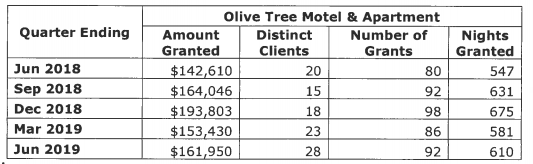
In  relation to one Olive Tree Motel OIA questions were asked about accommodation payments:

"Clients are granted an amount which is paid directly to the motel.


In the June 2019 quarter the motel was receiving $265 per night.

But nightly charges per unit range from $145 to $165 according to their website. Charges reduce for longer stays"

But good on National for getting onto not just the issue of cost but the problems of moving people who are often dysfunctional and criminal into cramped, close spaces which just aggravate their behaviour. Their well-attended meetings in the provinces to discuss this most pressing issue have also been well-covered by the media. 

It's hard to take Green MP Marama Davidson's response seriously - divert away from government failure to accusations of racism yet again. 

Wednesday, March 17, 2021

Consentual colonisation

Right now most academics, politicians, public servants, pundits and media maintain that the colonisation of New Zealand was a coercive and negative process for Maori. Moreover, that colonisation is an ongoing process.

I differ. I think much of the colonisation occurred with consent.

Take just one aspect of our shared history - social security.

While Maori were not wholly locked out of earliest social security provision, they were disadvantaged. It was harder to secure the Old Age Pension due to difficulty in procuring proof of birth. Then, authorities vested with the power of granting shied from issuing pensions to elderly Maori ensconced in communal living lest younger members misappropriated the funds. There was also debate about how much money an elderly Maori person living communally needed to live versus a retired European living independently. Neither of these considerations would be brooked today. And these discriminations quickly fell by the wayside.

Post 1938 Maori increasingly enjoyed the fruits of social security.  They were moving to the cities for work and wanted the same unemployment safety net. They were having large families and wanted the same family assistance. They aspired to own homes and wanted the same family benefit capitalization opportunity and access to state-advanced mortgages.

Colonisation provided a population large enough to supply the funds required for a universal safety net. Maori contributed and benefited willingly - or as willingly as non-Maori. (Willingness wasn't unamimous. I'm still no fan but recognise I am in a tiny minority. There are downsides to social security and they have disproportionately harmed Maori.)

Readers can doubtless think of other examples of how colonisation has been a positive process not least, the hundreds of thousands of life-long intimate individual unions between Maori and non-Maori.

I believe the term 'consentual colonisation' could be very powerful. Right now those who would angrily reject the idea are winning the debate and driving division.

Next time someone raises the matter of colonisation perhaps I'll ask, "Do you mean consentual colonisation?"


Tuesday, March 16, 2021

People coming off benefits

Social Development Minister Carmel Sepuloni has been crowing about people coming off benefits recently. I said to nobody in particular, "People always come off benefits at this time of year."

But don't take my word for it. Here's the Jan - Feb change 2021:


In total there was a drop from 389,601 to 377,907 - a 3% reduction.

And this is the same period in 2020:


The overall drop was 2.7%

A good deal of the change is driven by students moving from JS Student Hardship (categorised in 'other main benefits') back to student allowances. This is an older graph from my files but it serves to clearly show the annual December spike.


Friday, March 12, 2021

Piers Morgan

I don't know much about this guy Piers Morgan. His face is recognisable from a British talent show I watched for maybe a season? I live in New Zealand and don't follow social media  - or barely - so am unfamiliar with his views.

Verity Johnson's column Stop shouting, Piers Morgan, we're not listening in today's DomPost presented the perfect opportunity to hear them.

She begins, "...he’s basically just been that drunk dude outside a pub who yells at you when you walk past."

Then , "...he constantly, publicly, screams at successful, opinionated young women like Meghan Markle, Greta Thunberg and Ariana Grande..."

No example of what he screams at them though.

Regarding Meghan Markle, "She continued to ignore him, causing ever more acidic outbursts, to the point where, on Monday, he trashed her mental health confessions (subsequently crossing a line that made even Meghan’s detractors draw in their breath sharply)."

I didn't watch the Oprah interview. What did Meghan say and what did Piers subsequently say?

Again no dialogue forthcoming.

Historically Piers' offensive statements have apparently been made "so openly and for so long" they are "part of the script that we as young women always struggled with."

I scrutinise Johnson's own script but still no examples.

She continues, "No-one stopped his ranting on Monday. And it took a calling out by his weatherman on Tuesday, the devastatingly rational Alex Beresford, for him to shut up and flounce off."

Rational! I love rational. At least we are going to hear what the rational weatherman had to say... 

No such hope.

"A good 40 per cent of social media is predicated on the formula of angry man rants about something a woman has said and gets increasingly annoyed when she ignores his @s and invitations to “enter into a rational debate”. I’ve had it myself when male broadcasters have loathed columns I’ve written, repeatedly trash talked me on air, and been infuriated when I consistently won’t engage with them to “defend my position”.But why would we? We know the difference between rational debate and a drunk outside a pub."

Verity might yet grow up to be a Prime Minister who declares that Mike Hosking is the 'drunk outside the pub' simply because she preferred not to debate the ideas.

Whatever happened to the fearlessness of feminism?

Monday, March 08, 2021

Here's the problem with National

 From Scoop:

Women’s Wellbeing Survey Launched

Monday, 8 March 2021, 10:40 am

Press Release: New Zealand National Party

In recognition of International Women’s Day, National’s spokesperson for Women Nicola Grigg, has launched a survey looking into the wellbeing of women in the Selwyn electorate.

“We know that women have been disproportionately impacted by the Covid-19 pandemic in terms of job losses, but what we don’t seem to have a full understanding of is the overarching psycho-social impact the lockdown and enduring stress has had on our wāhine.

More (if you can stand it)


Sunday, March 07, 2021

Maori: "...gentle, kind and involved fathers"

Continuing with Stuff's 'Our Truth' crusade Michelle Duff has a piece profiling five good Maori Dads to show that they do exist. 

We all know there are good Dads - Maori and non-Maori - everywhere. The reason it isn't reported is that it isn't news. It's abiding fact.

She goes on to bemoan Once Were Warriors - "the spectre of Māori fatherhood, ground into New Zealand’s cultural fabric like a long stain of Double Brown on a pub carpet" - and some sensationalised  2006 research about the 'warrior gene' reinforcing stereotypes that sadly, "Māori start to believe".

Inevitably the narrative moves on to how Maori child-rearing practises were so much better in pre-European times. Duff lifts this 1840 quote from a writer called Polack:

 “The father was devotedly fond of his children and they were his pride and delight”, wrote Polack, a Jew and a trader for some years.

I went to the source and found that the immediately preceding sentence reads, "Child prisoners were greatly prized and lived with the whanau but they remained slaves for life." That part of the quote was naturally excluded. The practise of slavery - so abhorred internationally today - was ended by colonisation.

Stuff's obsession with selectively re-educating the audience is utterly patronising.

I form my views from a mix of: what I see with my own two eyes, reading, statistics,and anecdote. 

If 47 percent of those on the Sole Parent Support benefit (for caregivers with children up to 14 years-old) are Maori, commonsense dictates that the degree of contact Maori fathers have with their children is lower than for non-Maori.

Yes, I accept that not all of the fathers of mothers on SPS would be Maori, and some of the SPS recipients would acually be the fathers of the dependent children. Some of the claims will even be fraudulent - Mum claims despite Dad being ever-present.

However, from a PHD thesis held at the University of Waikato:

During the 1990s Yeoman and Cook (2008) estimated that around 40% of Māori children lived in a single parent household, predominantly with the mother. In other words, 2 out of every 5 Māori children were raised in homes with only one parent; a trend that is likely to keep increasing (Hutton, 2001). This also means that a large majority of fathers are absent from the everyday lives of their children or have limited contact with them. It also poses a question, where are all the fathers?

Asked, I believe, by a young Maori man. 


Friday, March 05, 2021

A picture of govt failure


Latest housing register statistics.

As usual  Maori displaying disproportionate need:

Out of interest I made a second gragh to see how the proportions compared to when Labour came into office:

Matters have worsened for Maori. You wonder why they keep voting Labour really.


Thursday, March 04, 2021

More biased Stuff reporting

 Another case of Stuff and their biased reporting appeared today.

Reporter:

Teenagers receiving youth benefits say they’re being harmed by a controversial welfare policy that’s meant to help them, with some forced to choose between going hungry or paying rent.

Since 2012, 16 to 20-year-olds who receive the Youth Payment or Young Parent Payment have had access to their money strictly controlled by the state.

Rent and bills are paid directly to landlords. Most of what’s leftover is put on a payment card that can only be used at certain shops and cannot be used to buy alcohol, cigarettes or electronics.

Youth are then given up to $50 a week in cash, but some receive a lot less after their expenses are paid.

The purpose of this is to help rangatahi (young people) budget, but a just-released report, by the Ministry of Social Development (MSD), which oversees the scheme, has found the restrictions can lead to young people feeling “disempowered and stressed”.

MSD report:

Most providers (64 percent) agreed that money management is beneficial to most young people.

I guess you would expect that from the adults. But let's have the full context for the lifted phrase "disempowered and stressed":

From the two studies it is clear that Youth Service providers and young people have similar views on compulsory money management. Both providers and current and past recipients see a definite benefit in some of the components of money management. However, they believe that other components are less helpful and may at times even cause young people difficulty. From the findings it is evident that young people may feel disempowered and stressed particularly due to the universal compulsory nature of money management and the limitations of the payment card. Providers and young people call for greater flexibility in the way money management works. 

So money management for young people and young parents isn't perfect but there is no impetus for it to cease as a practice. 

On what basis do Stuff ask for your financial support?

"Stuff’s ethical reporting is built on accuracy, fairness and balance."


Wednesday, March 03, 2021

Plummeting prison population

Corrections has released December 2020 prison statistics

My question is, how do you react to this graph?


There are around 1,500 fewer people in prison than the Justice Sector forecast there would be.

Does that inspire you? Does it make you feel less safe? I mean, everything is about feelings today isn't it?

Criminal behaviour doesn't change in the space of a year. Only active policy to reduce the prison population by device (eg earlier parole) can create a deviation of this magnitude.

Update: Jim Rose helpfully provided some context for the drop, reported in Suff.

Instead of waiting for laws to change – an often slow and contentious political process – Davis has started tinkering at the edges.

"In one aspect a lot has changed, and in another aspect, little has changed…We're finding inefficiencies in the system and doing our best to eliminate them."

Davis asked Corrections to identify its top 10 initiatives for safely reducing the prison population.

The initiatives included looking at how best to utilise electronic monitoring – something recommended in the briefing papers – and bail applications.

In the case of bail applications, those who have been charged are now given extra help filling out the form and access to their full contact information.

This allowed them to submit a proper bail application, with potential bail addresses, so when they came before the court, if a judge deemed them suitable for bail, it could begin immediately.

"We haven't made any legislative changes, we've just found inefficiencies in the system and changed them; low-hanging fruit," Davis says.

"I'm just surprised that the things that we're doing hasn't happened before."

At the moment, the system was "defying the forecasts", he says.

There is still more to be squeezed from those top 10 initiatives, which also include looking at transitional housing, remand, youth, iwi initiatives, and female prisoners. Then Davis will ask Corrections for the next 10 ideas.

"There's now an environment where they're free to be creative."

And for would-be inmates, more creative to be free!

I support the aim so long as more victims is not the result. An outcome only dscovered after the fact.

Saturday, February 27, 2021

Reverting to failed policies

 The following is the United States' historical experience and mirrors New Zealand's:

Giving parents money with no strings attached in order to reduce child poverty is an idea that has been tried before. The results are hardly ancient history. These policies became part of the federal government’s scope as a way to support the children of mostly widowed mothers, and successfully prevented severe destitution for many children. But these successes faded in the second half of the 20th century as the programs expanded and societal behaviors around marriage and childbearing began to change. Unconditional cash aid to poor families led to government dependency and non-contributing absent fathers, eventually becoming widely unpopular among policymakers on both the right and the left.

Unfortunately the policy never became unpopular with New Zealand's left, which has been traditionally far more inclined to socialism than America's, and far more in thrall to feminists. 

Clark's government had an inkling though and must have watched Bill Clinton's reforms to turn assistance into the result of work effort. Clark's government did attempt to keep liable fathers responsible and ran the line that the best way out of poverty was work.

But Ardern's government rushed back to the failed policy of  'no strings attached' and let fathers of children reliant on the taxpayer for their upkeep completely off the hook.

Now the US is faced again with debating policies that will set back all that was achieved after 1996 (broadly speaking because many states experimented earlier and achieved earlier.)

Here Labour has been and is working hard to undo Bill English' reforms.

In the States some Republicans want to wreck Bill Clinton's achievement.

But it's all government no matter the hue. All unrestrained power to take the hairbrained failed path yet again.

(If you have the time and interest read the linked article which actually contains practical free market ways to reduce poverty which are all adaptable to this country.)


Tuesday, February 23, 2021

PM stretching it on child poverty improvements

The Prime Minister announced today, "Government action has seen child poverty reduce against all nine official measures compared to the baseline year." 

The survey from which the statistics are sourced stopped at March 2020. The June 2020 results reported have therefore been calculated on an incomplete annual survey - a smaller sample size.  

Statistics NZ  says, “We are confident in the data’s ability to report on child poverty in New Zealand before the COVID lockdown in March 2020.” (My emphasis). Yet they report up to June 2020 to make trend observations. Implied is that they do not have confidence in the June data. The very data the Prime Minister is talking about.

Just days ago the Salvation Army's annual State of the Nation report was released with data compiled from OIA requests:

 CHILDREN IN BENEFIT HOUSEHOLDS

The number of children in households relying on government income support, as reported by the Ministry of Social Development (MSD), has been rising over the past four years, and the Covid-19 crisis has seen the number leap by more than 23,000 (13%) to over 211,000 in December 2020, a similar level to 2013.

Children living in benefit-dependent households are more likely to live in households with incomes below the official poverty lines, and the large increase in numbers this year will mean more children living in poverty unless there is significant increase to main welfare benefits and other income support. (again my emphasis)

Since Labour became government the number of children living on benefits had risen steadily.

The PM never addresses this issue, because she has staked everything on measuring incomes despite knowing (surely) that the source of income matters more than the level.

She can continue to redistribute income through the Families Package and Best Start but if this leads to more children on benefits then poorer social outcomes will follow - as sure as night follows day.


Saturday, February 20, 2021

Difference between Otago and Gisborne is one less child per woman

The falling Total Fertility Rate (TFR) was the subject of a report I wrote about 18 months ago. 

Now it's dropped even further. Statistics NZ describes it as, "NZ's lowest birth rate on record". 

But the regional variability is quite striking:


There are 1.38 births per woman in Otago versus 2.33 in Gisborne.

Higher fertility regions tend to correlate to higher Maori populations (the Maori birth rate remains higher than non-Maori).

But the four regions at the bottom of the rankings cover the four main cities where educated, career women reside.

The uniformly falling TFRs across the developed world are the result of women having choice (which is the result of freedom and prosperity).

Thursday, February 18, 2021

Percentage of women giving birth, by deprivation

 A graph for commentor  at Kiwiblog (sorry about the quality):

Percentage of women giving birth, by deprivation, 2009-2018


Quintile 5 = most deprived

Source 


Reversing the onus of proof

The Sexual Violence Legislation Bill continues its way through parliament.  Not everyone is onside with the law changes it seeks.

Noteworthy opinion today from Marie Dyhrberg QC :

... the bill crosses the line between assisting complainants and preventing accused men from effectively defending themselves. 

[The bill] states that consent to sexual intimacy must be given every time, which no-one disputes, but then stretches logic to say the jury cannot hear about intimate encounters the same couple had previously. With a rape allegation, when the sex is not denied, the trial turns on whether the defendant had reasonable grounds for believing the complainant consented. Where a couple are in a relationship, that belief may well depend on what had been usual and acceptable between them before.

If the belief was unreasonable, let the jury decide, which they cannot do if the defendant is banned from telling his side of the story... 

While it is true that some victims do not come forward because they fear the trial process,it is also true that innocent men get accused, sometimes for very vindictive or perverse reasons.

Other areas of the criminal law, like assault and fraud, have victims, including vulnerable ones. But we do not suggest that the conviction rate for these offences be unjustifiably or unlawfully bolstered by preventing accused persons from legitimately defending themselves with relevant evidence.

Defendants from lower income levels of society, and Māori and Pacific Island communities, already bear the brunt of the criminal justice system disproportionately to their numbers. The message that would go out to these defendants is that the system is being changed to make it easier to put innocent men in jail, because they cannot be effectively defended in the usual way.

Last year I blogged about Auckland Barrister Samira Taghavi and her response to the bill:

 "... as a defence lawyer, I feel compelled to explain the very damaging effects to those rights that the Sexual Violence (Legislation) Bill would inflict if enacted.

So what are fair trial rights? There are several, all protected in our Bill of Rights Act, and they include the right to be presumed innocent, the right to run an effective defence and the right to remain silent instead of having to help the prosecution prove your guilt. This bill would seriously violate each."

 The Auckland District Law Society says:

"...the major problem with this approach is this reverses the onus of proof. This attitude reflects a presumption of guilt and that all complainants are telling the truth when they allege sexual assaults. This has a major impact on defendants and the restrictions they face in the current jury trial process and would adversely affect fair trial process rights."

I  gather National and ACT are broadly in support, albeit it fighting a couple of clauses. 

Despite the many misgivings (more can be found at submissions) the bill has the numbers to pass into law.

Tuesday, February 16, 2021

What a brazen bunch of hypocrites MPs are

What a brazen bunch of hypocrites MPs are.

Labour - unheralded in its 2020 election manifesto - is pushing through changes to Maori ward legislation with unconscionable speed. By the time I was aware of it and looking at the proposed changes, the deadline for submissions had passed.

Slippery Slope has just pointed out to me that in 2011 Grant Robertson was steaming over National pushing through law changes under urgency:

Labour MP Grant Robertson released figures on the use of urgency since 1999 which showed in its first two years National pushed 17 laws through without allowing public submissions - compared to the four or five each term when Labour was in government.

Urgency extends the sitting hours of Parliament, allowing the Government to get more legislation through. It allows a government to easily bypass the select committee process, where the public give views on law changes and MPs iron out problems in the bill... 

Mr Robertson said urgency was sometimes warranted, such as with the Christchurch earthquake legislation. However, it was being used excessively and on some controversial bills. One example of National bypassing the select committee process was the law change implementing national standards in schools - a controversial policy which could have benefited from expert submissions.

The Maori ward legislation is nothing if not controversial.

And as if making a defence in today's parliament, then acting Leader of the House Simon Power points out that in regard to bypassing select committees, "the Government had ensured that did not happen for significant constitutional issues, such as the Marine and Coastal Area Act and electoral finance reforms." (my emphasis)

Graham Adams has written a compelling  cut- through- the- BS piece here about how "The Minister of Local Government has struggled to make her case for a law change under urgency." 

Monday, February 15, 2021

Hype and hysteria doesn't help horses

 As an animal lover it distresses me to read reports like the following:

Coalition for the Protection of Racehorses (CPR) are saddened but not surprised to learn of two horses who were killed and dumped on the beach on December 28 whilst the Tolaga Bay Races continued.

Spokesperson, Frances Baker said, "Right in front of the crowds eyes at this family event was the shocking and devastating reality of using horses to race, one whom broke both their legs and the other who had a heart attack. This happened whilst families cheered and betted on their lives."

"This is no different to the horses suffering on a regular basis on the racetrack, except that the beach races were not as prepared to hide the bodies with green screens and quickly drag them away. Heart attacks and fractures are common in racing."

She said, "After being shot in the head, those horses were not given the dignity they deserve and were left dumped on the beach without cover very close to the shore."

"NZTR had issued the betting licence for this event. Again, NZTR have blood on their hands. Deaths on and off track are common when using animals for entertainment."

I thought I'd seek a little more information about the event:

Mrs Jefferd said they had a team of highly-trained stewards, volunteers, horse wranglers and vets on board at the races, but sometimes these things happened.

“We have full procedures in place for our volunteers and people on the day. We had two vets on the day with one on call and they were the ones who make the call”.

Attending vet Bob Jackman said one horse collapsed and was unable to be moved without further suffering, while the second horse sustained fractures to both front legs.

“Events such as these are very uncommon, with only one other instance having occurred in the 35 years of my attendance.

“The overarching concern in these situations is that any animal suffering must be minimised, and after assessment of the animals and discussion with the owners, both horses were shot.”

Mr Jackman said these sort of incidents happen occasionally on any farms with horses and euthanising them promptly is standard practice.


The attending vet says these sort of events are very uncommon in direct contradiction of the spokesperson for CPR.

There is an element of risk to both horses and humans when it comes to racing. The humans of course participate voluntarily. For me it always comes back to the fact that most thoroughbreds (and standardbreds) would not exist if they weren't bred for racing. And contrary to what outsiders believe most people involved in the day-to-day training and care of these horses cherish them. They are the ones that hurt the most when one is lost in an accident.


Sunday, February 14, 2021

"New Zealand is not North Korea"

The following was brought to my attention and is very hard to argue with:

Extracted from the Feb 13 Economist's leading article, How well will vaccines work? :

For all these reasons, governments need to start planning for covid-19 as an endemic disease. Today they treat it as an emergency that will pass. To see how those ways of thinking differ, consider New Zealand, which has sought to be covid-free by bolting its doors against the world. In this way it has kept registered deaths down to just 25, but such a draconian policy makes no sense as a permanent defence: New Zealand is not North Korea. As vulnerable Kiwis are vaccinated, their country will come under growing pressure to open its borders—and hence to start to tolerate endemic covid-19 infections and deaths.

Across the world governments will have to work out when and how to switch from emergency measures to policies that are economically and socially sustainable indefinitely. The transition will be politically hard in places that have invested a lot in being covid-free. Nowhere more so than China, where vaccination is slow. The Communist Party has defined every case of covid-19 as unacceptable and wide circulation of the disease as a sign of the decadence of Western democracies.

While on the subject of the vaccine, I see all-knowing Alison Mau is taking her turn to have a crack at talkback radio today. The left having despatched with Banks and Plunket will now have their sights set on Peter Williams, so her attack comes as no surprise.

What does surprise is the constant characterisation of Sean Plunket as 'hard right'. He isn't. He's centrist politically. So is Peter Williams. They both believe in the role of the state in education, health, law and order albeit questioning the nature of the role and degree of intervention.

Williams spent quite a bit of time last week talking about the impending intention to vaccinate all New Zealanders, as is his right. People are entitled to discuss the vaccine, the ethics of being made to comply by employers, of needing to comply as a passport to travel. I've never had a flu jab so am wondering why I would have a covid jab. But soon it'll be forbidden to think aloud, let alone on a radio station.

Forget New Zealand's "draconian" covid response. It must surely strike the likes of Alison Mau, eventually, that shoving this country down a very slippery slope of snowballing intolerance risks reaching an endpoint which has more in common with North Korea than the free world.


Tuesday, February 09, 2021

"The myth of Saint Jacinda" by Oliver Hartwich, published in The Spectator

"Every time I read another excitable media article about New Zealand’s prime minister Jacinda Ardern, I am reminded of an old quip: ‘Viewed from a distance, everything is beautiful.’ That was Publius Cornelius Tacitus (AD 58-120). Were this Roman intellectual and historian alive today, he would make a great New York Times columnist. His tactic was to spin political and historical analogies so they could influence public affairs back home.

Tacitus’s Germania, for example, was about framing the Germanic tribes as a noble culture so that his Roman compatriots would recognize their own society as corrupt and decadent in contrast. The only problem was that Tacitus had never crossed the Rhine. That did not matter much: most Romans had not traveled far north either.

That is happening again, except this time New Zealanders are the noble savages being lovingly invented by global columnists. Hardly any of these writers actually live in New Zealand or understand it. Their op-eds reveal more about them than the country they purport to write about. In normal circumstances, this would not be a problem. But over the past few years, Jacinda Ardern has risen to international stardom. Her rise was based on remote reporting by a progressive world media thirsting for a noble alternative to strongmen leaders.

Anyone wishing for an anti-Trump, an anti-Johnson or an anti-Bolsonaro could not dream up a more suitable figure than Ardern. If she did not exist, she would have to be invented. She ticks all the boxes. As a young woman who became prime minister at the age of 37, she is one of the world’s first millennial heads of government. She is only the second world leader to give birth in office (the first was Benazir Bhutto of Pakistan).

Ardern’s political tenure is soaked in progressive holy water. The list of her adopted causes is long. She cited child poverty as her reason for entering politics. When she first ran for prime minister in 2017, she declared climate change her ‘generation’s nuclear free moment’. In early 2019, she promised in the Financial Times to champion a new ‘economics of kindness’. This was demonstrated shortly afterwards in the world’s first ‘well-being budget’.

Ardern has become the media’s poster child of a modern, centre-left politician, not least thanks to her expertise in communicating to every audience. Whether it is a Facebook Live broadcast from her home in her pyjamas or a traditional press conference, Ardern oozes a highly personalised brand of warmth, kindness and empathy.

This PR dexterity helped her steer through two major first-term crises. She found the right words to heal a shocked nation after a terrorist attack on the Christchurch Muslim community in March 2019. Last year, her near-daily TV appearances guided Kiwis through the first months of the coronavirus crisis.

For people watching from afar and sick of dealing with mortal, flawed and ineffective leaders, Ardern’s superheroine star shines bright. As the psychologist Jonathan Haidt revealed in The Righteous Mind, we wish for things to be true, and no amount of counter-evidence will change our minds. Ardern is lucky that humans have this mental bug because on practically every single metric her administration has failed.

She wanted to solve New Zealand’s housing crisis by building 100,000 homes over a decade. This unworkable state-run program was abandoned after two years, and house prices have skyrocketed faster than before. A promised light-rail connection from Auckland’s central business district to the airport met the same fate: the project was scrapped before it even started. Child poverty also rose under Ardern’s leadership, as did carbon emissions. The so-called ‘wellbeing budget’ earmarked funds to fix mental health — but has still notound any projects on which to spend the money.

Even in the two major crises, actual policy implementation differed immensely from the PR-shaped perception. A gun buyback scheme after the Christchurch attack was a costly fiasco. And the country’s success against Covid-19 was more a result of geography than policy. The government failed to manage even basic quarantine facilities.

In the 2020 election campaign, Ardern should have struggled to explain why her grand promises had so utterly failed. Except no one demanded any accountability, and Ardern cruised to an absolute majority based on her saintly image. Ordinary Kiwis, unused to being the global centre of attention, also desperately want this internationalist narrative to be true.

The gap between people’s impression of Ardern and her actual performance as a leader has widened to a gulf. So long as enough modern Tacituses write gushing Ardern portraits, her superstar status will not change."

Oliver Hartwich is executive director of the New Zealand Initiative, a Wellington-based think tank. This article was originally published in The Spectator’s February 2021 US edition

Source

Sunday, February 07, 2021

Sack Sean Plunket and risk sacking the audience

 Who knows if there is any truth to claims by gossip Keith Lynch that:

Sean Plunket's future at radio station Magic Talk is uncertain, Stuff has learned.

 It is understood Plunket has been asked not to return to the station, but that he may fight it.

It was easy enough for them dispatching John Banks who had only two more days to see out before the return of Peter Williams. But on what grounds could they sack Plunket?

It certainly wouldn't be for incompetence or failure to fulfil his work objective to lift ratings.

Plunket is mercurial (subject to depressive bouts by his own admission) and takes energy to listen to. But listen I do, sometimes intently. He goes, and I'll go.

Not to their competitor talk channel. It'll be to their competitor's new music channel  Gold which I am partial to. 

If we can't have free and frank talkback then there's no point in the medium.


Update: Chris Trotter has written a perspicacious piece on this subject.

"It is very hard to believe that MediaWorks’ advertisers were unaware that Magic Talk Radio had pivoted right, away from RNZ National’s demographic and towards Newstalk-ZB’s. It is equally hard to credit that Sean Plunket and Peter Williams were not presented to them as powerful magnets for the folk who were missing Newstalk’s arch-conservative host, Leighton Smith. Surely, they would have understood what sort of political discussions their ad-breaks would be interrupting?

What are we looking at, then, when we see corporations threatening to pull their ads from programmes whose listeners come from the very demographics they are targeting? Are we witnessing an intra-corporate triumph of woke PR mavens over hard-working marketing grunts?

The answer is, almost certainly, “Yes”. Overwhelmingly, the graduates pouring out of this country’s “communications studies” courses and into corporate PR are young women who, for years, have been schooled in the uncompromising dogma of social radicalism – especially feminism and anti-racism. When they learn (via Twitter, Instagram and Facebook) the awful truth about the latest shock-jock’s racist outrage, their first instinct is the get their employers’ brand as far away from the perpetrators’ “toxicity” as possible. Failure to “get ahead of the problem”, their bosses are cautioned, will lead directly to consumer boycotts. The “Roastbusters” precedent will be cited. To date, their bosses have demonstrated little need for further persuasion... 

If the New Zealand news media persists in the folly of “cancelling” all those listeners, viewers and readers who fail to pass ideological muster, then we will see the emergence of our own version of Fox News – with all that entails for the health of our country and its democratic institutions. Who would lead it? Do we have a Hannity, or a Tucker Carlson, waiting out there in the wings? Where to start looking for a talented right-wing contrarian, boasting years of professional broadcasting experience, who is currently between jobs?"


Thursday, February 04, 2021

Good is bad: black is white: up is down

People growing produce which earns income for the country are no longer good. They pollute, they treat their animal stock badly, they export livestock in inhumane ways to countries that abuse human rights.

People providing places for other people to live in are no longer good. They pry, they fail to maintain their properties well, they exploit rental prices and deny would-be home owners opportunity.

People who pay the lion's share of  tax are no longer good. They are the greedy privileged.

They're all bad.

So who are the new 'good'?

Government members who uncritically side with any group with a grievance because superficial kindness is key.

A media that uncritically sides with any person or group with a grievance because producing headlines that contain 'racism' and 'sexism' is all that's left in the age of click-bait. ('Ageism' isn't really very popular because the media hates boomers.)

Public servants who correct and regulate the behaviours of the farmers and landlords (while living at their expense).

Academics who study and publish about the behaviours of bad people (while living at their expense).

What will happen?

The 'bad' people will get on with it regardless. That's what they do.

The 'good' people will get ever more emboldened by the seeming acqiescence of the 'bad' people. They must be guilty.

Democracy should stand a chance of righting this upside-down stuff.

But with interference in the democratic process, inculcation of children about the past so as the shape the future, and the mass adoration of a highly photogenic Prime Minister (with potential longevity), I am very unsure about New Zealand's future right now.


Wednesday, February 03, 2021

Unemployment rate down - Jobseeker numbers up

Kiwiblog ran a post titled, "Great employment news." Here are a couple of comments and my response:


Having said that, the process for calculating the official unemployment rate remains unchanged.

The Aotearoa New Zealand History curriculum outcome

Regarding the new history curriculum, according to RNZ, "On Wednesday, Education Minister Chris Hipkins urged New Zealanders to check out the content and provide feedback before it was finalised."

It isn't the easiest website to navigate but I eventually found, from the 'draft curriculum', the 'progress outcome by end of year 10'.  This is what students - akonga - will 'know' by that stage:

"I have built my knowledge of stories iwi and hapū tell about their history in the rohe, and of stories about the people, events, and changes that have been important in my local area. For the national contexts, I know the following:

Whakapapa me te whanaungatanga

Migration and mobility

Aotearoa New Zealand has a history of selective and discriminatory practices to control migration, with little negotiation with Māori as tangata whenua. Nineteenth-century immigration schemes were designed to create a British colony and consequently shifted the balance of power from Māori to settlers. Immigration policy has been used to exclude some peoples and to restrict conditions for entry and citizenship.

Identity

Contested ideas about identity have come from youth challenging social norms, and from social actions addressing injustices and societal divisions over values. Māori have communicated their distinctiveness through cultural practices that have sometimes been appropriated and used inappropriately.

International conflicts

Our attitudes towards and reasons for participation in international wars, and the impact they have had on our society, have changed over time. The ways that we have commemorated these conflicts have reflected these changing perspectives.

Tūrangawaewae me te kaitiakitanga

Land, water, and resources

There have been contested views about developing Aotearoa New Zealand and its economic resources. This is especially evidenced by our environmental history.

Mana motuhake

New Zealand’s settler government and the Crown were determined to undermine mana Māori, especially by acquiring Māori territories. The New Zealand Wars and the legislation that followed demonstrated their willingness to do this by any means.

Tino rangatiratanga me te kāwanatanga

Te Tiriti o Waitangi

In 1840, the Treaty promised to protect tribal rangatiratanga. By 1900, it had become the means of regaining what it had promised – rangatiratanga, mana motuhake, self determination. It also underpinned iwi attempts to remedy injustice by working inside, alongside, and outside the Crown system.

The Waitangi Tribunal investigation process and subsequent settlements by the Crown have led to economic, political, social, and cultural growth for iwi. The settlements have also provided an opportunity for reconciliation.

The state and the people

When people and groups have campaigned on or asserted their human rights, it has forced the state to act. This has been evident in the actions of workers’ groups and organisations of women and of wāhine Māori. It has also been evident in law reform in relation to gender identity.

The state and the Pacific

Aotearoa New Zealand has acted in the Pacific in line with its own political, strategic, economic, and social interests. But its actions have also been an expression of whanaungatanga.

In my learning in Aotearoa New Zealand’s histories, I can:

• construct and compare narratives of cause and consequence that place historical events, people, and changes in an extended sequence with links to the present

• actively seek out historical sources with differing perspectives and contrary views (including those that challenge my own interpretation), giving deliberate attention to mātauranga Māori sources. While doing so, I identify missing voices and draw conclusions that capture the diversity of people’s experiences

• make an informed ethical judgement about people’s actions in the past, giving careful consideration to the complex predicaments they faced, the attitudes and values of the times, and my own values and attitudes."

What do you think?

I'll make one response (though I have more). 

I thought that making ethical judgements belonged to the study of philosophy. 

Monday, February 01, 2021

Will 'By Maori, for Maori' be another failed experiment in child protection?

New Zealand seems poised to implement separate child protection services based on ethnicity. Minister for Children, Kelvin Davis says he is against separatism but recommendations of the all-Maori four person panel appointed to advise on reform of OT may carry more weight. We have already seen the influence of others standing behind the appointees compel the resignation of embattled OT chief last month.

So I read the following article with great interest. Canada, specifically Manitoba, has gone down the path NZ now seems destined to follow.

There are parallels with respect to the historic removal of Indigenous children, inquiries and compensation. The responsibility for care and protection of Indigenous children now lies with the Indigenous people:

However, they continue to remove children from their homes in alarming numbers. Why?

I think that if you asked the Indigenous workers why Manitoba apprehends so many Indigenous children – in fact, more than were apprehended at the height of the “60’s Scoop” – the answer an Indigenous worker would give you would be basically the same answer that the non-Indigenous worker of the last generation would have given. It would go something like this:

“We work very hard to keep children with their parents. Unfortunately, in too many situations the parents (often, just the mother) are unable or unwilling to provide a home for the child – usually due to alcohol, or substance abuse issues. Every effort is made to help the parents, but sometimes the parents are unable or unwilling to accept the help. Even then, we make every attempt to place the child with extended family, or with another Indigenous care giver in the community. Only if all of these efforts fail do we make the painful decision to remove the child. Our work is greatly complicated by the fact that many of the children, and many of the parents, suffer from Fetal Alcohol Spectrum Disorder (FASD).”

The only significant difference between what child welfare workers from an earlier decade would have told you is that there was very little understanding of FASD until well into the 1990’s.

As a recent analysis of OT cases showed reasons for removal included:

Substance abuse, particularly synthetic cannabis, methamphetamine or alcohol addiction, often coupled with mental health issues associated with that addiction,including psychosis and suicidal behaviour.

The story is the same. Forget for a moment the veracity or otherwise of the systemic accusations/excuses made - until parental behaviours change, children will be at risk, often, extreme risk. 

There are no signs that substance abuse and addiction is abating. Can 'By Maori, for Maori' make a difference?

It is probably a forlorn hope.

The writer of the article, a retired Manitoba court judge and long-time observant of care and protection practice, finishes by putting this question:

"Is it not time to jettison the false notion that a child is nothing more than property belonging to a culture?"

Is that where NZ  will be in another twenty years time when the current, fashionable 'solution' has failed?

Sunday, January 31, 2021

MSD makes 'gender diverse' prediction


This graph released on Friday is accompanied by an interesting prediction. "We expect the numbers in this category [Gender diverse] to increase over time."

Why? is my immediate responding question.

Is it because MSD prophets expect gender diverse people are more likely to be unemployed?

Or is it because they expect more unemployed people will identify as gender diverse?

(There's a subtle difference between the two)

Or simply that more of the general population will identify as gender diverse?

That might make for an interesting OIA.

Friday, January 29, 2021

GUEST POST: Oranga Tamariki - Perceptions of Blame

I parted ways with my social work Master’s with the last re-write of CYF/OT legislation. Whanau placement children have demonstrably worse outcomes than general placement children because there is a problem with inter-generational dysfunction (what is normal for the spider is chaos for the fly). So, if recent developments are REALLY about what is best for the children, and not a massive power trip the likes of Turia and Raukawa-Tait are embarking on, then it should be as Henare O'Keefe says, that "...it doesn't matter if foster parents are black, brown, white, purple or green, they need to have the love for children and a passion in their future".

No one alive today has been colonised or has colonised anyone. Every single person has a choice. Both Maori and Pakeha choose to become addicts, or abuse/neglect their kids. (Remember Maori campaigned to be allowed access to booze in 1947 - now there's some campaigning to prevent Maori access to booze, South Auckland Maori Warden David Ratu and a women in Hawkes Bay). But drug and alcohol addiction are still apparently Pakeha's fault.

I am told constantly that “Māori were never asked about Pākeha intervention, it was decided by Pākeha that they would intervene anyway." As if it’s ok with them that standards for Maori children should be lower than other children. No. All children deserve love, care and a decent standard of living (with no abuse) and if families aren’t providing that there needs to be intervention.

Maori have been part of government decisions for a very long time. To pretend decisions made by  CYF, and now OT, excluded them is disingenuous. It's similar to the claim that Pakeha unilaterally banned the speaking of Maori in early schools when a 1866/67 petition to parliament of 337 Maori elders asked that "... there should not be a word of Maori allowed to be spoken in the school."

I am also told child abuse didn’t exist before Pakeha arrival; that Maori children were stolen to be slaves, and this is where abuse was learnt. Such a one-eyed view. Shall we discuss the Chatham Island Moriori and inter-tribal slavery and brutality? No, because that is in the past and as far as I am concerned has no bearing on how anyone chooses to raise their family today. 

In any case, if this claim is the reason why Maori are so high in OT's stats, how come most Maori can and do look after their kids beautifully?


Guest Post by 'The Slippery Slope'

Non-Maori need not apply

This is disappointing.

For many years I've created and exhibited portraits of 'tupuna'. I've also painted many Maori and their children as gifts and given tupuna portraits to Maori people who felt or had a connection to them.

One of the co-organisers of this new competition, the inaugural Kiingi Tuheitia Portraiture Award is the National Portrait gallery whose exhibitions I've previously participated in.

It's disappointing to be barred from entry to this event because I don't have whakapapa links to any tupuna. 

Emerging Māori artists, with whakapapa connections to the depicted tūpuna, can submit either an artwork created in the past two years or an entirely new piece of work.

I might also be challenged on the grounds of 'emerging' but that's a very subjective term in the art world. It may mean emerging in a new medium. But I could live with being banned on those grounds.

However there are hundreds of emerging non-Maori artists who would relish the opportunity to showcase their work but will be shut out  despite the claim that,

"This award is not just for Māori but for New Zealanders, after a turbulent 2020, now more than ever we are looking at ourselves and realise the importance of generating our own projects from home."

It's not for "New Zealanders" to partipate in. And it promotes a sense that only Maori with whakapapa links should be painting Maori. Good job Goldie and Lindauer didn't get that message.

Oh well. It's a free world (hah) and organisers can choose to give a platform to who they want to.

But seen as this is my blog here's a personal offering from my 'cloak series':


Wednesday, January 27, 2021

On John Banks and censorship

I listen to John Banks but wasn't tuned in yesterday when he made comments in response to a caller which were being recorded by an outraged and offended listener using TicTok. The caller described Maori as a stone-age people who are genetically predisposed to crime, alcohol and educational under-achievement. Banks made a typical Banksie response for theatrical effect. It came across as agreement. 

I don't know if Banks is racist. He says he is not.

In an attempt to ascertain how Banks might have responded (much easier in hindsight than heat of the moment) I've put myself in his shoes. I'd have interrupted the caller. I'd have a couple of questions. Why does the condition of a race 2-300 years ago have relevance today? The Pakeha whalers and sealers were a reprehensible bunch sexually abusing Maori children. Getting perpetually drunk and nasty when they came off their sea stints. An uncivilized race of people living in New Zealand at that time. 

But why does that matter now?

Maori and Pakeha in 2021 are generations removed. We are all human first. We are each individuals. The caller's blanket statement is illogical - never mind insulting and hurtful (especially to those who want to be insulted and hurt.)

BUT I am really worried where this new level of censorship is taking us.

By 1/ Magic Talk removing the host and 2/ advertisers pulling sponsorship and 3/ Cricket NZ suspending association and 4/ a non-listener describing Magic as "endless stream of racism, ignorance and general bigotry" (which I will personally attest is untrue), people with ideas like the caller will only get disaffected and driven underground in search of similarly disaffected types.

It is far preferable that they say their piece and hear the challenges. That they get ridiculed or lambasted by listeners who disagree. Which apparently did happen after the call.

Tuesday, January 26, 2021

Reminding ourselves why Oranga Tamariki removes babies

 According to analysis of actual cases Oranga Tamariki reports:

Typically, there were multiple factors associated with a decision toseek interim custody of a newborn baby. The most common reasons were:

• Substance abuse, particularly synthetic cannabis, methamphetamine or alcohol addiction, often coupled with mental health issues associated with that addiction,including psychosis and suicidal behaviour.

• Partner substance abuse and family violence. This can entail unpredictable acts of violence associated with substance abuse and a history of previous protection orders against the partner. Babies are particularly at risk in this context as they are often close by when the partner becomes violent, have no independent means of escaping the violent situation, and are highly vulnerable to serious physical harm from any assault.

Other factors included:

• Medical neglect, including severe lack of preparation for, and engagement with, the newborn baby.

• Parental difficulties in being able to recognise and respond to the needs of a newborn, including signs of distress.

To prevaricate over whether interventions should or should not occur based on political considerations is an act of abuse in and of itself.

Now there is a clear push for two different systems. Lady Moxon, instrumental to the resignation of Grainne Moss, says:

"The end goal is that we have our own Mokopuna Authority - I'm talking about Māori for Māori by Māori - whereby we're looking after our own children, wherever they are."

All Maori children have mixed ethnicity. But before they are Maori/Pakeha/Pacific/Asian/other they are tiny human beings. 

Tiny human beings whose best interest the grown-ups should be able to agree upon free from political agendas.

Sunday, January 24, 2021

"A beacon of kindness"

This is a bit over the top don't you think?

Ex Labour Minister Steve Maharey writes today:

"Ardern has gone on to become a world figure – a beacon of kindness in an otherwise very nasty world."

Does he mean all other world leaders are cruel? Only New Zealand has a kind leader?

What does he actually mean by a "very nasty world"? It's probably as peaceful as it has ever been. It's certainly more prosperous than it's ever been. 

Hell it's not perfect but in general most countries are seeing generational improvement in living standards; longer life expectancy, lower infant mortality, better sanitation, and better infrastructure.

I don't know where this "otherwise very nasty world" is.

Friday, January 22, 2021

ACT response to Grainne Moss resignation

 ACT's response to the resignation of Oranga Tamariki CE Graine Moss is spot on. Karen Chhour is part-Maori and grew up in fostercare so has firsthand experience of CYF intervention:

“Oranga Tamariki (OT) will remain ungovernable and continue to fail children unless it’s allowed to focus on the one thing it was established to do, ensure the wellbeing of children,” says ACT’s Social Development and Children spokesperson Karen Chhour.


“Until OT’s mandate and rules are tidied up it is unlikely anybody of high quality will put themselves forward to run the organisation.


“Well intentioned as it might have been, making the chief executive of the agency focus on the principles of the Treaty of Waitangi when responding to the needs of Maori children does not always result in the right outcomes for those children.


“Oranga Tamariki’s governing principles and its Act should be colour-blind, utterly child-centric and open to whatever solution will ensure a child’s wellbeing.


“Looking at decisions through the lens of s7AA imposes unworkably competing duties on the chief executive.


“Ethnicity and culture should not be a determining factor in deciding what is in the best interests of our children.


“Shortly ACT will be proposing a Member’s Bill that addresses these issues.


“The Government should drop the politically correct façade that’s holding the agency back and address s7AA itself.”


You can read more about OT's responsibilities under Section 7AA here. 

Statistic of the Day

 Statistics New Zealand released latest migration data yesterday. This fact is incredibly sobering:

From April 2020 to November 2020 there were 77,600 arrivals and 133,000 departures, compared to 4.44 million arrivals and 4.43 million departures in the same period in 2019.

There are lots of interesting graphs as well.

I often muse that if a historian was looking back from the future and saw just the graphs (these and the very many others displaying economic activity,etc) they'd be totally non-plussed at what could have caused such a catastrophic and rapid impact. I'd have guessed at a massive war ... but that would leave more questions than answers.

Thursday, January 21, 2021

Appreciating our essential services

 A courier driver gets caught short and pees out of sight of the road on a plant.

The property owner is disgusted and in her fury releases the footage to the media.

Now that's what I call appreciation for our essential services.


John Bishop: "Smiles all very well but we need a bold vision"

That's the title used in a column by John Bishop (father of National MP Chris Bishop) published in today's DomPost.

I used to think the PM so loved her position and the cheers of the adoring crowd that she would not do anything that risked losing or lessening her position at the pinnacle of admiration.

I have now moved away from that to the much less charitable view that she doesn’t know what to do. She has no real vision of what she wants New Zealand to be like, beyond the usual clichés.

I shared the second view when she was an opposition MP with the social development portfolio and have never had reason to change it.