Having a bit of a tidy up when I came across these photos which show the development of one of my favourite subjects and paintings, Herbie:

Having a bit of a tidy up when I came across these photos which show the development of one of my favourite subjects and paintings, Herbie:
The PM's office was trying to get data to show that rents have risen in line with wage increases apparently. PM's chief press secretary Andrew Campbell asks in an email mistakenly sent to Stuff:
“Can we get a table rent increases year on year since been in Govt year on year compared to increase in wages and house prices [sic]. My understanding rents have been in line with average wage growth and obviously a lot less than house price growth...Do we know if our rent increases have been in line with increases under National? If they have been that would be good to point out,” he said.
Well you definitely cannot point it out for Auckland or Wellington:

A media report yesterday talked about landlords "threatening" to hike rents in response to to Labour's closing the "loophole" of loan interest deductibility.
Both of those terms are misleading. The first is an effort to paint landlords as thugs. The second, as tax dodgers.
Landlords with mortgaged properties will have no choice but to hike rents or sell. They cannot simply absorb further expenses. For instance, the government never mentions how quickly insurance has escalated. And rental property insurance is more expensive than owner occupied insurance. Meanwhile rates continue to grow over and above the inflation rate. Not to mention the significant property maintenance costs imposed by this government.

Over the ten year period to 2018, births of NZ European babies were reasonably evenly spread across the economic deciles with the fewest being born in the least deprived decile - the poorest neighbourhood.
For Maori babies the reverse is true. The highest percentage are born in the poorest decile.
More than one in four Maori babies is born in the poorest area compared to one in twenty NZ European babies.
What a stark contrast.

Statistics New Zealand compiled a report called Housing in Aotearoa 2020 which is full of interesting data. This graph painted a slightly different picture from what might be expected.


She wrote me, "...we’ve come so far, and I know that we can make it through together."
She did. The PM. Tonight. Just now. Personally addressed to ME.
At fifteen, I wanted to be a song writer. I lacked Jacinda's brilliance though.
Who cares if it doesn't rhyme?
It's so salvational. So reassuring. So, Up Where We Belong.
Jacinda. I believe in you. I Believe I Can Fly.
You might have taken away my freedom, controlled my economy, exercised your power over mine and triumphed.
But I knew all along that you, magnificent leader, would write a better song lyric than I ever could.

(Left click on image to enlarge)
Note a marked reversal in a number of positive trends since 2017.
A reader kindly sent me a response she received yesterday from MSD. She'd asked if any cost benefit analysis has been made of Temporary Emergency Accommodation versus paying market rental. The answer was 'no'. Hardly surprising.
But MSD did supply a document containing some data from March 2020 quarter. Under a heading 'Analysis' the following observation appears:
"The spend on Emergency Housing does not represent value for money."
That's the understatement of the year.
I've charted the three main spends:

National is at last complaining about an issue I (and probably others) was blogging about over a year ago.
National’s Housing spokesperson Nicola Willis says the Government is relying too much on using hotels and motels as emergency housing, which has seen the owners of these establishments charge prices as high as $440 a night.
In relation to one Olive Tree Motel OIA questions were asked about accommodation payments:
"Clients are granted an amount which is paid directly to the motel.
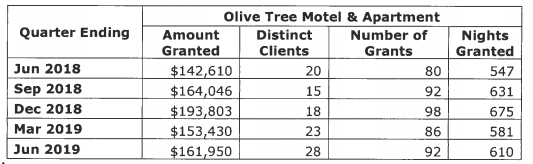
In the June 2019 quarter the motel was receiving $265 per night.
But nightly charges per unit range from $145 to $165 according to their website. Charges reduce for longer stays"
Right now most academics, politicians, public servants, pundits and media maintain that the colonisation of New Zealand was a coercive and negative process for Maori. Moreover, that colonisation is an ongoing process.
I differ. I think much of the colonisation occurred with consent.
Take just one aspect of our shared history - social security.
While Maori were not wholly locked out of earliest social security provision, they were disadvantaged. It was harder to secure the Old Age Pension due to difficulty in procuring proof of birth. Then, authorities vested with the power of granting shied from issuing pensions to elderly Maori ensconced in communal living lest younger members misappropriated the funds. There was also debate about how much money an elderly Maori person living communally needed to live versus a retired European living independently. Neither of these considerations would be brooked today. And these discriminations quickly fell by the wayside.
Post 1938 Maori increasingly enjoyed the fruits of social security. They were moving to the cities for work and wanted the same unemployment safety net. They were having large families and wanted the same family assistance. They aspired to own homes and wanted the same family benefit capitalization opportunity and access to state-advanced mortgages.
Colonisation provided a population large enough to supply the funds required for a universal safety net. Maori contributed and benefited willingly - or as willingly as non-Maori. (Willingness wasn't unamimous. I'm still no fan but recognise I am in a tiny minority. There are downsides to social security and they have disproportionately harmed Maori.)
Readers can doubtless think of other examples of how colonisation has been a positive process not least, the hundreds of thousands of life-long intimate individual unions between Maori and non-Maori.
I believe the term 'consentual colonisation' could be very powerful. Right now those who would angrily reject the idea are winning the debate and driving division.
Next time someone raises the matter of colonisation perhaps I'll ask, "Do you mean consentual colonisation?"
Social Development Minister Carmel Sepuloni has been crowing about people coming off benefits recently. I said to nobody in particular, "People always come off benefits at this time of year."
But don't take my word for it. Here's the Jan - Feb change 2021:

In total there was a drop from 389,601 to 377,907 - a 3% reduction.
And this is the same period in 2020:

A good deal of the change is driven by students moving from JS Student Hardship (categorised in 'other main benefits') back to student allowances. This is an older graph from my files but it serves to clearly show the annual December spike.

I don't know much about this guy Piers Morgan. His face is recognisable from a British talent show I watched for maybe a season? I live in New Zealand and don't follow social media - or barely - so am unfamiliar with his views.
Verity Johnson's column Stop shouting, Piers Morgan, we're not listening in today's DomPost presented the perfect opportunity to hear them.
She begins, "...he’s basically just been that drunk dude outside a pub who yells at you when you walk past."
Then , "...he constantly, publicly, screams at successful, opinionated young women like Meghan Markle, Greta Thunberg and Ariana Grande..."
No example of what he screams at them though.
Regarding Meghan Markle, "She continued to ignore him, causing ever more acidic outbursts, to the point where, on Monday, he trashed her mental health confessions (subsequently crossing a line that made even Meghan’s detractors draw in their breath sharply)."
I didn't watch the Oprah interview. What did Meghan say and what did Piers subsequently say?
Again no dialogue forthcoming.
Historically Piers' offensive statements have apparently been made "so openly and for so long" they are "part of the script that we as young women always struggled with."
I scrutinise Johnson's own script but still no examples.
She continues, "No-one stopped his ranting on Monday. And it took a calling out by his weatherman on Tuesday, the devastatingly rational Alex Beresford, for him to shut up and flounce off."
Rational! I love rational. At least we are going to hear what the rational weatherman had to say...
No such hope.
"A good 40 per cent of social media is predicated on the formula of angry man rants about something a woman has said and gets increasingly annoyed when she ignores his @s and invitations to “enter into a rational debate”. I’ve had it myself when male broadcasters have loathed columns I’ve written, repeatedly trash talked me on air, and been infuriated when I consistently won’t engage with them to “defend my position”.But why would we? We know the difference between rational debate and a drunk outside a pub."
Verity might yet grow up to be a Prime Minister who declares that Mike Hosking is the 'drunk outside the pub' simply because she preferred not to debate the ideas.
Whatever happened to the fearlessness of feminism?
From Scoop:
Women’s Wellbeing Survey Launched
Monday, 8 March 2021, 10:40 am
Press Release: New Zealand National Party
In recognition of International Women’s Day, National’s spokesperson for Women Nicola Grigg, has launched a survey looking into the wellbeing of women in the Selwyn electorate.
“We know that women have been disproportionately impacted by the Covid-19 pandemic in terms of job losses, but what we don’t seem to have a full understanding of is the overarching psycho-social impact the lockdown and enduring stress has had on our wāhine.
More (if you can stand it)
Continuing with Stuff's 'Our Truth' crusade Michelle Duff has a piece profiling five good Maori Dads to show that they do exist.
We all know there are good Dads - Maori and non-Maori - everywhere. The reason it isn't reported is that it isn't news. It's abiding fact.
She goes on to bemoan Once Were Warriors - "the spectre of Māori fatherhood, ground into New Zealand’s cultural fabric like a long stain of Double Brown on a pub carpet" - and some sensationalised 2006 research about the 'warrior gene' reinforcing stereotypes that sadly, "Māori start to believe".
Inevitably the narrative moves on to how Maori child-rearing practises were so much better in pre-European times. Duff lifts this 1840 quote from a writer called Polack:
“The father was devotedly fond of his children and they were his pride and delight”, wrote Polack, a Jew and a trader for some years.
I went to the source and found that the immediately preceding sentence reads, "Child prisoners were greatly prized and lived with the whanau but they remained slaves for life." That part of the quote was naturally excluded. The practise of slavery - so abhorred internationally today - was ended by colonisation.
Stuff's obsession with selectively re-educating the audience is utterly patronising.
I form my views from a mix of: what I see with my own two eyes, reading, statistics,and anecdote.
If 47 percent of those on the Sole Parent Support benefit (for caregivers with children up to 14 years-old) are Maori, commonsense dictates that the degree of contact Maori fathers have with their children is lower than for non-Maori.
Yes, I accept that not all of the fathers of mothers on SPS would be Maori, and some of the SPS recipients would acually be the fathers of the dependent children. Some of the claims will even be fraudulent - Mum claims despite Dad being ever-present.
However, from a PHD thesis held at the University of Waikato:
During the 1990s Yeoman and Cook (2008) estimated that around 40% of Māori children lived in a single parent household, predominantly with the mother. In other words, 2 out of every 5 Māori children were raised in homes with only one parent; a trend that is likely to keep increasing (Hutton, 2001). This also means that a large majority of fathers are absent from the everyday lives of their children or have limited contact with them. It also poses a question, where are all the fathers?
Asked, I believe, by a young Maori man.

As usual Maori displaying disproportionate need:


Another case of Stuff and their biased reporting appeared today.
Teenagers receiving youth benefits say they’re being harmed by a controversial welfare policy that’s meant to help them, with some forced to choose between going hungry or paying rent.
Since 2012, 16 to 20-year-olds who receive the Youth Payment or Young Parent Payment have had access to their money strictly controlled by the state.
Rent and bills are paid directly to landlords. Most of what’s leftover is put on a payment card that can only be used at certain shops and cannot be used to buy alcohol, cigarettes or electronics.
Youth are then given up to $50 a week in cash, but some receive a lot less after their expenses are paid.
The purpose of this is to help rangatahi (young people) budget, but a just-released report, by the Ministry of Social Development (MSD), which oversees the scheme, has found the restrictions can lead to young people feeling “disempowered and stressed”.
Most providers (64 percent) agreed that money management is beneficial to most young people.
I guess you would expect that from the adults. But let's have the full context for the lifted phrase "disempowered and stressed":
From the two studies it is clear that Youth Service providers and young people have similar views on compulsory money management. Both providers and current and past recipients see a definite benefit in some of the components of money management. However, they believe that other components are less helpful and may at times even cause young people difficulty. From the findings it is evident that young people may feel disempowered and stressed particularly due to the universal compulsory nature of money management and the limitations of the payment card. Providers and young people call for greater flexibility in the way money management works.
So money management for young people and young parents isn't perfect but there is no impetus for it to cease as a practice.
On what basis do Stuff ask for your financial support?
"Stuff’s ethical reporting is built on accuracy, fairness and balance."
Corrections has released December 2020 prison statistics.
My question is, how do you react to this graph?

Update: Jim Rose helpfully provided some context for the drop, reported in Suff.
Instead of waiting for laws to change – an often slow and contentious political process – Davis has started tinkering at the edges.
"In one aspect a lot has changed, and in another aspect, little has changed…We're finding inefficiencies in the system and doing our best to eliminate them."
Davis asked Corrections to identify its top 10 initiatives for safely reducing the prison population.
The initiatives included looking at how best to utilise electronic monitoring – something recommended in the briefing papers – and bail applications.
In the case of bail applications, those who have been charged are now given extra help filling out the form and access to their full contact information.
This allowed them to submit a proper bail application, with potential bail addresses, so when they came before the court, if a judge deemed them suitable for bail, it could begin immediately.
"We haven't made any legislative changes, we've just found inefficiencies in the system and changed them; low-hanging fruit," Davis says.
"I'm just surprised that the things that we're doing hasn't happened before."
At the moment, the system was "defying the forecasts", he says.
There is still more to be squeezed from those top 10 initiatives, which also include looking at transitional housing, remand, youth, iwi initiatives, and female prisoners. Then Davis will ask Corrections for the next 10 ideas.
"There's now an environment where they're free to be creative."
And for would-be inmates, more creative to be free!
I support the aim so long as more victims is not the result. An outcome only dscovered after the fact.
The following is the United States' historical experience and mirrors New Zealand's:
Giving parents money with no strings attached in order to reduce child poverty is an idea that has been tried before. The results are hardly ancient history. These policies became part of the federal government’s scope as a way to support the children of mostly widowed mothers, and successfully prevented severe destitution for many children. But these successes faded in the second half of the 20th century as the programs expanded and societal behaviors around marriage and childbearing began to change. Unconditional cash aid to poor families led to government dependency and non-contributing absent fathers, eventually becoming widely unpopular among policymakers on both the right and the left.
Unfortunately the policy never became unpopular with New Zealand's left, which has been traditionally far more inclined to socialism than America's, and far more in thrall to feminists.
Clark's government had an inkling though and must have watched Bill Clinton's reforms to turn assistance into the result of work effort. Clark's government did attempt to keep liable fathers responsible and ran the line that the best way out of poverty was work.
But Ardern's government rushed back to the failed policy of 'no strings attached' and let fathers of children reliant on the taxpayer for their upkeep completely off the hook.
Now the US is faced again with debating policies that will set back all that was achieved after 1996 (broadly speaking because many states experimented earlier and achieved earlier.)
Here Labour has been and is working hard to undo Bill English' reforms.
In the States some Republicans want to wreck Bill Clinton's achievement.
But it's all government no matter the hue. All unrestrained power to take the hairbrained failed path yet again.
(If you have the time and interest read the linked article which actually contains practical free market ways to reduce poverty which are all adaptable to this country.)
The Prime Minister announced today, "Government action has seen child poverty reduce against all nine official measures compared to the baseline year."
The survey from which the statistics are sourced stopped at March 2020. The June 2020 results reported have therefore been calculated on an incomplete annual survey - a smaller sample size.
Statistics NZ says, “We are confident in the data’s ability to report on child poverty in New Zealand before the COVID lockdown in March 2020.” (My emphasis). Yet they report up to June 2020 to make trend observations. Implied is that they do not have confidence in the June data. The very data the Prime Minister is talking about.
Just days ago the Salvation Army's annual State of the Nation report was released with data compiled from OIA requests:
CHILDREN IN BENEFIT HOUSEHOLDS
The number of children in households relying on government income support, as reported by the Ministry of Social Development (MSD), has been rising over the past four years, and the Covid-19 crisis has seen the number leap by more than 23,000 (13%) to over 211,000 in December 2020, a similar level to 2013.
Children living in benefit-dependent households are more likely to live in households with incomes below the official poverty lines, and the large increase in numbers this year will mean more children living in poverty unless there is significant increase to main welfare benefits and other income support. (again my emphasis)
Since Labour became government the number of children living on benefits had risen steadily.
The PM never addresses this issue, because she has staked everything on measuring incomes despite knowing (surely) that the source of income matters more than the level.
She can continue to redistribute income through the Families Package and Best Start but if this leads to more children on benefits then poorer social outcomes will follow - as sure as night follows day.


