Monday, May 03, 2010

Another way to reduce welfare dependency

When he announced the Future Focus welfare reforms, including work-testing the DPB when youngest child turns six, the Prime Minister suggested a modest reduction of 5,000 DPB recipients going into work. But what we never hear about is preventing or discouraging people from coming into the benefit system in the first place.

What most people don't understand is that the DPB caseload has a very high turnover. Each year there are around 35,000 grants and a similar number of people go off it. In a period when the numbers have been increasing I have used conservative numbers (35,000 in, 34,000 out) and a baseline of 100,000 to model what difference it would make if, as well as getting 5% off the DPB, influx was also reduced by 5%.


The way to stop people coming into the system is to change the incentives. Or more rightly, remove the incentives.

Sunday, May 02, 2010

Time's up people

Eating out is something we don't do a lot (unless you count visits to Burger king which is a reasonably regular event in our family). Last night we dined at a Petone restaurant with two couples David works with. It was something of a celebration. About 15 months ago they joined together in business and have done very well in the interim. One couple came over from the Wairarapa for the occasion.

We had a couple of bottles of wine, starters, mains, dessert and coffees. We were seated in a separate area with dimmed lighting. The service was ... unusual. Somewhat brusque.

At around 10.50, when we were the only group left in the annexed area, amiably chatting and laughing but winding up, the lights were abruptly turned up as a clear signal our time was up. Come in group of six.

It wasn't anything I had ever experienced before. It certainly wasn't conducive to securing repeat business, surely the lifeblood of a restaurant, because I won't be returning or recommending the restaurant despite the food being rather good. These days good food is par for the course. Hospitality is, however, even more important. Or am I being an over-demanding customer?

Friendships forged through paintings

Over the years my paintings have led to a number of enduring friendships. I hope this will be one.

My recent exhibition included a portrait of Sir Apirana Ngata.


The phone rang a few days ago and it was Apirana's grand daughter. She had read about the portrait and gone to see it. She was overwhelmed, very emotional but not in an unhappy way. She had sat for some time with the portrait and felt it had an aura. We talked at length, myself also very moved by her reaction to the portrait.

In any event I decided the painting belonged with her and today she arrived to take it home, arms full of baking, flowers, a kete containing a journal about her grandfather and a card. Nothing makes me happier than seeing my work give someone so much happiness.

Friday, April 30, 2010

More melodrama over alcohol

This time from Garth George;

I'm not in the habit of saying "I told you so", but this time I can't resist.

Back in 1999, when Jenny Shipley's tired and frightened National Government decided out of the blue to reduce the legal drinking age to 18, I predicted it would lead to immense social problems.

Whether the idea was to woo 18 and 19-year-old voters or to ensure that the fabulously wealthy booze industry fronted up with loads of cash for the upcoming election campaign I don't know.

But I do know that on the consciences of that Parliament's conscience voters is a legacy of thousands of deaths, injuries and broken lives among this nation's teenagers.

The Social Report 2009 says, on the other hand;

Potentially hazardous drinking

Most recent data

In 2006/2007, 23 per cent of drinkers of alcohol aged 15 years and over had a potentially hazardous drinking pattern.

Longer term trend

There has been no change in the rate since 1996/1997.


But based on his subjective view of the harm caused by alcohol George launches into his typical tirade, a list of what government should do to reduce alcohol availability including bans on advertising, bans on outlets, age restrictions and tax hikes. Understandably sore over this weeks wicked tax hike on tobacco, he drops in this pathetically peevish line;

Since I pay $120-odd for a carton of 200 cigarettes, I don't see why a bottle of whisky, gin, brandy, rum or whatever shouldn't be at least the same price, considering its potential to do far greater damage.


It's potential? Good God. Imagine if taxes started being applied based on the potential of products or services to cause harm.

The paper suggests a health warning on liquor labels and that, too, has been suggested here from time to time. Once again, what is sauce for the cigarette is sauce for the booze bottle (or can or carton).


Oooh he's grumpy. Silly Mr George. You see, when you call for state interference and force against what you hate - alcohol - you have to wear it against the things you love - tobacco. A bit of a pact with the devil.

Thursday, April 29, 2010

Smoking-related health costs horribly inflated

What the heck is going on with the estimated health-related costs of smoking? The generally accepted and publicised sum has been about $250 million and remember smoking rates are decreasing;


And here according to the Ministry of Health;

H3) What are the economic and other costs of smoking?

Smoking costs all New Zealanders. It:

* costs our health system over $200 million per year (1992 dollars) to treat smoking-related illnesses


But the DomPost this morning is saying;


This is blatantly about building public support for tax hikes and turning non-smokers against smokers who have apparently overnight incurred a 760 percent increase in their health bill.

A laugh amidst the oppressive government gloom

Good Lord. I need to get on with other stuff but I just spotted this;

. . . I have a fundamental belief that governments should leave people alone, and that the role of the state should be relatively small, and that the state should not be in you life more than it needs to be.

New Zealanders have this natural aversion to being told what to do by governments, both local and central, and I’m pretty much in that camp.


Who said it?

Regressive tobacco tax

A 2002 study estimated that tobacco spending made up 14 percent of low income non-housing budget. Rates of smoking are highest amongst the most deprived. Tobacco taxes are therefore regressive. That means they create a disproportionate burden on the poor.

On the back of this hike, a few people will give up smoking . According to the NZ Medical Journal for a 10% price increase, the demand would fall in the long term by 0.7% to 5.2%.

But the vast majority will not. They will cut spending elsewhere or get deeper in debt. The deeper in debt they get the more worried and depressed they will get and the more they will want to smoke. Vicious circle stuff.

Next time you hear a politician - except for the 4 ACT MPs who voted against the hike - spinning a sob story about under-taxing the rich and over-taxing the poor remember this particular plundering of the already impoverished.

Good on 4 ACT MPs

Well done to the 4 ACT MPs who didn't vote for a tax increase on cigarettes and tobacco products.

But who was the ACT MP that did?

Youth offending - treat reports with caution

I have long since stopped relying on media reports about reports. It is time consuming but if you come across a report about a report that interests, go straight to the horse's mouth. Today's NZ Herald report about a report is a good example of the wrong impression partial reporting can create;

Youth offending falls further in latest figures

That's great, isn't it?

The report is 208 pages long and I think the journalist covering it must have gotten tired about mid-way through. I certainly did. But I was looking for the whole story.

For instance;


OK. So we cannot infer very much at all by falling apprehension rates. Just as we cannot infer much at all by climbing prosecution rates but what the hell, we may as well look at them. They do form the larger part of the report despite the media coverage not mentioning it at all. (It may be that the writer is planning a further instalment.)


So significant increases in the rates of prosecution. This backs up the increasing severity of offending seen in apprehensions.

Of course no report about crime would be complete without some ethnicity analysis. Therein lies a shocking picture. Yes. I am still shocked by the disparity between European and Maori in so many sets of social statistics.


1 in 20 young Maori is prosecuted in court compared to 1 in 100 young European.

So the overall picture looks like this.


Let's finish with a quote from the report on the report from Judge Andrew Becroft;

Principal Youth Court Judge Andrew Becroft said the statistics punched a hole in the popular perception that youth offending was "spiralling out of control".


Draw your own conclusions.

Wednesday, April 28, 2010

John Armstrong backs the call to remove conscience voting

John Armstrong writes that political parties abrogate their collective duty by allowing conscience votes on drinking laws. He obviously approves of the born- again temperance brigade writing that we live in "conservative times".

Nats lose their political nerve over booze law

...Its recommendations aside, the commission's big challenge to Parliament is its call to end conscience votes on alcohol-related measures.

The commission is dead right. Conscience votes on such legislation have traditionally been granted to MPs on the grounds that drinking is a matter of personal morality.

This is a charade which allows parties to abrogate their responsibilities on things like the drinking age where public opinion unpredictably waxes and wanes on raising or lowering it and the politics get too difficult.


Parties should act as a body and predictably on matters they have campaigned on. Did National campaign on reversing alcohol consumption laws?

Did it campaign on removing conscience votes?

John Armstrong is only taking this line because it suits his position on the issue.

Contrast what Armstrong writes above to what he wrote about the Civil Union Bill and conscience voting;

Labour's gay MPs have been told to take a back seat to prevent critics accusing the Government of pandering to the "pink vote".

And she [Helen Clark] has stressed this is ultimately a conscience measure and thus Parliament's decision, not the Government's.

It hardly adds up to a rip-roaring celebration of the measure's intent.

But both Helen Clark and David Benson-Pope, the minister in charge of the bill, have kept their nerve, not least because the left faction in the Labour caucus will be furious if they buckle.


So nerve was kept in this instance but lost when it comes to alcohol laws.

There are very good reasons why parliament has conscience votes on moral issues. They are too important to relinquish.

Tuesday, April 27, 2010

The whys and wherefores of waste

There is a report in The Press claiming that 50 percent of drugs are being wasted. That wouldn't be happening if they were recreational drugs notice. Try to envisage people turning up to tinnie houses with bags stuffed to bursting with unused cannabis. No. It is too silly.

First, 50 percent seems high when I do a mental check of my own medicine cabinet. 10 or 20 maybe, but then that's just my family.

There are valid reasons why medicines remain unused. Death. Often people are on massive amounts of medication at the point of death.

Recovery. Some medicines should be taken as a whole course but many will do the job and no more is needed.

Over zealous prescribing. Patients can be very passive and let a GP prescribe for them medicines that they have no intention of taking.

Bad reaction. Sometimes the patients rightly or wrongly perceive a bad reaction to a drug and stop using it.

And there are other things that come to mind which lead to waste. The rules around pharmaceuticals and dispensing. Over cautious best-by dates. The non-recyclability of returned medicines.

And of course subsidies. Human nature is such that often people do not value what they do not pay for. There-in lies the paradox. The state makes medicines more accessible so that people's health is preserved and they do not become an economic cost at the secondary level. But by doing so, waste taxpayer's money at the primary level.

In my opening comment I drew a parallel with recreational drugs. Are they comparable? I think so. Genuinely sick people should be just as motivated to take their medicine as people looking for a high. So why, apart from the reasons of death and recovery, aren't they? Because they didn't really need or want it in the first place? If food was subsidised there is no doubt in my mind that the waste of it would be colossal.(I have seen people wasting food from charity parcels - mince, still in the tray, left on the floor for the cats to chomp their way through.)

So the waste of pharmaceuticals is, to some degree, a product of taxpayer subsidy and unnecessary bureaucracy. Death and recovery are immutable factors. Subsidy and over-regulation are not.

Monday, April 26, 2010

First-hand account about Maori and social security post-war

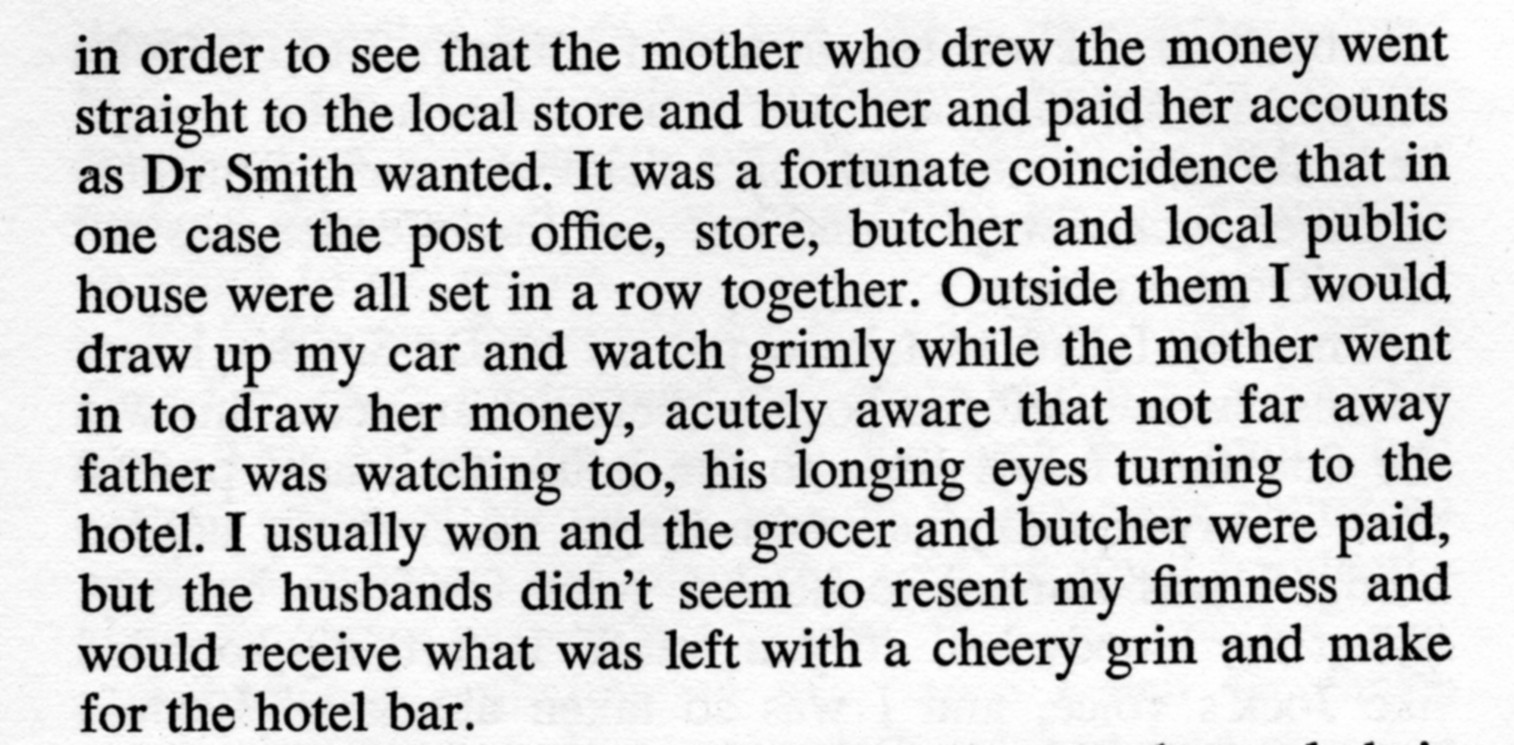
The best way to find out what happened in the past is to read first-hand accounts. The following excerpt is from a book called Nurse in the North and is by Barbara Ancott-Johnson, She worked in the Hokianga with a well-known doctor G M Smith - "Jock" - and writes here about her efforts to enforce his expectations about social security in Maori communities. As you read try to imagine such an approach happening today. Oh the screaming over privacy rights there would be;


Tapu Misa on private enterprise

Motivated by the government's plans to allow the private sector into prison management and accident insurance Tapu Misa today wades into the evils of privatisation. She ends with this;

As a former comptroller of the US, David Walker noted in 2007: "There's something civil servants have that the private sector doesn't. And that is the duty of loyalty to the greater good - the duty of loyalty to the collective best interest of all rather than the interests of a few. Companies have duties of loyalty to their shareholders, not the country."

There is something else civil servants have that the private sector doesn't. And that is access to funds that are guaranteed through the force of the state. Their jobs do not rely on producing either a good or service that customers will voluntarily meet the cost of.

I hope at some future date Tapu Misa is going to write a column slating private ownership of the media because companies only serve the interests of a few and profits go offshore. She could cite her own employer as an example.

Sunday, April 25, 2010

Coddington on Bennett

Deborah Coddington says Paula Bennett, despite being "not unintelligent", comes across as "a bit of a bint." I confess I had to consult a dictionary to confirm the meaning of bint which is a 'not too bright' woman. This is, according to Deborah, because of the content of her speech. For example, she (and John Key) over-use the word 'actually'.

We are all too familiar with lazy speech. Like, er, like, basically, it's er sort of, well, actually, like that. Absolutely, awesome (never with the -ly), piss poor communication.

I must just drop in a story here. My son's cousin knows a girl who goes to my son's school. The cousin asked her if she knew Robert. The girl replied, "He's that guy that uses big words that nobody can understand". Now that tickled both Robert and I. Robert uses interesting language because he reads a lot. Her inability to understand him isn't his problem. It's hers. Robert isn't about to change to accommodate her because he likes words. Yesterday I had cause to say to him "For goodness sake you," to which he quickly retorted "Don't you 'for goodness sake you' me," which instantly dispelled my annoyance.

Anyway here's the guts of it. We speak like the people we live with and spend time with. My message to the children is, don't use that word when there is a better one available. Don't overuse words until they lose all meaning. Don't swear often. Save your cursing for when it really matters, otherwise what will you have when the need arises?

The English language is rich. I have a responsibility to use it fully and sometimes, painstakingly. The way I communicate with my children is more important in my view than the way I feed them. The way I converse with my husband rubs off on them enormously.

But we are not conformists. We don't try to be like other people. The degradation of language and communication is a product of conformism and, a phenomenon Theodore Dalrymple identifies; the conformism is going in the wrong direction. A physical analogy is tattoos. Once a mark of lesser educated working-class men, now so-called intelligent middle class women flock to affect them. It is a sad fact that some politicians are downward conformists, not only because that is their inherent nature, but because they think it will buy votes.

I agree with Deborah Coddington. It's not good enough to say, speak how you like; that's freedom of expression isn't it? It's just evolving culture isn't it? 'I'm a Westie and proud of it'.

No. Freedom of thought and freedom of expression rely on the ability to think and communicate. Language is the tool by which we achieve both.

I am sick of the dumbing-down process. Never have I said so before because 'dumbing down' is, of itself, one of those hackneyed overused phrases. Apparently IQs are rising as the world becomes wealthier. If so, it's not particularly apparent.

Some of the worst displays of ungrammatical, grating, dull and repetitive language appear in and around sporting endeavours, from both commentators and players. Many times I have cursorily reflected to myself, all brawn and no brain (naturally a 'gender neutral' comment for those academics who do possess healthy linguistic repertoires, but nonetheless fill their written and oral communications with woolly concepts and overladen sentences). Still, the players at least use their physical abilities to best effect. The same cannot be said for commentators.

And it cannot be said for politicians.

Which brings me back to Paula Bennett. If there is merit in having an ex-beneficiary Maori single mother as Minister because she represents realised aspiration, then why not try to inspire people further? For any politician, there is no shame in being articulate.

It is a sad indictment if politicians are merely there to reflect ordinariness and lack of ambition - the characteristics that often go hand-on-hand with low-grade communication.

Saturday, April 24, 2010

Discovering 'poverty' in Japan

Apparently Japan has discovered 15.7 percent of its people are living in poverty and this is a blow to a society that has always considered itself mostly middle-class.

They made this discovery by adoption of international definitions. An example is used of a single mother raising a teenage daughter and working two jobs. She can't afford to send her daughter to vocational school, a special school that teaches animation acting. But most of the people living in poverty have enough to eat, cars and cellphones.

Contrast this to Brasilia, another story of poverty where people live in make-shift tents on rubbish dumps.

This is no doubt how Mrs Sato, the Japanese example, thinks of poverty.“I don’t want to use the word poverty, but I’m definitely poor,” said Ms. Sato, who works mornings making boxed lunches and afternoons delivering newspapers. “Poverty is still a very unfamiliar word in Japan.”

And may it stay unfamiliar. Japan is a country (as much as I know about it) that has strong families and low crime. In part that can be attributed to very limited state welfare.

When the US discovered 'poverty' and began the 'war' against it in the 1960s, all that happened was poverty became more entrenched and widespread.

If this article is anything to go by, and notice how one female academic is already talking about people not being able to participate fully in society (which is exactly what NZ officials said in 1973 before they created the DPB), then Japan may be about to start going down the same misguided pathway to not less poverty, but less prosperity.

If you doubt my warning consider that currently Japan has one in 7 children living in (let's label it accurately) relative poverty. But NZ has one in 5 living in relative poverty and most are in benefit-dependent households. Why would Japan want to copy western models of welfare?

Friday, April 23, 2010

IMF projected economic growth

The IMF have just released their outlook for economic growth in 2010-11. It contains masses of information but these two charts caught my interest given that China has now moved into the position of NZ's 2nd biggest trading partner. The US is also in the pink. I wonder if the colour use was intentional? The numbers represent % economic growth. (NZ ranks 26th in the world on GDP per capita in current prices and US dollars).


GST question

If beneficiaries,superannuitants and WFF recipients are going to get an income boost when gst rises, are they going to get an income cut if GST comes off food?

Around the newspapers

Jim Hopkins does what nobody else can better - leaves you wondering whether to laugh or cry.

Here's a man who survives the dangers of Afghanistan only to come to NZ and become of victim of something far more insidious - false rape accusations. Again it appears the complainants (female scumbags) get name suppression and no consequences. Surely this sort of vicious and malicious behaviour is almost as worrying as the physical danger taxi drivers face yet gets nowhere near the publicity.

In Taranaki a judge asks if the case of a man taking marijuana into court isn't the stupidest case of the day. The man, a mental health patient says he self-medicates to control his violence. Stupidest case or stupidest law?

Staying in Taranaki, and possibly with the theme of stupidest, Phil Goff was asked to complete the 6 word branding task it recently set members and gave it a go. Like most politicians he couldn't keep to the brief. A nearby observer did much better with 'boring and uninteresting' although even that is repetitious.

And the granddaughter from hell let's rip at a judge when she fails to convince him she has turned over a new leaf. Own goal. Definitely stupidest.

Thursday, April 22, 2010

March 2010 benefit statistics - a mixed bag

March 2010 benefit fact sheets are out.

Unemployment benefit 60,211
DPB 109,643
Sickness benefit 55,796
Invalid's benefit 84,877


Over the year to March unemployment benefit is up 62 percent ; DPB up 7 percent; sickness benefit up 9 percent; invalid benefit up 1 percent.


Over the quarter to March while the DPB also rose (+354) the unemployment (-6117), sickness (-3362) and invalid (-161) benefits fell.


Earlier in the month the Minister said;

1,110 sole parents also cancelled their DPB and went into paid work.

But more joined up to the DPB than left.


The quarterly fall in sickness beneficiaries is good but I am not sure what it means. Perhaps the December quarter had featured a temporary surge in short term recipients explaining why 2009 saw the biggest calendar year SB increase ever recorded.

The quarterly fall in the unemployment benefit is also obviously good but I still believe much of it represents a transfer to student allowances. There are still no 2010 statistics available for those.

Authoritarian National

A few days back I made a comment on Mulholland Drive about authoritarianism being in the ascendency with the National government.

This morning DPF blogs;

National has had an authoritarian streak to it recently, where they are whittling down the number of issues MPs traditionally are not whipped on. They even want to remove conscience voting on alcohol. There are MPs in National (and many party members) who support NZ becoming a Republic, and they should have been allowed to say so.

So what happened in Parliament yesterday of any value?

The Republican Bill was stopped from going to select committee. It's not a subject I have strong feelings about one way or the other but many do and it should have been debated.

ACT's bill to reintroduce a minimum youth rate was not allowed to go to select committee. There is conclusive evidence the lack of a youth rate is affecting youth unemployment.

BUT Paul Quinn's bill to further disenfranchise prisoners was given the green light to go up for public discussion. Hallelujah - not. Exactly what is taking the vote away from short term inmates supposed to achieve?

Oh and ACT voted for that too. It's not even as if there is any pattern of quid pro quo emerging whereby the Nats support ACT's bill in return for ACT supporting theirs.

My frustration with National/ACT is not unusual but DPF being very angry with them is. If that is a reliable barometer many New Zealanders must be starting to get a touch tetchy with this government.

Wednesday, April 21, 2010

More on the Declaration

A couple of quotes from separate media articles about the reasons why Canada won't sign;

Canada feels key parts of the text remain ambiguous and open to competing definitions that could, to give one example, allow native groups to reopen already settled land claims.


In his address to the General Assembly before the vote, Canada's UN ambassador, John McNee, said Canada had "significant concerns" over the declaration's wording on provisions addressing lands and resources, as well as another article calling on states to obtain prior informed consent with indigenous groups before enacting new laws or administrative measures.


And the following backs up Mai Chen's belief that the Declaration is a precursor to a more binding Convention;


Indigenous congress demands teeth for UN Declaration

THE UN Declaration on the Rights of Indigenous Peoples, achieved after a 20-year struggle, recognises the right of the world's 370 million indigenous people to autonomy, self-determination and control of their territory and resources for their own benefit.
However, as a mere declaration, it lacks the legally binding nature of UN conventions, which form part of the framework of international law. This is the goal that the leaders of native peoples are now pursuing


And just listening to the radio today, reading the blogs and newspapers etc I think Key has significantly under-estimated NZ's response to his actions and the secrecy surrounding them.

Define "temporary"

Paula Bennett was reportedly in the Hutt explaining how National's reforms would reduce welfare dependency. My reaction:

Nurturing neuroticism

Until the media told me about worried children I wasn't worried about it. Now I am worried about my 11 year-old worrying. And the writer intends to make me worry even more tomorrow and even more the day after that. And apparently stressed parents make 11 year-olds worried. Um. I think I see the solution.

Tuesday, April 20, 2010

The UN Declaration - Verbosity super-sized

Surely the United Nations Declaration on the Rights of Indigenous People could be distilled into a much smaller document. Multitudinous affirmations, re-affirmations, concerns, considerations, solemn proclamations, considerations, convictions, encouragements, beliefs, recognitions, emphases followed by 46 articles.

Here's a kicker.

Article 39
Indigenous peoples have the right to have access to financial and technical assistance from States and through international cooperation, for the enjoyment of the rights contained in this Declaration.


Translated: Maori have the right to taxpayer's money. Nothing to get enormously excited about in practice I suppose when there is already a sizeable transfer one way or another. But should National have signed up to an explicit individual right to taxpayer money based on an imprecise concept like indigeneity?

Monday, April 19, 2010

Unemployment insurance shouldn't be the priority

Revisiting an announcement from the Welfare Working Group Chair, Paula Rebstock last week, who said;

Ms Rebstock told Radio New Zealand that the employment insurance will be looked at by the Working Group.

"Right now, if you are in a relationship with someone and you become unemployed, the chances are you would not be entitled to a social welfare benefit.

"But if you are involved in an insurance scheme and you have contributed, then you would also be in receipt of an unemployment benefit for a period," Ms Rebstock told Radio New Zealand.

She said the system could be similar to Canada's Employment Insurance scheme.

"It is clearly within the terms of reference of the group," Ms Rebstock said.


When the Welfare Working Group was first announced the Minister was quite clear their job was to look at ways of reducing dependency and breaking the cycle. Most recently, “The Welfare Working Group will examine long term welfare dependence, identifying causes and solutions.”

Over recent years the unemployment benefit has not been a significant contributor to long term welfare dependence. Currently 84 percent have been on it for less than a year (at least in that current continuous spell). The numbers dropped to 22,748 (based on December quarter figures) at one point. Now they are back up to 60,00 due to the recession. Obviously the UB is very sensitive to the labour market. But generally when there is work the Unemployment Benefit numbers fall substantially. Not so for other benefits.

So it was interesting that Rebstock chose looking at unemployment insurance as her initial announcement. I am not against looking at unemployment insurance at all but it shouldn't be a priority. And while Rebstock says, "It is clearly within the terms of reference of the group" other benefits - the DPB and Invalid benefits in particular - are more in need of attention.

I sincerely hope that the 'hard stuff' will not be neglected.

Sunday, April 18, 2010

Promising a new and nauseating level of Nanny State

As the Liberal Democrats star seems to be in the ascendancy in the UK general election campaign I thought it would be timely to look at what they are promising with welfare. Britain's system is probably (with the exception of Australia's) closest to that of NZ and naturally the problems are similar. I looked but, hell, not one interesting or original idea could I find.

But something different must be building their following.

I searched on undettered and came across this glitzy teen mag lookalike pamphlet called Real Women. Go look but get your bucket ready first. Some policy examples;


Remove pre-interview sex discrimination with a ‘no name’ policy for job applications to stop employers making conscious (or subconscious) judgments about whether a woman can ‘do the job’.)

Scrap tuition fees for all part-time and full-time degree courses

Help women over 25 going back to study by paying the fees for their first Level 3 qualifications

A Citizen’s Pension for all based on residency and set above the poverty line, helping women who took time out from work to raise children. This would rise in line with earnings or inflation, whichever is higher

Recruit and train thousands more health visitors and midwives. These professionals will advise new mothers and families on parenting skills including, advice on the health of a baby and support for relationships, which can become particularly trained when a new child arrives. We would set these professionals free from meaningless targets so that they could focus on the well-being of families and children

Protect children from body image pressure by preventing the use of altered and enhanced images in advertising aimed at under 16s, through changes to Advertising Standards Authority rules. We would work with industry regulators and professionals to find ways to ensure that children have access to more realistic portrayals of women (and men) in advertising

Help women make informed choices by requiring adverts to clearly indicate the extent to which digital retouching technology has been used to create overly perfected and unrealistic images of women Encourage the British Fashion Council and design schools to ensure students are taught and judged on their ability to cut to a range of sizes and body types

Ensure that late night trains have a well-publicised ‘Secure Carriage’. This carriage would be where a guard would sit

Develop a 'stopping on request' element to night bus services so that women and men can get off the bus in between bus-stops, to minimise the distance they need to walk on their own


There you go ladies. If you don't ever want to think or do for yourself again this is the party for you. And sorry I don't have time now to go looking for their Real Men policy but anyone want a bet as to whether they have one?

Saturday, April 17, 2010

First hand look at the Tea Party supporters

Classically Liberal has a most interesting post about attending a Tea Party rally and what he found there. For one thing, a great deal of anti-immigrant sentiment;

One woman was lecturing a camera about "my country is like my house." She thought that silly analogy valid."And I have the right to say who comes into my house." I couldn't stand it any more and from where I was seat yelled to her: "It's my house too." Not being too bright she smiled, pointed at me and yelled, "EXACTLY!" To that I replied: "And I don't care who comes in." She was not thrilled with that reply.

2 days to go


The lady with the feathers and pounamu has gone to Adelaide but I still have paintings for sale at the Academy Galleries, Queens Wharf, Wellington 10am - 5pm Saturday and Sunday.

Friday, April 16, 2010

Around the blogs

School holidays combined with an exhibition has left little time for writing. Fortunately there is plenty of interest on other blogs;

Winston Smith has written movingly about a rare success story from his supported housing experience but observes;

Now, instead of holding up the likes of Catriona as a shining example that one's childhood doesn't have to pre-determine your path in life I have to listen day in day out to the disempowering mantra that young people with anti-social behaviour problems behave the way they do due to their negative childhood experiences. A convenient theory that then allows the young person to self destruct and the agents of state intervention to abdicate all responsibility.


Labour MP Kelvin Davis gets angry about Iwi benefiting from the privatisation of prisons;

I see some iwi are rubbing their hands together in glee at the prospect of being able to get rich by locking their own up.

It goes to show how high the aspirations of some of our Maori leaders are. We now aspire to bung the bros in the hinaki and watch the dollars roll in. The longer and more often we can put them away, the sooner we will be able to afford to expand the prison and lock even more away.


The Frogblog laments what they claim is the stacking of the Welfare Working Group with the "far right".

Presumably under pressure from ACT, the Government seems to be unable to resist finding places for wingnuts on the various advisory groups it is setting up. Yesterday it continued this trend by appointing Business Roundtable communications consultant and former ACT Party President Catherine Isaac (formerly Judd) to its Welfare Working Group.


Karl du Fresne nails it in his usual concise fashion;

THE LEFT keeps moaning that wages in New Zealand are too low, which is perfectly correct. They complain that the government hasn’t delivered the promised higher-wage economy – again, all true.

But just let anyone suggest that something meaningful be done to free up the economy, increase productivity and stimulate income growth – such as reducing taxes and government spending – and who’s the first to howl in protest? Why, it’s the Left.


And last but not least my friend John Ansell has written about an exhibition he went to see earlier this week. Thank you John.

Thursday, April 15, 2010

Maori and separatism

Is there an assumption amongst non-Maori that the Maori Party speaks for all Maori?

Perhaps the Maori Party MPs believe they do inasmuch as Maori who do not embrace the cultural and spiritual values of the Maori Party are not 'real' Maori.

The Maori Party is billed as a huge success yet their polling remains consistently around 3 percent despite being high profile, involved in the 'big' issues and appearing to have made some advantageous deals with National.

In Maoridom I am sure that there is no such assumption. The tribal politics and affiliations are strong. And there are plenty of business savvy Maori who don't naturally embrace the economic left and Maori who are inherently conservative.

There has always been disagreement between Maori leaders about what is the best way forward for Maori. Some preached assimilation. Others, like Apirana Ngata wanted Maori to retain their language, their customs and culture but also to take on the education and health services provided in the non-Maori world. To equip themselves for the future.

Remarkably I agree with Garth George today who writes about the Whanau Ora report;

The phrase "te ao Maori", which means "the Maori world", occurs at least 30 times in the taskforce report. I wonder about that. After all, the social welfare system, no matter how it is constituted, exists mainly in the modern Western world.

Many of the tens of thousands of people who are afflicted by poverty or otherwise disadvantaged may indeed be part of the Maori world, but they live in, and have to cope in, the modern Western world.


The Maori Party are most certainly pushing an increasingly separatist line. Yet they represent the aspirations of maybe 2 or 3 out of 12 voting age Maori (and that is assuming the significant Maori voting age population in Australia have a similar voting preferences to their NZ counterparts).

If many Maori are getting frustrated with the direction in which the Maori Party is taking Maoridom I am afraid the door will be re-opened to Winston Peters. Especially if Labour-voting Maori decide they are not wasting their vote at the next election. There is no doubt Winston has been ramping it up recently, opposing separatism but also stirring up anti-immigrant sentiment and economic nationalism. Ironically there are disaffected ex ACT voters, ultra conservatives, who might also lean his way. I say ironically because it was Rodney Hide that got rid of him.

My own frustration lies in not wanting separatism yet not wanting to deny Maori the chance to do things their way. But do most Maori want to "do things their way"? Isn't it about time we were talking about "our way"? I want to hear more from Maori who want to put aside the division but I don't want to hear it from Winston Peters.

Tuesday, April 13, 2010

Welfare Working Group announced

Members of the Welfare Working Group include:

• Ms Paula Rebstock (Chair)
• Professor Des Gorman
• Professor Kathryn McPherson
• Associate Professor Ann Dupuis
• Ms Catherine Isaac (formerly Judd)
• Ms Sharon Wilson-Davis
• Mr Adrian Roberts
• Ms Enid Ratahi Pryor.


According to the Minister's press release;

Based on past trends and current policy settings, the proportion of New Zealanders receiving long-term benefits is expected to increase unabated. The fiscal, social and economic costs of that are unsustainable.

Somewhat similar to what the header of this blog says.

I notice a number in there.

Taxpayers currently spend $7.6 billion per annum on main benefits.

A couple of weeks back I posted about the total of $4.8 billion being bandied about all over the media and said it was too low and the real cost is likely to be over $7 billion.

The erroneous $4.8 billion came directly from the Ministry:

345,000 New Zealanders currently receive a benefit, costing taxpayers $4.8 billion a year.

Anyway, good luck to them. One can only hope that if they offer up anything useful the government will have a more constructive response than to the Taskforce 2025 (which already made recommendations about reducing welfare)

When DPB pays more than the average female worker's income

From the Future Focus fact sheets we learned;

A sole parent, with two dependent children, renting in Auckland on DPB could receive approximately $580 per week including Accommodation Supplement and other allowances. A sole parent, with two dependent children, renting in the South Island on DPB could receive approximately $500 per week including Accommodation Supplement and other allowances

Using Statistics NZ Average Weekly Earnings (Employees) by Industry (ANZSIC06) and Sex (Qrtly-Mar/Jun/Sep/Dec) I produced a chart showing how these payments compare.


The point of this chart is to illustrate that choosing motherhood over work is entirely economically rational.

Comments and provisos

- tax applied 21c in the dollar
- a single mother (or other low income workers) employed in a low paying job may qualify for family tax credits, accommodation supplement etc
- the average earnings take no account of region whereas the DPB payments do
- If the DPB recipient has fewer than 2 children the weekly payment is lower; if she has more it is higher

(Inspired by Dynamic Benefits, produced by the UK Centre for Social Justice, undoubtedly the source of this piece by Fraser Nelson;

If an unemployed Pole gets a job as a barista in Starbucks, even for 15 hours a week, his situation improves dramatically. A young man in Britain would be just £10 a week better off than if he stayed at home on benefits. Why break your back for an extra tenner?

The situation is even more pernicious for young women who leave school with low qualifications, because the alternative to low-paid work is pregnancy. A woman with one child and on benefits has, on average, more disposable income than a hairdresser or teaching assistant. With two children, it's more than a receptionist or library assistant. With three, it's a lab technician, typist or bookkeeper. So there should be no mystery about why Britain came to have so many children in workless households (one in five, the highest in Europe). The young mothers, and the young men on benefits, are walking down a road to dependency paved for them by the state.

This is a peculiar definition of compassion. What Beveridge denounced as the "giant evil" of idleness is now being incubated on a mass scale by the very welfare state designed to eradicate it. As Britain positions itself for a recovery, this raises an ominous question for a prospective Conservative government: will it do any better? If the economy is to recover, might it simply suck in more of these industrious, hard-working immigrants while leaving between five and six million British people on out-of-work benefits?


Hat-tip also to The Welfare State We Are In)

Benefit statistics - what the numbers mean

Yesterday the Minister of Social Development pre-empted the release of the March quarter benefit numbers. The good news is total welfare benefits dropped by 20,662.

However, when the economy is not in recession that is a normal development.


Analysis of a similar drop between December 2006 and March 2007 shows that the drops on UB (10,000) and DPB (3,000) were larger than the Minister is indicating for the most recent quarter, respectively 6,000 and 1,000.

So a fair chunk of the drop is off benefits other than the 4 main benefits.

In December 2009 there were 12,096 unemployed students receiving the Unemployment Benfit - Student - Hardship. This compares to 7,997 in December 2006. So in December 2009 50 percent more students were on the dole and many of those will now have transferred onto a student allowance.

So we are beginning to see where most of the drop is and it isn't so much about leaving welfare but transferring onto another form of it.

If there had been any significant reduction in either the sickness or invalid's benefit I am sure we would have been hearing about it.

Monday, April 12, 2010

Contradictory crime figures

Reading two pieces back-to-back highlighted a significant error in the first. The error was immediately noticeable and I didn't think I could be bothered blogging about it. But the second caused me to reflect yet again about the misinformation that is spread via the media.

In the NZ Herald, Tapu Misa writes:

Crime went up last year, the biggest real increase in years. Murders were up by 25 per cent, the 65 recorded homicides being the highest in a decade. And violent crime was up by 8 per cent per capita.

In the DomPost, John Hartevelt writes:

Police statistics issued this month showed violent crime was up by 9.2 per cent to 65,465 offences last year. There was a jump in recorded homicide offences – up by more than 20 per cent to 134 last year.

Misa has reported homicides at less than half of the true number. There were 65 murders but it is a significant mistake to interchange the two.

In this column she rails against three strikes, blames increased crime on increased joblessness, discusses the causes of falling crime in the US (including the discredited abortion theory), pans the 'broken windows' revolution and the Californian application of three strikes. All of which is a discussion that will no doubt be addressed by Garth McVicar or David Garrett given the chance (although the NZ Herald doesn't appear to publish responses to Misa).

One theory about a cause of dropping US crime is neglected however. She wouldn't want to find anything in favour of welfare reform.

Strong families and employment are protectors against crime. Both are diminished by out of control welfare. Crime in the US dropped as welfare dependence diminished.

If lower socio-economic men continue to be displaced from their roles as father and provider then more crime is on the cards. And it is guaranteed to continue through to the next generation via any children he produces.

Sunday, April 11, 2010

Matt McCarten's misapprehension

The left - and probably many on the right for that matter - do not understand what privatisation is.

Just because taxpayer funding is allocated to people who are not directly employed by the state, it does not follow that privatisation has occurred. The contracts are still publicly funded and the taxpayer has no choice about providing the means.

Whanau ora is not privatisation.

Privatisation of welfare would require that social services and cash assistance were provided by agencies that fund themselves through corporate backing, investment, business ventures, individual donations etc. That is, the funding is provided by willing contributors.

The wages and salaries of those practitioners of whanau ora will still be paid by the state, albeit indirectly.

To use Matt's quotation, "... big f***ing deal."

Saturday, April 10, 2010

UK: life in state-provided 'supported housing'

Winston Smith has just updated his blog with his usual cutting-through-the-crap humour;

After reading about Cameron’s plan to turn the lives of yoofs around it got me thinking about all the harebrained plans and policies I have to work with. In fact, right outside the office on a notice board there is one outlining our policy on Keyworking (a.k.a Support Working, Link Working just in case anyone finds the term Keyworking offensive they have options). The policy outlines all the different qualities that the resident’s personal assistant, sorry KeyWorker, should exude, thus instilling at a young age that the state is there to serve you before you have done anything in service of the state. Most notable of all though is the definition of what keyworking purports to do: “helping you to realise your goals in order to move forward in life.” This definition doesn’t allow for the fact that many of our 16-25 year old residents don’t have goals beyond getting as wasted as they can on a regular basis. This then involves me having to support them in setting some goals all the while being “careful not to impose one’s own value system” as one manager put it to me recently. The residents who don’t have goals never turn up for their Keyworking sessions and have to be threatened with eviction to engage in setting goals they don’t aspire towards. All of this is recorded, monitored and audited by layers of state financed bureaucrats.

Then there are those residents, usually the older ones but not always, who have goals and aims and are progressing and just want to be left alone to do so which they should be permitted to do. They resent formal support plans that state obvious goals like: continue to pay your rent, go to work etc. etc. They can’t understand and neither can I, why all this needs to be written down and why they have to talk about it every two weeks for an hour. They feel patronised for having their lives interfered in and they are right. However, as they can’t afford to rent properties of their own due to unjust rents they are forced to adhere to the state’s ludicrous interference to qualify for a roof over their heads.

Getting stuff done

It's not much after 9am. David has gone to work and I have done the week's grocery shopping, have today's washing on the line, the dishwasher is emptied, animals fed, beds made, a couple of blog entries before that and...the day is mine. I can read, paint, garden, walk the dog, study horse form, do a jigsaw with Sam.

This post was prompted by a remark the checkout girl made to me earlier.(She's a student who has recently been studying in Leeds reading politics and art history). She said she wished her parents were as organised as I am. That they would do a proper shop instead of buying in dribs and drabs and that she had offered to do it for them but to no avail. I was surprised at her frustration but it caused me to reflect on why I am the way I am.

It goes back to a teacher. She was deputy principal and an utter battle-axe. She would yank an illegal piece of jewellery off your neck if she caught sight of it. But she was very kind to me when I was in the sick bay - a monthly unpleasant occurrence.

One day in assembly she told us that people regarded her as very efficient. "But you know what?" she said. "I am not. I am lazy. But I like to get what needs to be done out of the way so I can do what I want to do, which includes lazing around if I want to."

In a practical sense that is the philosophy I live by. It was bloody good advice.

Explaining what a libertarian is

Highly recommended article here for those people who can't tell the difference between liberals, conservatives and libertarians.

I used to be a Kennedy-style "liberal." Then I wised up. Now I'm a libertarian.

But what does that mean?

When I asked people on the street, half had no clue.

We know that conservatives want government to conserve traditional values. They say they're for limited government, but they're pro-drug war, pro-immigration restriction and anti-abortion, and they often support "nation-building."

And so-called liberals? They tend to be anti-gun and pro-choice on abortion. They favor big, powerful government -- they say -- to make life kinder for people.

By contrast, libertarians want government to leave people alone -- in both the economic and personal spheres. Leave us free to pursue our hopes and dreams, as long as we don't hurt anybody else.


More.


Read through to the last lines because that is the crux of it for me.

Boaz indicts the welfare state for the untold harm it's done in the name of the poor.

"What we find is a system that traps people into dependency. ... You should be asking advocates of that system, 'Why don't you care about the poor?'"

The "don't know" line is missing

The latest Roy Morgan poll. Not that I was asked, but if I had been, my answer wouldn't be represented.

We could try a mini (probably very mini on a Saturday) poll here. How many of you, if there was an election to be held next Saturday, don't know who you would vote for - or wouldn't vote at all?


There is a danger I will return to my non-voting status. With a big difference. When I was young I didn't vote because I didn't know or care enough.

Friday, April 09, 2010

What difference will whanau ora make?

Whanau Ora is a restructuring of welfare services. There is no indication yet that welfare benefits are involved. Whanau ora promises to work with and reduce dysfunctional families. Dysfunctional families experience a range of negative occurrences; truancy, domestic violence, drug and alcohol abuse, teenage pregnancy, criminal offending, poor physical and mental ill-health are some.

Dependence on benefits is a big driver of dysfunction. Benefits - or a guaranteed weekly payment from Work and Income regardless - absolve people from working for a living and having positive, constructive and co-dependent relationships with other whanau members. Benefits allow people to live outside of functioning society. Welfare services evolve as a response to this dysfunction. Services may ameliorate some of the problems but a significant reduction cannot be possible while the prime driver - benefits - remains unchanged.

The taskforce report used an example of a working single mother whose children were going off the rails and was having to deal with various authorities. This example isn't typical however. The Early Start programme, the only programme that has systematically identified the neediest families, provided services to them and compared the outcomes to a control group that did not receive services, found 90 percent of their clients were on welfare. The problematic working mother does fit however with Tariana Turia's view that women should be allowed to stay on the DPB until their youngest dependent child completes his or her schooling.

It is possible that Maori will be better providers of welfare services for Maori people. John Tamihere maintains his trust can reduce youth offending if given ample resourcing. But it is difficult to see by what mechanism whanau ora is going to ensure people 'meet their obligations' unless the trust also controls benefit inflow into the dysfunctional families they aim to assist. That eventuality may still be a whanau ora goal. In the past trusts or agents have been appointed to manage benefits. As it stands however there is no intimation this is going to happen. The report specifies that there is, "... no expectation iwi would fund core services such as health or unemployment benefits."

The government claims that the 20 new whanau ora contracts will be a fiscally neutral policy. Funding will be drawn from the existing Health, Social Development and Maori Development budgets. This can only mean that there will be winners and there will be losers. We have yet to see which service providers are going to have their funding cut or lose it altogether.

The whanau ora concept focuses on the family and their collective responsibility. But in my experience working in a voluntary capacity with needy families, there is usually one (or two) individuals that pull the whanau down. Who make their own problems everybody else's. For instance Corrections complains about imprisoned whanau members pressuring their relatives to bring drugs into prison. This can take the form of intimidation or physical threats. Hence the dysfunction multiplies. However the problem still begins with, and must be resolved by, the individual.

Perhaps it is time to start talking more about personal responsibility instead of collective responsibility. When the US decided to grab welfare dependence and all the attendant dysfunction by the neck and give it a good shake they did so via new legislation called the Personal Responsibility and Work Opportunity Reconciliation Act(PRWORA). President Clinton told Americans welfare, as they had known it, would change. In the majority of cases welfare became strictly short term assistance, the aim being to restore the incentive to rely on one's own efforts and avoid self-destructive behaviours .

Simply changing the way services are provided will only scratch the surface if the current benefit system remains unchanged.

Update; Talking to Larry Williams on NewstalkZB (starts 55:02)

Thursday, April 08, 2010

Whanau ora - overhyped

Turia has been appointed Minister of Whanau Ora. The media is billing whanau ora as potentially the biggest shake-up in welfare in decades. But whanau ora is about welfare services - not welfare cash transfers. There is nothing in the report released today that would indicate whanau ora providers will take over administration of benefits.

How much can whanau ora be expected to achieve in terms of changing behaviour - or as John Tamihere would put it, getting beneficiaries/clients to meet their obligations - when services and benefits are separate? It is like tasking a group within a large company with lifting worker's productivity but giving it no capacity to penalise or reward either motivated or lazy workers. So while some are hailing this development as a great step forward, I will wait and watch.

Whanau ora is about the whole of family approach. Personally I have seen high risk whanau where one (or two) bad eggs keep pulling others down. 'Blood is thicker than water' does not serve Maori well in this respect. So increasing the well-being of the whanau still rests on the individual and his or her efforts.

The "lucky" country thinks big

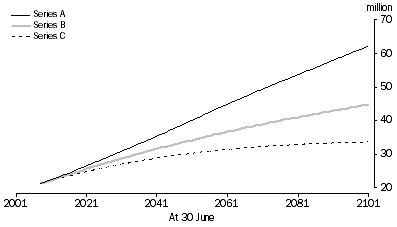
The Age is reporting that the Australian Treasury has predicted their population will grow to 36 million by 2050. The roughly matches what the Australian Bureau if Statistics are forecasting as well.

Australia's estimated resident population (ERP) at 30 June 2007 of 21.0 million people is projected to increase to between 30.9 and 42.5 million people by 2056, and to between 33.7 and 62.2 million people by 2101. Series A projects the highest growth, while Series C projects the lowest growth.


In contrast Statistics New Zealand is predicting the following for New Zealand;

Low fertility and the ageing of the large baby boom cohort have raised the prospect of slow or no growth in the future. Regardless of which projection is chosen, the general demographic outlook for New Zealand over the coming decades is for slowing growth, a narrowing gap between births and deaths, and an ageing population. This is a radical departure for a society accustomed to a growing population. Any innovative or expansionist planning or business programme must take account of structural shifts in progress.


This graph is from 2000, but even latest population projections - June 2009 - are only slightly higher:

The latest projections of New Zealand's population have the estimated resident population (provisional) at 30 June 2009 as a base. Projection series 5 presented here assumes that:

* New Zealand women will have 1.90 children each on average in the long-term (below the 2.1 children required for the population to replace itself without migration)
* life expectancy at birth will increase to 85.6 years for males and 88.7 years for females by 2061
* there will be a net migration gain of 10,000 people each year from 2013 onwards.

Given these assumptions, New Zealand's population is projected to grow from 4.32 million in 2009 to 5.15 million in 2031 and 5.75 million in 2061.


There are people who celebrate low or zero population growth. I am not one. The economic reality is that dependency ratios are growing and without an expanding working-age pool (what might be expected from net migration) NZ is facing massive problems.

Wednesday, April 07, 2010

The distortion of the DPB

Yesterday beneficiary advocate Paul Blair was back in the news claiming the Ministry of Social Development is acting illegally. He is trying to get people who have been relegated from an invalid's benefit to a sickness benefit to come forward and form a body that will take the department to court. Mr Blair describes himself as a qualified barrister. Listening to him interviewed by Sean Plunkett this morning he lacks the discipline and gravitas one might associate with that of a practitioner of the law.

Mr Blair has nevertheless succeeded in his past endeavours to bend MSD policy to his will. In 2004 he and two other fathers took a case against the department described by the NZ Herald as follows;


Three Rotorua beneficiaries have forced a law change for single parents with split custody of their children through an out-of-court settlement with the Social Development Ministry.

On October 1, 1991, a law was introduced to stop two parents living apart, but who had split custody of their children, from both getting the Domestic Purposes Benefit.

One was eligible for the sole-parent benefit and all the benefits that went with it, while the other was entitled to the unemployment benefit.

Rotorua beneficiaries advocate and sole parent Paul Blair argued that this was not fair as the parent receiving the DPB was entitled to earn more when working than the parent on the dole.

Parents on the DPB were also entitled to childcare subsidies, a non-recoverable training incentive allowance if attending a course, and did not have to be work-tested.

Rotorua sole parents Leon Broughton, Richard Amoroa and Mr Blair started legal proceedings in the High Court at Rotorua against the chief executive of the ministry more than a year ago.

In the out-of-court settlement, the ministry agreed the second parent in split-custody cases would be entitled to the emergency maintenance allowance, paid at the same rate as the DPB and with similar advantages.

Justice Alan McKenzie ordered the ministry to review the plaintiffs' benefits, pay any arrears, treat all similar cases in the same way and review cases as far back as December 12, 2000.


This is an utter distortion of how the DPB was intended to operate; the state paying for the mother (or father) to care for the dependent children while the liable parent contributes to this payment through earned income.

Another Court of Appeal case, the Ruka Case, also saw the original intention of the DPB distorted by a ruling that stated where a women was living in a relationship with a man who was abusive and not financially or emotionally supportive she could not be legally described as 'living in the nature of a marriage'. Therefore she could continue to receive the DPB. Thousands of past decisions were scrutinised under the new ruling, overturned and financially recompensed. Note now that as long as a man is violent and doesn't support his partner she can stay on welfare. A bitter irony given an original aim of the DPB was to enable women to leave abusive relationships.

Of course there are many other ways in which eligibility for the DPB has been distorted. These are just two of the more counter-productive examples.

Shattered myth

Some news for those of us who had to be forced to eat fruit and veges as kids, continue to force ourselves to eat fruit and veges as grown-ups and force our children to eat fruit and veges because THEY WILL MAKE YOU LIVE LONGER.

All that angst and resentful compliance may have been a complete waste of time.

However, having believed it for so long I am not about to relinquish my prejudice and share this revelation with the children. When they ask, "What's to eat?" my standard response will continue to be, "Get a piece of fruit."

(They only listen to me sometimes but this at least reduces the amount of junk food they might otherwise consume. And I need to indulge myself. I always feel like a better mother when I feed them fruit and veges.)

Once a lag, always a lag?

A friend once described to me how she and two others had gone to prison to visit a gang president to 'buy' her partner's freedom. She stayed in the car but was quite explicit about the intent of the visit and which gang was involved. And I have no reason to doubt the story.

I recalled this episode just now when reading about Jack Yorke, who similarly struck a deal to obtain his release. Looking at the region it may well be the same gang. Unfortunately for Mr Yorke, when the person with whom he had struck the deal died, new blood started demanding money to uphold the agreement. It's so despicable. Yorke, probably something of a wreck from hard living and on a sickness benefit, stole some property to pay the ransom. Then he confessed to the police. It was his first conviction in the 6 years since being released from jail.

Now he is being sent back to prison for 15 months with "special release conditions to assist in rehabilitation."

This raises a few questions in my mind.

1/ What, if anything, is being done about the blackmailing of Mr Yorke?

2/ What is 15 months in prison supposed to achieve? Would it be preferable to spend the $91,000 it costs to house a prisoner each year on buying Yorke a new identity and shipping him off somewhere? In prison it is going to cost 6 times what it currently costs to support him and the fact he stayed out of trouble after 2004 would suggest he is over his life of crime, worn-out most likely.

3/ If Mr Yorke is subject to threats and intimidation on the outside, what chance the authorities can keep him safe on the inside?

4/ And, of course, is Mr Yorke telling the truth, but I am prepared to give him the benefit of the doubt.

But perhaps the hard-liners would say, tough. He has to be punished and if he didn't want to do the time, he shouldn't have done the crime. Perhaps Mr Yorke is about to get his comeuppance for his previous life of offending.

And that is exactly where I part company from the hard-liners. Yes, I actually have some sympathy for this character because I imagine he is a burnt-out shell of a man who no longer poses a threat to society. There are plenty more like him hence very few old men are in prison. But more importantly the way the justice system is dealing with him seems to defy logic. There must be better outcomes available for both Yorke and the taxpayer. Surely.

Tuesday, April 06, 2010

11 percent of 16-24 year-olds on welfare

At December 2009 there were 62,580 16-24 year-olds on welfare,

View the benefit type, age and regional breakdown here.

Only 36 percent of them were on the dole. 35 percent were on the DPB.

(One 16 or 17 year-old was on a Widow's benefit.)

Just over 1 in 10 may not seem remarkable but in higher socio-economic areas the number will be negligible. And in the poorest areas the number will be around 4 or 5 in 10. That's where being on welfare is normalised behaviour.

Is Work and Income toughening up?

According to the NZ Herald people are being bumped off the invalid's benefit and onto a sickness benefit ahead of the new rule changes. The health advisers involved are not a new appointment though. It may be that after the release of last year's auditor general's report, which found a lack of progress in the application of Labour's changes, they have stepped up activity.

The story may also be the result of Rotorua beneficiary advocate and activist Paul Blair getting busy again. Paul Blair has previously taken the Ministry of Social Development to court in order to secure a rule change that allowed single parents to split the custody of their children, both go on the DPB and avoid work-testing.

So what do statistics show? The March quarter statistics are not out yet. But those up to December 2009 show an increase in both benefits. Within that picture it is entirely possible more people than usual are being transferred from IB to SB hence the steep rise on SB. But the inflow onto IB is still greater than the outflow.


These graphs show that around 55 working-age people out of 1,000 rely on a sickness or invalid's benefit. This compares to 24 in 1991. Something has to be done to reverse the growth trend. Putting someone on a shorter term, lower paying benefit might provide the encouragement they need to look for a different or supplemental source of income.

Monday, April 05, 2010

Methadone dispensing under increasing scrutiny in Scotland

In NZ there around 4,500 people on the methadone programme.

In Scotland, where the population is only 5 million, there are 22,000 on methadone.

As my husband noted, there must be long queues at the pharmacies in the morning.

It is no wonder that methadone has become a political football in Scotland but expense is a red herring. Methadone itself isn't expensive but the management of patients and dispensing adds up.


A coalition of world experts in drug abuse have defended the use of methadone to treat heroin addicts and warned that curtailing its prescription would bring about a spike in overdoses, crime and HIV.

In a letter to The Scotsman, the group, comprising dozens of international specialists, have condemned the "continuing misrepresentation" surrounding the effectiveness of the heroin substitute and rejected claims that is too expensive.

The defence of methadone by the coalition of GPs, psychiatrists, counsellors and epidemiologists comes in the wake of growing criticism of the treatment and accusations that the Scottish Government has become overly reliant on the drug.

Last week, Professor Neil McKeganey, the director of the Centre for Drug Misuse Research at the University of Glasgow, argued that more effort was required to get Scotland's addicts off drugs through abstinence.

Blog stats


Last month there were over 7,000 visits. A new milestone. Ta very much.