"E ngā mana, en ngā reo, e ngā karangatanga maha. Tēnā kotou.
Greetings. It’s my special privilege to address this nation today about Ihumātao because it’s an issue that goes to the heart of who we are as a country. This Government believes in shared prosperity, and I want to tell you what that means in relation to Ihumātao.
I’ve heard some barracking that I should provide leadership on this situation, but curiously that’s where the alternative ‘leadership’ stops. So, as Prime Minister, please allow me to lay out how our nation will find its way through this impasse.
First, let me acknowledge something. It’s wrong that the land at Ihumātao was taken against the wishes of its owners in 1863. But lest we forget, that land was taken by conquest before then. That was wrong, too."
More at Magic Talk
Sunday, September 01, 2019

Fewer Men Celebrate Father's Day
Saturday, 31 August, 2019 - 19:58
'Families: Ever Fewer, or No Children: How Worried Should We Be?' - a new report just released by Family First NZ - drew attention to New Zealand's all-time low fertility rate of 1.7 births per woman in 2018.
Fewer women are becoming mothers. 16 percent of 45-49 year-old women were childless at the 2013 Census - almost double the 9% in 1981. But international data shows even fewer men are becoming fathers.
Report author Lindsay Mitchell says, "Childlessness affects more men than women. In the absence of New Zealand data, two countries with total fertility rates not dissimilar to New Zealand - Norway at 1.56 in 2018 and the US at 1.728 in 2018 - have collected data relating to childless males."
According to Science Norway: "Fertility figures from Statistics Norway show that fewer and fewer men in Norway are fathering children. The share of men who are childless at age 45 rose from 14 percent in 1985 to 23 percent in 2013. The share of women who had not become mothers by age 45 increased from 10 percent in 1985 to 13 percent in 2013."
In the United States, 2014, the US Census Bureau reported, "Just under a quarter of U.S. men between ages 40 and 50 were childless."
These percentages are unsurprisingly similar and quite likely to mirror male childlessness in New Zealand.
'Families: Ever Fewer, or No Children: How Worried Should We Be?' - a new report just released by Family First NZ - drew attention to New Zealand's all-time low fertility rate of 1.7 births per woman in 2018.
Fewer women are becoming mothers. 16 percent of 45-49 year-old women were childless at the 2013 Census - almost double the 9% in 1981. But international data shows even fewer men are becoming fathers.
Report author Lindsay Mitchell says, "Childlessness affects more men than women. In the absence of New Zealand data, two countries with total fertility rates not dissimilar to New Zealand - Norway at 1.56 in 2018 and the US at 1.728 in 2018 - have collected data relating to childless males."
According to Science Norway: "Fertility figures from Statistics Norway show that fewer and fewer men in Norway are fathering children. The share of men who are childless at age 45 rose from 14 percent in 1985 to 23 percent in 2013. The share of women who had not become mothers by age 45 increased from 10 percent in 1985 to 13 percent in 2013."
In the United States, 2014, the US Census Bureau reported, "Just under a quarter of U.S. men between ages 40 and 50 were childless."
These percentages are unsurprisingly similar and quite likely to mirror male childlessness in New Zealand.
Friday, August 30, 2019
Ever Fewer or No Children, How Worried Should We Be?
MEDIA RELEASE
FAMILY FIRST NEW ZEALAND
30 August 2019
Pros and Cons Of “All-Time Low” Fertility Rate - Report
New Zealand's total fertility rate has reached an all-time low, with an average of 1.71 children per woman in New Zealand, well below population replacement level.
“Families: Ever Fewer or No Children, How Worried Should We Be?“ - a new report from Family First NZ - looks at the reasons behind falling fertility, and discusses what might influence future trends.
Report author Lindsay Mitchell says, "In the past, government policy could positively affect the size of families. The Universal Family Benefit strongly influenced peak fertility in 1961 when women had an average of 4.3 children. But as females have become better educated and increased their work force participation, more have chosen to have fewer or no children. Economic pressures like student debt and insecure employment play a role. And now they face additional pressure from environmentalists. Meanwhile, policy interventions appear less and less effective."
The report examines the historical context of family size; identifies some of the underlying factors affecting fertility rates, including derivation, marital status, ethnicity and ageing mothers; discusses the implications of smaller families; and analyses some of the policies which could reverse the shrinking family. It also reviews other countries’ efforts to incentivise fertility.
“To date, New Zealand has been complacent about its total fertility rate because firstly, it fluctuated around replacement rate for a long period, and secondly, it was higher than most other OECD countries. Now we are trending down to resemble many other European and Asian nations struggling to boost fertility. As New Zealand’s fertility rate falls progressively further below population replacement level, the need to address the issue becomes more urgent."
“Without population replacement or growth, economies decline. A nation's strength lies in its young: their energy, innovation, risk-taking and entrepreneurship. The new blood drives the exchange of ideas and experimentation. If these attributes aren't home-grown, they have to be imported. At an individual level, single person households are the fastest growing household type in New Zealand. Increasingly people face old-age with few or no family supports.”
“These are just some of the big picture considerations New Zealanders need to be thinking and talking about.”
“The matter of fertility is critical to New Zealand’s future. If not actively worrying about the shrinking family, at the very least the topic should feature regularly in our private and public conversations.”
"Ultimately, whether or not people choose to have a child or children is a highly personal matter, but they shouldn't be denied balanced information to help them decide."
Report
FAMILY FIRST NEW ZEALAND
30 August 2019
Pros and Cons Of “All-Time Low” Fertility Rate - Report
New Zealand's total fertility rate has reached an all-time low, with an average of 1.71 children per woman in New Zealand, well below population replacement level.
“Families: Ever Fewer or No Children, How Worried Should We Be?“ - a new report from Family First NZ - looks at the reasons behind falling fertility, and discusses what might influence future trends.
Report author Lindsay Mitchell says, "In the past, government policy could positively affect the size of families. The Universal Family Benefit strongly influenced peak fertility in 1961 when women had an average of 4.3 children. But as females have become better educated and increased their work force participation, more have chosen to have fewer or no children. Economic pressures like student debt and insecure employment play a role. And now they face additional pressure from environmentalists. Meanwhile, policy interventions appear less and less effective."
The report examines the historical context of family size; identifies some of the underlying factors affecting fertility rates, including derivation, marital status, ethnicity and ageing mothers; discusses the implications of smaller families; and analyses some of the policies which could reverse the shrinking family. It also reviews other countries’ efforts to incentivise fertility.
“To date, New Zealand has been complacent about its total fertility rate because firstly, it fluctuated around replacement rate for a long period, and secondly, it was higher than most other OECD countries. Now we are trending down to resemble many other European and Asian nations struggling to boost fertility. As New Zealand’s fertility rate falls progressively further below population replacement level, the need to address the issue becomes more urgent."
“Without population replacement or growth, economies decline. A nation's strength lies in its young: their energy, innovation, risk-taking and entrepreneurship. The new blood drives the exchange of ideas and experimentation. If these attributes aren't home-grown, they have to be imported. At an individual level, single person households are the fastest growing household type in New Zealand. Increasingly people face old-age with few or no family supports.”
“These are just some of the big picture considerations New Zealanders need to be thinking and talking about.”
“The matter of fertility is critical to New Zealand’s future. If not actively worrying about the shrinking family, at the very least the topic should feature regularly in our private and public conversations.”
"Ultimately, whether or not people choose to have a child or children is a highly personal matter, but they shouldn't be denied balanced information to help them decide."
Report
Wednesday, August 21, 2019
More Clinton than Trump
Here is the latest $74,000 rate-payer funded 'artwork' to grace the rooftops of Wellington.
People don't like it. I do. And after discussing it with my year 3 art student daughter get some of the rather dubious connotations.
Yesterday Stuff asked passersby for their reaction:
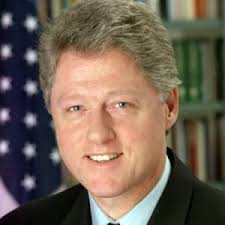
The Trump paranoia, obsession, mania, call it what you will, results in people seeing him everywhere. In fact the face has more similarities to Bill Clinton than Donald Trump.
Whoever - if anyone - it is styled on, the work has done exactly what the artist wants: caused a stink.
And from the council's point of view it will fulfill its stated purpose of attracting more people to Civic Square.

People don't like it. I do. And after discussing it with my year 3 art student daughter get some of the rather dubious connotations.
Yesterday Stuff asked passersby for their reaction:
Ruhe said his peers had compared the sculpture to Donald Trump's face.
The Trump paranoia, obsession, mania, call it what you will, results in people seeing him everywhere. In fact the face has more similarities to Bill Clinton than Donald Trump.
Whoever - if anyone - it is styled on, the work has done exactly what the artist wants: caused a stink.
And from the council's point of view it will fulfill its stated purpose of attracting more people to Civic Square.

Friday, August 16, 2019
Oranga Tamariki "Euro-centric"
The Minister for Children, Tracey Martin, yesterday attended a hui to talk about the changes at and failings of Oranga Tamariki.
Also attending the hui was Annette Sykes, activist lawyer, who said,
"Yes Oranga Tamariki has transformed, but the culture of practices hasn't, it's essentially Euro-centric."
The Maori child mortality has improved vastly under whatever practices were and are being advanced in the field of child health and safety.

The infant mortality rate was down to 3.8 deaths per 1,000 live births in 2018, compared with 5.0 per 1,000 in 2008, Stats NZ said today.When it comes to child safety there are basic practices that transcend culture. The minister should have the gumption to say so.
Infant mortality for Māori dropped from 6.7 in 2008 to 4.9 in 2018.
Her response was, "Nothing will change unless Māoridom gets the chance to design it [new systems of state care]."
Well hell I thought that's what whanau ora was all about.
While all this political bickering goes on, all 'transformation' really takes is for one individual to assume dedicated care of a child.
Tuesday, August 13, 2019
Unemployment rate down - benefit numbers up
According to Statistics NZ:
Many have expressed puzzlement over this given Jobseeker benefit numbers are rising. As a percentage of the working age population the number rose from 4.2 to 4.5 percent over the year to June 2019.
How can this be explained.
First we need to look at the denominator.
In the case of the Jobseeker benefit the denominator is the working age population defined as 18- 64 year-olds.
The unemployment rate uses a denominator also called the working-age population but is defined as "the non-institutionalised population 15 years and over, who usually live in New Zealand."
So apples are not being compared with apples. 15,16 and 17 year-olds are counted when calculating the unemployment rate.
Of course this has long been the case and it's the trend that matters.
But it may be that demographic changes are more influential in the low unemployment rate than the health of the economy.
If the cohort size of the 15-17 year-olds is larger than previously, that will lower the resulting unemployment rate. As these cohorts mature they will start affecting the older working age population used by MSD.
Immigration is also effecting the denominators constantly.
What we do know for sure is that those on Jobseeker benefits; 136,233 at June 2019, are actual numbers.
All other percentages are estimates.
Note also that last time the unemployment rate was so low, according to Stats NZ, 3.8% in June 2008 the numbers on the unemployment benefit were also very very low:


258,317 people were on any type of benefit at June 2008 - or 9.9% of the working age population
291, 969 people were on any type of benefit at June 2019 - or 9.7% of the working age population
Absolute numbers up - percentage down.
Not much in it though and sad to say, this might be as good as it gets.
The seasonally adjusted unemployment rate fell to 3.9 percent in the June 2019 quarter, down from 4.2 percent in the March 2019 quarter, Stats NZ said today.That's a drop over the year to June 2019 from 4.4 to 3.9 percent.
This is the lowest unemployment rate since the June 2008 quarter, when it was 3.8 percent.
Many have expressed puzzlement over this given Jobseeker benefit numbers are rising. As a percentage of the working age population the number rose from 4.2 to 4.5 percent over the year to June 2019.
How can this be explained.
First we need to look at the denominator.
In the case of the Jobseeker benefit the denominator is the working age population defined as 18- 64 year-olds.
The unemployment rate uses a denominator also called the working-age population but is defined as "the non-institutionalised population 15 years and over, who usually live in New Zealand."
So apples are not being compared with apples. 15,16 and 17 year-olds are counted when calculating the unemployment rate.
Of course this has long been the case and it's the trend that matters.
But it may be that demographic changes are more influential in the low unemployment rate than the health of the economy.
If the cohort size of the 15-17 year-olds is larger than previously, that will lower the resulting unemployment rate. As these cohorts mature they will start affecting the older working age population used by MSD.
Immigration is also effecting the denominators constantly.
What we do know for sure is that those on Jobseeker benefits; 136,233 at June 2019, are actual numbers.
All other percentages are estimates.
Note also that last time the unemployment rate was so low, according to Stats NZ, 3.8% in June 2008 the numbers on the unemployment benefit were also very very low:


At that time there were many more on DPB and the Sickness benefit.
For all the jiggery pokery here's the bottomline:
291, 969 people were on any type of benefit at June 2019 - or 9.7% of the working age population
Absolute numbers up - percentage down.
Not much in it though and sad to say, this might be as good as it gets.
Wednesday, July 31, 2019
Ethnicity matching
"The state thinks it's ok to place children outside their genealogical links."
This from Dame Tariana Turia speaking at the 'Hands off our Tamariki' rally at parliament yesterday.
Clearly the state tries very hard to keep children within their whakapapa links. That may actually be part of the problem of re-abuse in 'state care' - that children have been left or placed with unsafe family members.
But the state certainly tries very hard to place children within their own ethnicity. (Again not something I necessarily agree with if the child's best interests are not being served.)
That's why they measure their achievement in this endeavour:

That is one seriously misguided, dangerously inflammatory individual.
If abuse at the 'hand of family' were to stop Oranga Tamariki, the focus of all this venom, wouldn't need to exist.
This from Dame Tariana Turia speaking at the 'Hands off our Tamariki' rally at parliament yesterday.
Clearly the state tries very hard to keep children within their whakapapa links. That may actually be part of the problem of re-abuse in 'state care' - that children have been left or placed with unsafe family members.
But the state certainly tries very hard to place children within their own ethnicity. (Again not something I necessarily agree with if the child's best interests are not being served.)
That's why they measure their achievement in this endeavour:

Green Party co-leader Marama Davidson, who attended the protest with a host of other MPs, said the "torture and abuse" at the hand of the state must stop.
That is one seriously misguided, dangerously inflammatory individual.
If abuse at the 'hand of family' were to stop Oranga Tamariki, the focus of all this venom, wouldn't need to exist.
Sunday, July 28, 2019
Active engagement with beneficiaries declines - numbers increase
Another of the 'key facts' advanced by the WEAG was:
Again I OIAed the statement:
A table of data has been provided along with this statement:

I have charted the data:

In June 2014, employment-focused case managers engaged proactively with 50% of their clients every month to support them into employment. This has fallen to an all-time low of 19%, and, over the past year, has continued to drop by an average of one percentage point per month.Source
Again I OIAed the statement:
Under the OIA please supply the data source and current percentage relating to the following claim:
"In June 2014, employment-focused case managers engaged proactively with 50% of their clients every month to support them into employment. This has fallen to an all-time low of
19%, and, over the past year, has continued to drop by an average of one percentage point per month."
Source:
http://www.weag.govt.nz/assets/documents/WEAG-report/efc60ff2a8/Whakamana-Tangata-Key-Facts-v2.pdf
A table of data has been provided along with this statement:

I have charted the data:

I took the liberty of adding in jobseeker numbers though 'active engagement' could I assume be happening with other beneficiaries, those on sole parent support for instance.
What the picture appears to be telling us is that as active engagement with beneficiaries has declined, their numbers have increased.
Saturday, July 27, 2019
"Key fact" is not
We live in a time when so many 'facts' turn out to be lies. They are not facts and the untruthfulness degrades the level of understanding and debate.
According to the Welfare Expert Advisory Group:
 Source
Curious and dubious I sent an OIA to MSD:
Here is their response:


"...we have not been able to locate any data that was provided that might support the statement."
Neither can I.
This is a big deal.
If MSD didn't provide the data, where did it come from?
Who wrote the 'key fact'?
According to the Welfare Expert Advisory Group:

Curious and dubious I sent an OIA to MSD:
Under the OIA please supply the statistical evidence for the following claim:
"Over 50% of Māori children are growing up in households receiving a main benefit."
Source:
http://www.weag.govt.nz/assets/documents/WEAG-report/efc60ff2a8/Whakamana-Tangata-Key-Facts-v2.pdf


"...we have not been able to locate any data that was provided that might support the statement."
Neither can I.
This is a big deal.
If MSD didn't provide the data, where did it come from?
Who wrote the 'key fact'?
Tuesday, July 23, 2019
'Harm in state care' does not mean harm inflicted by the state
Not my first post on this subject but there now seems to be an official response from Oranga Tamariki clarifying the true situation.
While Maori organisations plan to protest the uplift of Maori children many people are under the misapprehension that the state is actively harming children under its care.
That only happens in a handful of circumstances and usually as part of attempts to manage the child or young person.
OT has to front-foot this issue due to biased media reporting. For instance, a letter I wrote (published) to the DomPost back in March:
While Maori organisations plan to protest the uplift of Maori children many people are under the misapprehension that the state is actively harming children under its care.
That only happens in a handful of circumstances and usually as part of attempts to manage the child or young person.
Oranga Tamariki deputy chief executive Hoani Lambert said the majority of the harm to Māori children happened in placements where they had been left with their family.
OT has to front-foot this issue due to biased media reporting. For instance, a letter I wrote (published) to the DomPost back in March:
Michelle Duff (DomPost, March 28) writes about the 220 children abused "in state care", they were "...taken from their families, from their homes, to a place that's meant to be safer". Most children who are 'in state care' are placed with an approved family member or returned to their original caregivers. They are under the legal custody of the state (Oranga Tamariki Chief Executive) but not living in foster care or residential homes. Most of the abuse occurred in placements that were family-related or having been returned to parents. Most of the abusers were family members or parents. No abuse or re-abuse of children is acceptable. But the facts show that family members and parents posed the greatest danger to these victims. This suggests that where the state primarily fails is in poor decision-making and monitoring of risk.
Monday, July 22, 2019
Does Duff exaggerate?
Maori organisations have just announced a rally to Parliament a week tomorrow, July 30, to protest the state removing Maori children from their whanau caregivers. It'll be called the Hands Off Our Tamariki rally.
I felt weary reading about it.
Then by chance I read an excerpt from Alan Duff's new book, A Conversation with My Country.
Poor Shahlaya wasn't 11 when I first saw her — she was 111. She was discreetly pointed out to me at a low socio-economic primary school many years ago. She came from a place like Pine Block, my fictional suburb in Once Were Warriors.I've read most of what Alan Duff has written over the years. In my estimation he falls into the 'been there, done that' category (though I hasten to say not as a child abuser.)
The school principal whispered, "See that girl . . . the sad-looking one? The one not smiling? We know she's on a house-to-house circuit, suffering sexual abuse. A tragedy, and too many like her."
The sub-society she was born into stole and violated her right to childhood. Men took turns at possessing her body, subjecting it — not her, the innocent child — to indecencies. Too weak to resist, she was an "it", a body solely to give pleasure to sick-minded adult males. And you can bet they figured out that should she go to the police or to the school authorities, her allegations would not be believed. It probably did occur to her abusers that what they did was wrong, but wrong only if they were held to
account. As to evil, it has to be assumed that abusers like this lack
a self-reflective, moral mechanism.
They may as well have put her brain into an electric mixer.
If his description of the abuse of Maori children by Maori is not an exaggeration - indeed if it holds any weight - doesn't Hands Off Our Tamariki suggest an entirely different visual image?
Friday, July 19, 2019
"Most of us don't come close to paying our way in the tax system"
In a flippant attack on Superannuation the writer states:
"Most of us don't come close to paying our way in the tax system."
Really?

"Most of us don't come close to paying our way in the tax system."
Really?

12 percent of individuals are paying 48% of income tax.
But that doesn't mean that a young person with no dependents isn't "paying their way" ie putting in more than they take out in either transfers or services.
Most people tend to "pay their way" at different times during their lives.
I'm not "paying my way" as an individual but I am as part of a couple.
So it's a fraught statement. As is much of the opinion piece bursting with generalizations. Interestingly, the comments (closed almost immediately) aren't very favourable.
(Update: Comments have gone from 8 when I first read the article to 285. My observation was based on the 8 I read.)
Thursday, July 18, 2019
Justifying beneficiary increase
According to TV Three News:
"...the number of people on benefits has increased by 15,000 since the Government took office - but it's insisting that's down to population growth..."
And "...the number of people on a benefit has increased by 15,000 - though the numbers remain in line with population growth."
Labour is backtracking to "since the Government took office" because it can't defend its more recent record.

"...the number of people on benefits has increased by 15,000 since the Government took office - but it's insisting that's down to population growth..."
And "...the number of people on a benefit has increased by 15,000 - though the numbers remain in line with population growth."
Labour is backtracking to "since the Government took office" because it can't defend its more recent record.

Another big jump in benefit numbers

"The number of working-age people receiving main benefits as at the end of June 2019 was 5.2 percent higher than at the end of June 2018."Here's ACT's press release on the matter:
Beneficiary numbers spike by almost 15,000
Thu, 18 Jul, 2019
“A massive spike in the number beneficiaries shows Labour’s anti-growth policies are slowing the economy and making it easier for people to stay on welfare”, says ACT Leader David Seymour.
“There was an increase of 14,559 people on a benefit in the last 12 months.
“That is a shocking indictment of Labour’s economic record and a reflection its approach of failing to sanction beneficiaries who don’t comply with their obligations.
The number of New Zealanders on a main benefit has grown to 291,969, or 9.7 per cent of the working-age population.
“Even more damning is an 11.2 per cent increase in the number of people on Jobseeker Support – that’s 13,720 more than this time last year.
“Uncertainty over a capital gains tax, industry-wide collective bargaining and foreign investment and a higher minimum wage are starting to take their toll on the economy.
“Labour needs to take responsibility for the harm it is doing to the economy.
“It is completely unacceptable that nearly 300,000 New Zealanders are on a benefit when some industries are desperate for workers. If people can work, they should.
“The Government should alleviate genuine hardship, but Labour’s anti-growth policies will see many more New Zealanders dependent on handouts, rather than living productive, independent lives.”
Tuesday, July 16, 2019
Why children are uplifted

(Left click to enlarge)
Above is a graphic from a short article by Ian Lambie, Chief Science Advisor for the Justice Sector, which appears in the latest edition of the New Zealand Corrections Journal.
It shows that 292 children aged 0-5 had been exposed to 5 or more known family violence incidents within a year.
Lambie writes:
"Talking about the wellbeing of babies seems a long way from arguments about the prison muster, but that is where the evidence says we must begin."This should be to the forefront of thinking while the controversy about uplifting Maori children plays out. There are certainly cases where Oranga Tamariki have been heavy-handed or overly rules-bound, and while social workers continue to be human beings, variation in the way they approach cases will exist. But there is also a great deal known about the circumstances some babies are being born into and it would be reprehensible not to act.
Thursday, July 11, 2019
Steep decline in fraud prosecutions
Having scanned through the OIA responses mentioned below I found a couple of interesting tables. The first shows that fraud prosecutions are well down:
 The reduction began before Labour became government. The decrease was 27% from 2016 to 2017; and 35% from 2017 to 2018. Have people suddenly become far more law-abiding?
The accommodation supplement is topical given high rents are always in the news.
At September 2018 there were 292,006 payments in place.
Two thirds were to beneficiaries; the rest to veterans, super-annuitants or non-beneficiaries.
66% were renting, 22% boarding and 11% owned their own home.
24% were receiving the maximum amount available.
8% were couples with children; 26% were sole parents with children; 57% were single.
And finally this caught my eye. Another accommodation problem that's been in the news but here's some stats:


The accommodation supplement is topical given high rents are always in the news.
At September 2018 there were 292,006 payments in place.
Two thirds were to beneficiaries; the rest to veterans, super-annuitants or non-beneficiaries.
66% were renting, 22% boarding and 11% owned their own home.
24% were receiving the maximum amount available.
8% were couples with children; 26% were sole parents with children; 57% were single.
And finally this caught my eye. Another accommodation problem that's been in the news but here's some stats:

Perhaps it isn't a 'problem' for the owners of ageing motels being displaced by better quality establishments.
Well done MSD
Saturday, July 06, 2019
RNZ witch hunt finds ... reasonable numbers
RNZ is constantly on Oranga Tamariki's back trying to show them as a failing agency.
Oranga Tamariki published data not long ago detailing the number and nature of abuse/neglect cases happening to children in state care. I pointed out then that many children who are 'in state care' officially are nevertheless in the day-to-day of their parents or family members.
Today RNZ reports:
'Children' can include individuals up to 18 years of age. Some will be incredibly difficult to handle. Doubtless they will require firmness; may provoke and may attack. Some will be pre-prison characters.
I would dearly love to know more about these cases but privacy dictates details can never be released.
But I don't see 8 cases in 6 months as a rod to use on the back of people doing extremely difficult work.
Oranga Tamariki published data not long ago detailing the number and nature of abuse/neglect cases happening to children in state care. I pointed out then that many children who are 'in state care' officially are nevertheless in the day-to-day of their parents or family members.
Today RNZ reports:
Oranga Tamariki released data showing its own staff have harmed children in care eight times in the space of six months: six cases of physical harm, and one each of sexual and emotional harm.My immediate response is surprise at how low the number is.
'Children' can include individuals up to 18 years of age. Some will be incredibly difficult to handle. Doubtless they will require firmness; may provoke and may attack. Some will be pre-prison characters.
I would dearly love to know more about these cases but privacy dictates details can never be released.
But I don't see 8 cases in 6 months as a rod to use on the back of people doing extremely difficult work.
Thursday, June 27, 2019
OIA response publishing - MSD lagging behind
Government departments have to make OIA responses public.
MSD has fallen off not posting anything since September 2018
Treasury is keeping up their latest posted is June 24 2019.
Corrections latest is also September 2018.
Now I have to go looking in places I don't normally lurk.
The Ministry of Health is doing well, particularly well, with an up-to-date concise display of information.
So is Education.
So what's with MSD in particular?
It has the largest expenditure of any government department and as such, impacts on thousands of lives.
Seems in keeping with their general philosophy of loafing off. Not really trying to get people into work. Not really trying to get fathers to take responsibility for their children. Not really trying to get clients to turn up for appointments.
Hoped the Minister would be pensioned off today but no such luck.
MSD has fallen off not posting anything since September 2018
Treasury is keeping up their latest posted is June 24 2019.
Corrections latest is also September 2018.
Now I have to go looking in places I don't normally lurk.
The Ministry of Health is doing well, particularly well, with an up-to-date concise display of information.
So is Education.
So what's with MSD in particular?
It has the largest expenditure of any government department and as such, impacts on thousands of lives.
Seems in keeping with their general philosophy of loafing off. Not really trying to get people into work. Not really trying to get fathers to take responsibility for their children. Not really trying to get clients to turn up for appointments.
Hoped the Minister would be pensioned off today but no such luck.
Monday, June 24, 2019
There will be war
Between them, the risk averse and the environmentalists are quite determined to severely reduce the quality of our lives to preserve the quantity.
The closure of amenities such as the Wellington Public library has a huge negative impact on thousands of regular users. Some of those people virtually lived there through the winter months. The church my husband infrequently attends in Eastbourne has been closed down due to earthquake risk. The Naenae pool which is quite iconic to those of us who grew up anywhere in the Hutt Valley and the backbone of Naenae's economy is closed until further notice. We've lost cinemas. Rising insurances due to earthquake risk (which are more real than rising seas at this stage) rob us of money we might spend on other pleasures - then again they might not if there is bugger all left to spend the disposable dollar on.
The environmentalists - AKA the climate-crisis calamitists - are steadily restricting dog exercise areas and ostracizing cats. At the same time SAFE - animal rights activists - would have horses become extinct as they try to shut down racing and rodeo. Perhaps that meshes in nicely with the other environmentalist - the vegan, who wants us all to desist with our love of meat and dairy. One even tried to explain to me why cheese is addictive and I should wean myself off it.
Need I mention cars, cabin cruisers in the sky, cheap clothes, cows, coal....and children?
Going childless is now the new demand from the environmentalists. The very, very best way to save the planet (with nobody left to inhabit it anyway). I expect no grandchildren.
But this morning I flew into an apoplexy. There will be war. I am now under notice that "companion pets are looking more and more like a selfish and unnecessary extension of a carbon footprint we should be going all out to reduce."
What is the vision of these guilt-tripping oppressive obsessives? A world where ageing childless pet-less people can only go where their legs carry them (with no four-legged friend in tow)? Can only eat what they can grow from soil and barely heat their tiny houses?
No thank you. You can keep your horrid hands off my beloved dog. She is saner, more tolerant and infinitely better company than any grim and glum greenie. She stays.
The closure of amenities such as the Wellington Public library has a huge negative impact on thousands of regular users. Some of those people virtually lived there through the winter months. The church my husband infrequently attends in Eastbourne has been closed down due to earthquake risk. The Naenae pool which is quite iconic to those of us who grew up anywhere in the Hutt Valley and the backbone of Naenae's economy is closed until further notice. We've lost cinemas. Rising insurances due to earthquake risk (which are more real than rising seas at this stage) rob us of money we might spend on other pleasures - then again they might not if there is bugger all left to spend the disposable dollar on.
The environmentalists - AKA the climate-crisis calamitists - are steadily restricting dog exercise areas and ostracizing cats. At the same time SAFE - animal rights activists - would have horses become extinct as they try to shut down racing and rodeo. Perhaps that meshes in nicely with the other environmentalist - the vegan, who wants us all to desist with our love of meat and dairy. One even tried to explain to me why cheese is addictive and I should wean myself off it.
Need I mention cars, cabin cruisers in the sky, cheap clothes, cows, coal....and children?
Going childless is now the new demand from the environmentalists. The very, very best way to save the planet (with nobody left to inhabit it anyway). I expect no grandchildren.
But this morning I flew into an apoplexy. There will be war. I am now under notice that "companion pets are looking more and more like a selfish and unnecessary extension of a carbon footprint we should be going all out to reduce."
What is the vision of these guilt-tripping oppressive obsessives? A world where ageing childless pet-less people can only go where their legs carry them (with no four-legged friend in tow)? Can only eat what they can grow from soil and barely heat their tiny houses?
No thank you. You can keep your horrid hands off my beloved dog. She is saner, more tolerant and infinitely better company than any grim and glum greenie. She stays.
Subscribe to:
Posts (Atom)


