As
promised, I spent the morning at the social services select committee hearing on the latest
social security amendment bill legislating well-publicised changes to the DPB and a new youth payment. I predicted the submissions would be opposed and each was. As well, each submitter complained about the rapid process in that not enough notice was given for submissions, and the non-Wellington submitters uniformly complained about having to present via video rather than face-to-face. I heard three individual males; young, middle-aged and elderly. Then came the
Women's Health Action Trust and the
Auckland Women's Centre. The main themes were;
- there are no jobs
- the reforms are punitive and mean-spirited
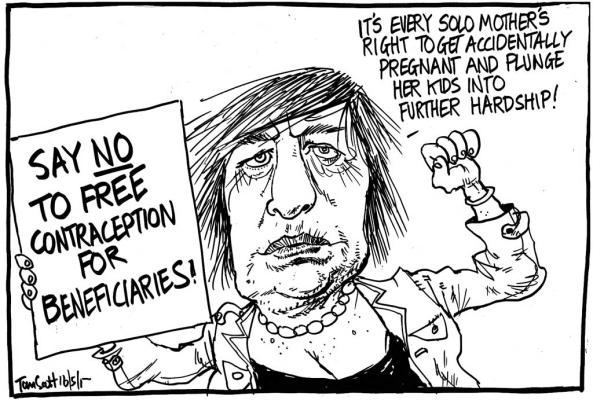
- they contravene women's human rights and their sexual and reproductive freedom, as prescribed by the UN
When the chair, National MP Sam Lotu-liga asked the second submitter,
Robin Gwynn, if he was aware that
Seek is advertising 15,000 jobs he was reprimanded by Labour MP Rajen Prasad for engaging in such a manner . Prasad told the chair to
"desist or it will lead to disorder". Having heard from Mr Gwynn that
"the government has a moral and humane responsibility to make sure the jobs are available before passing such legislation" which was
"bullying the weakest and most defenceless elements of our society" I thought the chair had a reasonable point but the Labour MPs were quite indignant at having such relevancies mentioned.
Next up was an arch lefty unbeknownst to me but recognisable by content, David Tolich. He vehemently objected to the video process and that is was arranged by a
"private company with taxpayer money" no less. (Ignores that fewer tax payer dollars are required for this facilitation than the alternative). He said it contravened Te Riti O Waitangi and the Constitution. He said that the DPB reforms were an insult to parenting, an abuse of children and parents, and culturally abusive to boot. He wanted the benefit levels pre-1990s cuts restored and, surprise, surprise, the IWTC given to beneficiary parents. It would only cost $400m which he described as
"chicken feed". He spoke so long there wasn't much time for questions but Jacinda Ardern managed a patsy about whether he agreed (or words to that effect) that the incentives to work in NZ are very high because of "
how low benefit rates are."
Next came the Women's Health Action Trust. The presenter, Christy Parker, senior analyst, tried to cram in as much as she could but focussed on the policy that will require women who add a child to their benefit to be available for work after one year. This creates
"a differential gender impact because it undermines women's sexual and reproductive rights, fails to value parenting, increases social stigma..."
There was
no support for;
-raising the DPB age to 19
-the youth payment
-private providers working with youth
-information sharing
-compulsory parenting courses
Parents should be
"supported, celebrated and empowered". This legislation would
"jeopardise women's self determination." You get the drift.
Labour's Mangere MP Sua William Sio, to his credit asked if the group had had any practical experience with private providers that led to their opposition. The submitter pointed to the UK reforms and private providers, and
"welfare reforms internationally that have been a failure" but admitted she had no personal experience to call on.
Next Leonie Morris of the Auckland Women's Centre. Again she complained bitterly about the process. She wanted to be able to speak in person and described what she could see at her end; just the committee chair and the back of each MP's monitor. She requested that each member introduce themselves. They obliged, but it wasted her tight time allocation. She hammered her organisation's expertise in the DPB. Said that 50 percent of women on the DPB came from a background of domestic violence. (I will attempt to investigate this claim). The other 50 percent have
"experienced traumatic separation". She said about women on the DPB,
"Most live in poverty, the majority have health problems, the majority have low educational qualifications" but then that the reforms were
"mean-spirited and punitive". After such a testimony about life on the DPB it was ironic to hear her slamming attempts to change the system.
National MP Mike Sabine (who had been the only National MP engaging with the submitters bar the chair and there were 3 more) asked if the Centre had any problem with women who chose to go back to work when their children were very young (responding to the constant theme that requiring mothers to be available for work devalued parenting and even verged on child abuse according to Tolich). The submitter from the Women's Health Action Group butted in and said the key word was 'choose'. Women being work-tested were unable to choose.
If I could have had one moment of redress this is when I would have used it. These women go on and on about rights (human), freedom and choice for beneficiaries not once acknowledging the loss of rights (property), freedom and choice imposed on all those who fund the DPB.
I might return tomorrow. Sucker for punishment that I am.




- Susan Fraser (Crofton Downs)