Tuesday, May 18, 2010

Getting airborne again

And now for something completely different...

I made enough profit from my exhibition to fulfil a recently stirred ambition to get back to flying. As I haven't exercised the privileges of my Private Pilot's Licence for just over ten years I had to study and resit Aviation Law which I have just accessed the results of below. Yahoo. My memory may not be as lacking as I sometimes think.

Having completed the arduous medical exam and confirmed that my heart is fine (although at my age, in the second fifty year period, the certificate only remains valid for 2 years) all that remains is to go and do some flying; brush up on forced landings and stall recovery, sit a Biannual Flight Review and bob's your uncle. Talking of bob, Robert can't wait. His interest in aviation is very strong. I shouldn't be surprised. He is my son.

Hope yet for UK Conservatives

When the Conservatives were elected I felt disinterested because on my reading of it they didn't look very different from National. Too close to the centre to be of any use.

However, not only Frank Field, but David Freud is in Cameron's new cabinet. Freud advised Labour on welfare reform but then defected to the Tories. Here he tells why;


“This figure's wrong,” Gordon Brown interrupted as I began to explain my Welfare Report to him. He leaned threateningly towards me, jabbing a stubby finger at a table in my draft.

I looked at it. “No it isn't,” I replied.

“Yes it is.”

“No it isn't.”

“Yes it is.”

This was becoming unproductive. I tried to break the impasse. “I'll make clear that it's a gross figure, if that will satisfy you,” I proposed.

“Yes, yes. Do that,” he growled.

I was in his Treasury office in February 2007. I had been asked by Tony Blair and then work and pensions secretary John Hutton to write an independent report on how to reform the welfare system. They were happy with my recommendations: now I had been sent to explain them to Brown.

It was a surreal encounter. The changes I was recommending were genuinely radical. Yet as our argument veered on for the next half-hour, we went from one inessential detail to another. Try as I might, I could not get him to discuss matters of principle. After this bizarre softening-up exercise, he dumped me into a room full of officials and special advisers, who demanded that I make change after change to the report.

In the end I managed to publish the independent report that I wanted to: one that championed a major effort to roll back the number of people dependent on benefits. In particular, it recommended that substantial resources be directed to helping those 2.6 million people who had been parked on Incapacity Benefit, with the investment financed from the resulting savings to the benefits bill.

When the economic crisis erupted in autumn 2008, the Government's response seemed to show all the top-down characteristics that have failed us over the past 30 years. Gordon Brown had clearly not accepted the reforming principles behind my outcome-led proposals — not surprisingly, given his lack of interest in them during our bruising, nit-picking encounter.

And even where Labour had accepted parts of my approach in principle, the pace they proposed would be terrifyingly slow. They were looking to pilots covering less than 20 per cent of the country — leaving many people without any serious support.

So I was enthralled when David Cameron and George Osborne asked me in February 2009 to join the Conservative Party to help them develop the ideas in my report into real, nationwide policy. They were determined that a Conservative government would launch the long and difficult task of rolling back the extraordinarily high levels of dependency that have developed in this country.

Today the fruits of that work are launched in a new welfare contract for Britain. Its principle is: do the right thing and we will back you; fail to take responsibility and the free ride is over. As well as using the principles behind my report to help millions of people who have been abandoned for too long, within six months of taking office we will introduce new sanctions for anyone who refuses to look for work.

That way we can have a welfare system that is firm but fair, and we can end Britain's dependency culture. Gordon Brown clearly doesn't want to change the system: we need a change of government to get the job done.

Monday, May 17, 2010

Labour's Frank Field appointed 'poverty czar' by Cameron

New Conservative PM David Cameron has appointed Labour's ex-welfare minister Frank Field as 'poverty czar' in the UK. This is big news for anyone interested in welfare reform. Frank Field is above all a realist. He has better grip on what is causing poverty in countries like the UK and NZ than any other politician I can think of. For a short time he was welfare minister under Tony Blair but there was a falling out with Gordon Brown and he has spent the last few years on the back benches.

But he may be too plain-speaking for the new Tories.

Compare what he says about single mothers...

"I've always believed in a causal link between benefits and the number of single mothers. We've got to change so that people don't become single mothers. For some, they become single mothers by accident, while for others it's a deliberate choice."


...to the Tory prevaricator...

"We have to be careful with this claim of a causal link. When we are giving benefit to the single mother, we are not giving it to her, it's to the child. if you want to end child poverty, then you have to give benefit."

Sunday, May 16, 2010

The contrasting views of Coddington and Woodham

The contrast between the columns written by Deborah Coddington and Kerre Woodham in today's Herald on Sunday strongly marks the split between a pragmatic view and a reactionary view. Strangely it is Woodham with whose view I identify. She believes not a great deal has changed over time in relation to young people drinking to the point of death and that kids will always do dumb things.

Coddington, on the other hand, believes that the drinking is far worse and the state has to do something. Both columns are written in the aftermath of the tragic death of young James Webster.

Having a 16 year-old son brings me a little closer to the issue. Nevertheless I am sick and tired of hearing and reading about the scourge that is alcohol and young people's relationship with it. Not because I like a drink or two, especially bubbly, but because the problem isn't actually about alcohol. Teenage years are amongst the riskiest. That's part of the human cycle and human condition. And nobody can expunge that reality. Young people are busting out and they lack judgement. There are some aspects of life that simply can't be changed. Deborah says that she was lucky her kids survived. Well, not really. The overwhelming chances are that our children will survive adolescence and early adulthood. Except in times of war, when the risk-taking nature of the young was harnessed and celebrated, that is blessedly also immutable fact. Not a matter of luck.

The best parents can do is know their children; make home a place their children want to be; be people their children can trust, or at least be some sort of anchor for them, and teach their children that they don't have to run with the crowd, don't have to get involved with doing stuff they actually don't want to do and, for that matter, neither should they try to coerce others against their will.

After that it is in the lap of the Gods.

Saturday, May 15, 2010

Going to the media and another apology

There is an growing fashion of people running to the media with silly subjective stories that leave a good number of us yawning. Like, Work and Income tells jobseeker to remove her degree from CV. Big deal.

This is not one of them. Gary Wake e-mailed this story to NewstalkZB, and obviously other media, as a last desparate resort. If you don't want to read the entire e-mail you can hear Justin du Fresne read it in its entirety straight after the 9am news yesterday. Listen (starts at 13:30). As the story unfolds there develops a sense of very black comedy about cancellation after cancellation of surgery as Gary's 11 year-old daughter becomes more and more disabled.

After you have listened consider the response of the DHB;

"We recognise this has caused some distress to the patient and her family and we apologise."

Some. No response at all would probably have been an improvement on that indifferent word choice.

I truly hope Mr Wake achieves a positive result from his action and that his daughter receives the surgery and makes a speedy and successful recovery. The whole episode has been a devastating downward spiral for Kirstie and her family and provides a damning insight into the inadequacies of New Zealand's health system. As parents we are all saying, there but for the grace....

Friday, May 14, 2010

John Key, Tuhoe and trust

I just don't get National's game plan. On hearing John Key slam the door on Tuhoe I felt hurt for them. It would not cost New Zealanders to let Tuhoe take over management of the Urewera National Park. It means everything to them and is just a few lines in the press to the rest of the us. On the other hand, if it was the upholding of a 'principle' there would at least be some rationale behind this, to use Chris Finlayson's word to describe how some Pakeha regard land settlements, 'mean-spirited' refusal to grant Tuhoe the fulfilment of their deep desire to exercise some sort of guardianship over the land they live on.

But it can't be a denial based on principle because elsewhere we have seen National open doors to increased Maori ownership. The re-visitation of the Seabed and Foreshore wrangle looks like it will result in Maori gaining greater resources. The upshot of current proposals will, like the signing of the Declaration of the Rights of Indigenous People, be far more encompassing than a deal over the Urewera.

Then John Key insults everybody's intelligence (or perhaps he assumes we have none) by saying there will be no separatism in New Zealand. Bull. Of course there is and will be separatism. The question is, how much and will it be a good or bad thing?

Individualists (my tribe if you like) make a great deal about our rights and freedom as individuals. We do not like being controlled by collectives, especially the state. We would actually embrace our own separatism from people who think differently - social engineers, moral relativists, herders etc. So why can't we understand Maori and their yearning to do their own thing?

It doesn't mean that we are permanently divorced from each other. Many successful marriages are based on respect for each other's space; both separateness and togetherness. That is how the relationship between Maori and Pakeha would best strengthen and abide.

But yesterday John Key showed he doesn't really understand this when he made a very big mistake with an unfortunate comment about Tuhoe eating him for dinner. It isn't that the joke was unfunny. It was that he would even think to joke about Tuhoe after just causing them so much pain. That was thoroughly and dismally revealing.

He pandered to those people who do not want Tuhoe to get anything. People who believe that Maori will shut off Pakeha access. They base this on the past behaviour of a few thugs. In fact, their entire view of Maori is based on the worst of Maori and not the best. But do they base their view of Pakeha on the worst specimens instead of the best?

Maori generally welcome strangers and share with them. At some point we are going to have to trust each other if the future is going to be better than the past. But trust took a massive hit two days ago when Tuhoe were told that their dream was over.

Thursday, May 13, 2010

Benefit fraud; consistency of sentencing and deterrents

A Feilding District Court judge sentenced a woman who had defrauded Work and Income of $48,000 to one year in prison yesterday with no opportunity for home detention.

Which led me to speculate about the consistency of sentencing for benefit fraud. A recent case was fresh in my mind having received a new comment just a few days ago from someone who claims to know the accused (one of the few advantages of having moderation turned on is seeing incoming comments on old posts.) I have searched for any reports of Georgina Ann Marie Nelson's sentencing which was due in February this year to no avail. If the commenter checks in again perhaps they could update us.

In this case a woman was jailed for one year but allowed to apply for home detention after stealing $85,000.

Here, eight months for $49,000.

Here, 6 months for $40,000, application for HD allowed.

In this one a couple were both sentenced to 8 months for a combined total of $38,000.

That's enough. It's depressing reading and there are no shortages of examples. In the 2005/06 financial year there were 937 prosecutions for benefit fraud, most of people who were working and claiming.

All of the above cases involved claiming not to be in a relationship 'after the nature of a marriage'. And anecdotal evidence would suggest they probably represent just the tip of an iceberg.

The sentencing looks reasonably consistent. It also looks reasonably lenient. Let's face it, if you have been on a benefit and all that happens is you get to stay on a reduced benefit largely confined to home, it's not much of a deterrent.

Should people who defraud Work and Income get longer sentences? Or should they simply be banned from ever collecting welfare again, including Super? The second option may be more effective.

Wednesday, May 12, 2010

Student allowances up 63 percent since 2006

These statistics only tell us so much. 67,796 students received an average of $1,157 each in the first quarter of 2010 (during term-time).

These numbers do not tell us if total student numbers are up. Only that far more students are qualifying for allowances and accommodation benefits. This may be a factor of the recessionary impact on their parental incomes. Then again these numbers may include thousands who can't find work and would otherwise have been on the unemployment benefit. In which case this will be positively affecting the unemployment rate and may account for the recent surprise when the March quarter rate dropped from 7.1 to 6 percent. I have an OIA request lodged with MSD which will fill in some of the gaps.

(These statistics make a report in the NZ Herald yesterday obsolete already. It was about the rise in the number of young people without income between 1996 and 2006 ;

Statistics New Zealand spokesman Conal Smith said there were many variables but it looked like a greater proportion of students were neither working nor getting a student allowance.

Blogs are much more up-to-date!)

Fighting back

What a welcome change to read a column by someone taking it to another emerging army of alarmists - the anti-TV terrorisers.

A blind moral panic about television and other electronic media hinders children's potential to realise literary futures that are different from the past.

Why are we such snobs about children watching television?

Anne-Marie Quill has said everything - and more - that ran through my mind last week when I read about 'experts' warning parents not to let under 4s watch any TV whatsoever. Unlike Ms Quill I couldn't find the energy to refute this absurdity so opted to do the next best thing and ignore them (which is incidentally how I advise my children to deal with bullies).

The warning came around the same time that I took my 11 year-old daughter and other team members over to Seatoun school to compete in the annual KidsLit competition. The children first compete to be in the school team, and the winners then square off in the Wellington area rounds. Ultimately a NZ team will compete internationally in Edinburgh.

The competition comprises 10 rounds of 10 questions, with each round covering a particular subject. That was first up was American literature. And a typical question would be, What was the family surname of the girls in Little Women? The children work as a team and eventually the highest score wins. But along the way there are chances to win books and money! The quizz master, in his tall hat, who is completely nuts about the concept, really brought the show alive. There was even a question and prize for the adults at the end of each round. So rather than just being spectators we were participating.

As I listened it occurred to me that the line between books and tv is now very blurred. So many books have become movies and with the advent of video/DVD our children are familiar with far more fiction than they would otherwise have been. That is not to say that these kids aren't readers. They are. And it does my heart good to see their passion for reading being recognised and rewarded. I particularly welled-up with pride and emotion when one of the end-of-round money questions began, I am going to read to you the first lines from a book and if you can identify the book, hand up quick as you can, "This is a story about something that happened long ago when your grandfather was a child..." and up shot Sam's hand. The audience and the quizz master gasped. "The Magician's Nephew?" she ventured. "Correct!" to much applause and the reward of a $5 note. (The book pictured here was mine as a 7 year-old hence its somewhat tatty state.)

Of course the Narnia books have variously been turned into TV series' and films many times. There was a BBC TV series made when I was a child. I loved to do both; read the books and watch the screen. And that was in the 1960s.

These experts who warn against TV viewing must have stale and unimaginative lives. Perhaps they spend all their time exercising their precious bodies and believe that, for their own betterment, every other individual should be doing the same.

But what about the life of the mind? Frankly they can naff off and more people should join with Anne-marie Quill in telling them to.

Tuesday, May 11, 2010

Welfare and IQ

There is a fascinating tussle going on between Gordon Campbell and Peter Saunders. Gordon Campbell first drew attention to the writing and ideas of Peter Saunders, who has been appointed to the Welfare Working Group in an advisory capacity. Campbell is strongly condescending towards Saunder's thinking about IQ, how it affects achievement and the role it has played in the developing numbers of welfare-dependent people.

Saunders talks a great deal about class. He is now living back in his native Britain (also my birthplace) where class is part of the wallpaper.

I have always understood that when NZ was colonised there was something of a desire to leave behind the class mentality. Ambitious working class people were lured out here with the promise of land ownership. Many, if not most, 4th or 5th generation NZers come from humble backgrounds. No big deal. I am not so much proud that my great grandfather was an Irish scavenger, but grateful that he got himself out of Ireland looking for better or I wouldn't be around today. On my mother's side, her Dad was a miner. She, against the odds, put herself through teachers training college and made a better life for herself than was expected. When I was young we had IQ tests at school (England). Because my mother was a teacher she was privy to my result which was apparently very good. But I didn't turn out to be academically brilliant. Dropped out of University and cleaned offices. It was never a matter of 'couldn't do' but didn't 'want to do'. And I was always happy hanging out with 'ordinary' people. People from working or middle-class backgrounds. Later in life, when I wanted to challenge what I was seeing around me, then I began the long ongoing process of educating myself.

So where am I getting to with this. People like Gordon Campbell hate the idea of class and IQ. In his circles you can't dare say someone is not smart enough to be a teacher or a doctor. Because that is insulting. (And yet this same troop - although it may not specifically include Campbell - have formed their own brand of elitism. And woe betide if someone without academic qualifications writes something they don't like. Suddenly the pleb has over-reached herself).

IQ is only a measurement of certain abilities. I know plenty of people who wouldn't fare well in the IQ testing stakes who are 'intelligent'. But what Saunders is trying to convey is that intellectual ability is a fact and it very much influences what people can and will achieve in their lives, including social status. Some people have too much and it can wreck their lives.

What Campbell actually thinks is less accessible. He quotes someone called Young at length, about 'meritocracy' which seems to be a theory that people who have achieved on merit then close off opportunity to others to follow suit. Sounds conspiratorial.

But he does question Saunder's suitability to be an advisor to the group on more tangible grounds;

Having displayed this touching faith in the accuracy and cultural neutrality of IQ testing, Saunders ploughs on. Over the course of the last three decades, he points out, low skilled jobs have been shed in many developed countries. “What are governments to do about this?” he asks. “The problem is that one-sixth of the population has an IQ under 85… Pushing them through government training courses makes politicians feel good, but it is not going to turn them into skilled IT workers. Somehow, we have to find new, useful, but less challenging tasks for them to do.”

Having dismissed the value of retraining programmes for welfare beneficiaries on welfare, Saunders then proceeds to criticize measures to improve the equality of opportunity to tertiary education. Again, this is a wasted effort, in his view. To repeat: these are the sort of views that Paula Bennett wants her expert panel on welfare reform to heed. We should be very worried.


Equality of opportunity is important and I think a great deal more of it exists in this country than in the UK. But what strikes me as I read Saunder's column is his approach to the welfare 'problem' is coloured by his recent Australian and UK experiences. Both countries have had long dole queues for a long time.

Notwithstanding some moved onto sickness and invalid's benefits, NZ's dole queue shortened dramatically before the recent recession. Some may attribute that to the very availability of equal opportunity.

While New Zealand shares similarities with Australia in the welfare-dependence stakes, it is also quite different. Unique in fact. Maori, and to a lesser extent Pacific Islanders, make up a disproportionate share of recipients.

I reject that the Maori dependence is down to low intelligence. Maybe some wouldn't perform well under IQ testing but I know enough Maori well enough to know they are not stupid (apologies for my own collectivising). Maori dependence is long-standing; both complicated and simple; economic and cultural. The bulk of their dependence is through unsupported mothers. I am loathe to call them 'single' because many are not. A further chunk of it is through ill-health, both physical and mental. On the other hand, Maori unemployment is higher in a recession but we have seen it drop to very low levels when the work is there. In June 2007 less than 8,000 Maori were on the unemployment benefit compared to 43,000 in 1999 and many more in the early 90s.

So coming at the NZ welfare problem from an intelligence/ ability angle would not be a priority on any list I had written. Maori are a resourceful people. That has to be unlocked at every level. It gets undermined when the state runs around doing for them.

But I digress. There will always be work (or a working partner) for people who do not aspire or, heaven help us, lack the ability to become academics and professionals. The problem is making it financially viable. Enough to live on. Either the state gets out of the way and lifts the taxation burden off employers (I can't see this happening and part of me distrusts that a free market would bring less inequality) or it tops up people doing menial work. It is still preferable to have people in work, getting topped up or paying no tax, than being paid to be economically unproductive.

There is a danger of over-intellectualising the whole business of welfare dependence. But at least I can understand where Peter Saunders is coming from. I can't say the same for Campbell.

Sunday, May 09, 2010

ACT and freedom

These words from ACT Deputy Leader Heather Roy, from a just-written piece entitled Oppressive Government, are mildly encouraging;

The State increasingly seems to feel it has no choice but to take responsibility for those who are not prepared to take responsibility for themselves. Government has assumed the role of saving people from themselves.

The inevitable result - an unintended consequence of State meddling in people's lives - is that those with diminished responsibility have been given the right to be picked up and cared for by the State at the expense and inconvenience of the majority. And the majority seems expected to acknowledge and understand this - even to respect it when, in fact, it should be the reverse.

Our society is slowly being turned on its head. The minority rules - or at least the rules are made for the minority, but imposed on all. The minority must be saved from itself by the State, and the only way the State can do this is by loading increasing impositions on the responsible people - taking away their freedom and choice. How is that right? Well, it's not.


One of the ways in which the state goes overboard is in its surveillance of children. The last Children's Commissioner had a grand plan to screen all children to check for physical or emotional problems. This is a sledge hammer to crack a walnut. But the Commissioner got her way.

Straight after reading the above, I clicked on another release from the same MP. It is from a just-given speech to the Early Childhood Council Conference;

Many of your services will have provided information about a child's social and emotional development through a strengths and difficulties questionnaire. I appreciate that there have been concerns about this questionnaire, but it is an internationally validated tool that was widely looked at by the Ministry of Health before being included as part of the 'B4 School Check'.

The Ministries of Education and Health acknowledge the value of the professional judgement of early childhood teachers, and we strongly encourage you to contribute to the B4 School Check.


So I don't know whether Heather Roy does understand freedom. Or perhaps continuing a developing political theme, there are two Heather Roys.

More likely it is just the inevitable and dissembling result of being the Deputy Leader of an apparently 'libertarian' party but also a government Minister.

Whanau ora - why it will fail

John Tamihere writes that whanau ora risks sabotage by government bureaucrats and it will be "...the Maoris who cop the flak." That may well be but there is a more inevitable reason why it will fail.

Tariana Turia said the following when speaking about whanau ora last week;

For too long, there has been a confusion over the role of the state in relation to families. Government must never become the defacto head of the family by replacing vital functions that we would expect families to do for themselves in caring for their wellbeing as a whole.

But that is exactly what the state has become. Particularly prevalent amongst Maori families, it takes on the role of financial provider. The same happens in other countries and it is always the poorest people who are affected the most because the level of income the government provides is commensurate to the level of income a male would bring in. So the poorest families - blacks, Hispanics, native Indians, Aboriginals, Maori, - suffer the most disintegration. The men are dis-empowered and the women struggle.

My biggest reservation about whanau ora lies therein. With no fundamental change to the benefit system (Tariana is a strong advocate of the DPB) it will remain no more than a different way of picking up the pieces.

Friday, May 07, 2010

One step forward, five steps back

The Minister for Social Development has just issued a statement about the fall in numbers on the unemployment benefit in April. Rather confusing it is too;

Latest benefit figures out today show Unemployment Benefit numbers have dropped by almost 500 for the month of April...

...Maori account for three quarters of the fall in Unemployment Benefit figures.

Over the last month 4,654 people cancelled the Unemployment Benefit and went into work, 1,346 of those were Maori and 346 were Pacific Island people.


Get that?

In plain English, 4,654 unemployment benefits were cancelled but 4,154 were granted. Maori made up three quarters of the difference.

However there has been an overall rise in working-age beneficiaries from 324,814 to 327,462 or by 2,648. As I said, one step forward, five steps back.

Green MP - blinkers on

Catherine Delahunty had this column published in the DomPost today. It contains the following;

"Most people spend less than one year on any benefit and use that time to rebuild their lives and education."

The MP need only refer to the latest Ministry of Social Development factsheets - available on-line - to find that 69 percent of people reliant on any benefit continuously, are dependent for more than one year; 38 percent for more than 4 years. These percentages however take no account of the fact that many people leave a benefit and then return. The clock starts afresh on their new spell.

The Ministry cannot provide information about how long the average or cumulative stay on a benefit is.

The concern of the Welfare Working Group is breaking the 'cycle of dependency'. Except for Green MPs most people can see that it exists and that it is damaging, to children especially.

The cycle exists recession or not. It is immune to periods of strong economic and low unemployment.

I despair of the Greens and their blinkered attitude to welfare. Some of what Catherine Delahunty says is true. Some beneficiaries work in the community; some are too sick or disabled to work. But to use that to justify crying 'beneficiary bashing' at any suggestion of reform is tired and negligent.

Blancmange and navigators

Yesterday Annette King likened whanau ora to blancmange; when you try to get a grasp of it, it slips through your fingers. When the recipe for whanau ora is considered, that's no surprise;


But what about Labour? It's not as if they weren't just as capable of producing wibbly-wobbly recipes for whanau and hapu outcomes;


And here's another none Maori-specific just for good measure;


How many talking heads does it take to come up with this reverse rocket science?

Speaking of which, who can stand up and take a bow for the breathtakingly clever name for whanau ora providers - navigators?? Then again, it was probably the result of a collective brain-storming session.

"What are we going to call these social workers?"

"We need a name for them?"

"'Course we need a name for them. Otherwise how will we tell the difference between them and all the other social workers?"

"So what do our guys do that is different?

"They find a way."

"Oh, and the other ones don't."

"That's it. So what do you call someone who finds the way?"

"An explorer?"

"Nah. He looks for a way but he might not find it."

"An inventor?"

"Sort of but he makes something rather than finding a way."

"Um. I've got. A navigator. He finds the way. Without the navigator we won't know where we are going and if we don't know where we are going, how will we get there?

"Exactly!"

"So, er, what's the Maori word for 'navigator' then?"

"I'll google it. Urungi."

"Fantastic. So we will call our social workers 'urungis'."

"No. We can't do that."

"Why?"

"Because it has to be for Pakeha too. And they won't know what urungi means. Like, I didn't know what it meant till I googled it."

"So it has to be navigators. Like Kupe eh. What about whanau ora kupes?"

"Nah. There was only one Kupe. Anyway they called a tug Kupe. We don't want people thinking our social workers are tugs."

"I guess. Navigators it is then."

Thursday, May 06, 2010

More mistakes from the Minister's office

It is good news that the unemployment rate has dropped back to 6 percent.

But who writes the Minister's press releases?

Unemployed Maori make up 13.6 percent and Pacific island people account for 13.3 percent of those who are officially unemployed.

Wrong. 13.6 percent of Maori and 13.3 percent of Pacific people are unemployed - two completely different things.

If the release statement was correct then Maori would be under-represented in the ranks of the unemployed.

Now that would be be very good news.

Update; Cut and paste into the NZ Herald, Unemployed Maori make up 13.6 per cent and Pacific island people account for 13.3 per cent of those who are officially unemployed.

Wednesday, May 05, 2010

Maori imprisonment rate climbing

Yesterday I posted about the Maori percentage of the prison population remaining at roughly one half since at least 1987. On the face of it this would appear at least better than it continuing to rise. Then it occurred to me (thanks to some prompting) that with a growing prison population, to maintain a 50 percent share the Maori rate of imprisonment would actually have to be increasing. A commentator said;

For what it's worth, not necessarily because Maori are increasing --- both absolutely, and relatively as a proportion of NZ's total population.

The question is: is the increase of prison population as a %age greater than the increase of maori as a %age. I'd guess, actually, that the answer is no.

To do this properly, don't fuck about with ratios and %ages. Get the raw numbers and work from there.


Never one to shirk a challenge I first looked to see if the statistics were already available. A search turned up this chart.


Note that this represents sentenced prisoners only and the population used was 14 and over.

The last prison census conducted was in 2003. There are statistics available for December 2009 which provide total prisoners and ethnicity but not a gender breakdown by ethnicity. Therefore I have made the assumption that 57% of the female prisoners were Maori (consistent with 2003) and removed 281 from the Maori total.

Prison population at December 2009; 8,244

Maori percentage; 50.8 % or 4,188 (- 281 females = 3,907)

Maori male aged 14 and older in 2009; 223,693

Rate per 1,000 17.47

Total prison population at November, 2003; 6,240

Male Maori prison population; 2,913

Maori male aged 14 and older in 2003; 202,506

Rate per 1,000 14.38

The population statistics used are from Statistics NZ estimates.

So the imprisonment rate per 1,000 Maori males has increased from 14.38 in 2003 to 17.47 in 2009. The only weakness in the data is my assumption about the percentage of Maori prisoners who are female.

(And of course whether more prisoners are simply identifying as primarily Maori is another factor I have no information about.)

Norway - not suffering welfare cheats lightly

Norway may be the best place in the world to bring up children but they only pay a single parent benefit for 3 years and they don't suffer fraudsters lightly;

Police in Bergen have arrested a dozen parents of small children in recent weeks, charging them with swindling the state welfare system. Most have fraudulently claimed they were single parents, and thus collected extra child welfare payments.

Parents in Norway are given a generous lump-sum payment when they have a child, and then receive child welfare payments of about NOK 1,000 a month (called barnetrygd) every month until the child is 16, regardless of their household income. Single parents get double the amount, and can be eligible for extra aid as well, sometimes amounting to as much as NOK 15,000 a month (USD 2,500).

Newspaper Bergens Tidende (BT) reported this week that police and officials at state welfare agency NAV received so many tips of suspected fraud that they mounted an offensive called Operation Trygd. Plain-clothed police officers kept several apartments under surveillance, watching the comings and goings of their residents.


And loosely related, here's an Australian welfare cheat who is currently in prison, but wants her 'right' to receive IVF treatments recognised by the court;

Kimberley Castles, who is serving three years in a minimum security jail for welfare fraud, has only seven months left before she turns 46 and becomes ineligible for in vitro fertilisation treatment.

But she has been denied access by prison authorities to receive such treatment, due to concerns other prisoners would become jealous and also want such treatment, making visits to the fertility clinic hard for authorities to co-ordinate.

Tuesday, May 04, 2010

Any ideas?

A question is exercising me. Maori make up around 50 percent of the prison population. This has been the case since at least 1987 when the Prison Census showed 48 percent of inmates were Maori.

The question occupying me isn't, why is the proportion so high but, why hasn't the proportion gone higher? What has held it at roughly one half?

Demographics?

The rapidly growing representation in crime statistics post-war reflected the rapid urbanisation of Maori. But the young Maori population is still growing faster than the young non-Maori pop (except Pacific).

The fact that the Maori prison percentage hasn't continued to climb must be a good thing so what explains it?

"Tobacco taxes + disarmed shop-owners = an invitation to violence " x 2

This morning PC writes about Tobacco taxes + disarmed shop-owners = an invitation to violence

“Four masked men have robbed a Palmerston North dairy at gunpoint, threatening the owners and an elderly customer….They stole the cash register and a quantity of tobacco before fleeing and eluding a police cordon…
“The Association of Community Retailers (ACR) today linked the robbery with the Government's sudden hike in tobacco tax last week.
"' ‘They don't need to rob a bank for a mere $5000 when it's easier to rob a dairy of double that amount of value in tobacco products,’ said tobacco spokesman Richard Green.”


Here's another just up the line;

Five youths, two aged 17 and three aged 14, burst into the Belt Rd Dairy in New Plymouth about 6.30pm on Sunday and threatened the owner with what appeared to be a pistol...

...New Plymouth CIB Detective Sergeant Greg Gray said the group grabbed a large quantity of cigarettes and tobacco and cash before leaving the shop.

Monday, May 03, 2010

Another way to reduce welfare dependency

When he announced the Future Focus welfare reforms, including work-testing the DPB when youngest child turns six, the Prime Minister suggested a modest reduction of 5,000 DPB recipients going into work. But what we never hear about is preventing or discouraging people from coming into the benefit system in the first place.

What most people don't understand is that the DPB caseload has a very high turnover. Each year there are around 35,000 grants and a similar number of people go off it. In a period when the numbers have been increasing I have used conservative numbers (35,000 in, 34,000 out) and a baseline of 100,000 to model what difference it would make if, as well as getting 5% off the DPB, influx was also reduced by 5%.


The way to stop people coming into the system is to change the incentives. Or more rightly, remove the incentives.

Sunday, May 02, 2010

Time's up people

Eating out is something we don't do a lot (unless you count visits to Burger king which is a reasonably regular event in our family). Last night we dined at a Petone restaurant with two couples David works with. It was something of a celebration. About 15 months ago they joined together in business and have done very well in the interim. One couple came over from the Wairarapa for the occasion.

We had a couple of bottles of wine, starters, mains, dessert and coffees. We were seated in a separate area with dimmed lighting. The service was ... unusual. Somewhat brusque.

At around 10.50, when we were the only group left in the annexed area, amiably chatting and laughing but winding up, the lights were abruptly turned up as a clear signal our time was up. Come in group of six.

It wasn't anything I had ever experienced before. It certainly wasn't conducive to securing repeat business, surely the lifeblood of a restaurant, because I won't be returning or recommending the restaurant despite the food being rather good. These days good food is par for the course. Hospitality is, however, even more important. Or am I being an over-demanding customer?

Friendships forged through paintings

Over the years my paintings have led to a number of enduring friendships. I hope this will be one.

My recent exhibition included a portrait of Sir Apirana Ngata.


The phone rang a few days ago and it was Apirana's grand daughter. She had read about the portrait and gone to see it. She was overwhelmed, very emotional but not in an unhappy way. She had sat for some time with the portrait and felt it had an aura. We talked at length, myself also very moved by her reaction to the portrait.

In any event I decided the painting belonged with her and today she arrived to take it home, arms full of baking, flowers, a kete containing a journal about her grandfather and a card. Nothing makes me happier than seeing my work give someone so much happiness.

Friday, April 30, 2010

More melodrama over alcohol

This time from Garth George;

I'm not in the habit of saying "I told you so", but this time I can't resist.

Back in 1999, when Jenny Shipley's tired and frightened National Government decided out of the blue to reduce the legal drinking age to 18, I predicted it would lead to immense social problems.

Whether the idea was to woo 18 and 19-year-old voters or to ensure that the fabulously wealthy booze industry fronted up with loads of cash for the upcoming election campaign I don't know.

But I do know that on the consciences of that Parliament's conscience voters is a legacy of thousands of deaths, injuries and broken lives among this nation's teenagers.

The Social Report 2009 says, on the other hand;

Potentially hazardous drinking

Most recent data

In 2006/2007, 23 per cent of drinkers of alcohol aged 15 years and over had a potentially hazardous drinking pattern.

Longer term trend

There has been no change in the rate since 1996/1997.


But based on his subjective view of the harm caused by alcohol George launches into his typical tirade, a list of what government should do to reduce alcohol availability including bans on advertising, bans on outlets, age restrictions and tax hikes. Understandably sore over this weeks wicked tax hike on tobacco, he drops in this pathetically peevish line;

Since I pay $120-odd for a carton of 200 cigarettes, I don't see why a bottle of whisky, gin, brandy, rum or whatever shouldn't be at least the same price, considering its potential to do far greater damage.


It's potential? Good God. Imagine if taxes started being applied based on the potential of products or services to cause harm.

The paper suggests a health warning on liquor labels and that, too, has been suggested here from time to time. Once again, what is sauce for the cigarette is sauce for the booze bottle (or can or carton).


Oooh he's grumpy. Silly Mr George. You see, when you call for state interference and force against what you hate - alcohol - you have to wear it against the things you love - tobacco. A bit of a pact with the devil.

Thursday, April 29, 2010

Smoking-related health costs horribly inflated

What the heck is going on with the estimated health-related costs of smoking? The generally accepted and publicised sum has been about $250 million and remember smoking rates are decreasing;


And here according to the Ministry of Health;

H3) What are the economic and other costs of smoking?

Smoking costs all New Zealanders. It:

* costs our health system over $200 million per year (1992 dollars) to treat smoking-related illnesses


But the DomPost this morning is saying;


This is blatantly about building public support for tax hikes and turning non-smokers against smokers who have apparently overnight incurred a 760 percent increase in their health bill.

A laugh amidst the oppressive government gloom

Good Lord. I need to get on with other stuff but I just spotted this;

. . . I have a fundamental belief that governments should leave people alone, and that the role of the state should be relatively small, and that the state should not be in you life more than it needs to be.

New Zealanders have this natural aversion to being told what to do by governments, both local and central, and I’m pretty much in that camp.


Who said it?

Regressive tobacco tax

A 2002 study estimated that tobacco spending made up 14 percent of low income non-housing budget. Rates of smoking are highest amongst the most deprived. Tobacco taxes are therefore regressive. That means they create a disproportionate burden on the poor.

On the back of this hike, a few people will give up smoking . According to the NZ Medical Journal for a 10% price increase, the demand would fall in the long term by 0.7% to 5.2%.

But the vast majority will not. They will cut spending elsewhere or get deeper in debt. The deeper in debt they get the more worried and depressed they will get and the more they will want to smoke. Vicious circle stuff.

Next time you hear a politician - except for the 4 ACT MPs who voted against the hike - spinning a sob story about under-taxing the rich and over-taxing the poor remember this particular plundering of the already impoverished.

Good on 4 ACT MPs

Well done to the 4 ACT MPs who didn't vote for a tax increase on cigarettes and tobacco products.

But who was the ACT MP that did?

Youth offending - treat reports with caution

I have long since stopped relying on media reports about reports. It is time consuming but if you come across a report about a report that interests, go straight to the horse's mouth. Today's NZ Herald report about a report is a good example of the wrong impression partial reporting can create;

Youth offending falls further in latest figures

That's great, isn't it?

The report is 208 pages long and I think the journalist covering it must have gotten tired about mid-way through. I certainly did. But I was looking for the whole story.

For instance;


OK. So we cannot infer very much at all by falling apprehension rates. Just as we cannot infer much at all by climbing prosecution rates but what the hell, we may as well look at them. They do form the larger part of the report despite the media coverage not mentioning it at all. (It may be that the writer is planning a further instalment.)


So significant increases in the rates of prosecution. This backs up the increasing severity of offending seen in apprehensions.

Of course no report about crime would be complete without some ethnicity analysis. Therein lies a shocking picture. Yes. I am still shocked by the disparity between European and Maori in so many sets of social statistics.


1 in 20 young Maori is prosecuted in court compared to 1 in 100 young European.

So the overall picture looks like this.


Let's finish with a quote from the report on the report from Judge Andrew Becroft;

Principal Youth Court Judge Andrew Becroft said the statistics punched a hole in the popular perception that youth offending was "spiralling out of control".


Draw your own conclusions.

Wednesday, April 28, 2010

John Armstrong backs the call to remove conscience voting

John Armstrong writes that political parties abrogate their collective duty by allowing conscience votes on drinking laws. He obviously approves of the born- again temperance brigade writing that we live in "conservative times".

Nats lose their political nerve over booze law

...Its recommendations aside, the commission's big challenge to Parliament is its call to end conscience votes on alcohol-related measures.

The commission is dead right. Conscience votes on such legislation have traditionally been granted to MPs on the grounds that drinking is a matter of personal morality.

This is a charade which allows parties to abrogate their responsibilities on things like the drinking age where public opinion unpredictably waxes and wanes on raising or lowering it and the politics get too difficult.


Parties should act as a body and predictably on matters they have campaigned on. Did National campaign on reversing alcohol consumption laws?

Did it campaign on removing conscience votes?

John Armstrong is only taking this line because it suits his position on the issue.

Contrast what Armstrong writes above to what he wrote about the Civil Union Bill and conscience voting;

Labour's gay MPs have been told to take a back seat to prevent critics accusing the Government of pandering to the "pink vote".

And she [Helen Clark] has stressed this is ultimately a conscience measure and thus Parliament's decision, not the Government's.

It hardly adds up to a rip-roaring celebration of the measure's intent.

But both Helen Clark and David Benson-Pope, the minister in charge of the bill, have kept their nerve, not least because the left faction in the Labour caucus will be furious if they buckle.


So nerve was kept in this instance but lost when it comes to alcohol laws.

There are very good reasons why parliament has conscience votes on moral issues. They are too important to relinquish.

Tuesday, April 27, 2010

The whys and wherefores of waste

There is a report in The Press claiming that 50 percent of drugs are being wasted. That wouldn't be happening if they were recreational drugs notice. Try to envisage people turning up to tinnie houses with bags stuffed to bursting with unused cannabis. No. It is too silly.

First, 50 percent seems high when I do a mental check of my own medicine cabinet. 10 or 20 maybe, but then that's just my family.

There are valid reasons why medicines remain unused. Death. Often people are on massive amounts of medication at the point of death.

Recovery. Some medicines should be taken as a whole course but many will do the job and no more is needed.

Over zealous prescribing. Patients can be very passive and let a GP prescribe for them medicines that they have no intention of taking.

Bad reaction. Sometimes the patients rightly or wrongly perceive a bad reaction to a drug and stop using it.

And there are other things that come to mind which lead to waste. The rules around pharmaceuticals and dispensing. Over cautious best-by dates. The non-recyclability of returned medicines.

And of course subsidies. Human nature is such that often people do not value what they do not pay for. There-in lies the paradox. The state makes medicines more accessible so that people's health is preserved and they do not become an economic cost at the secondary level. But by doing so, waste taxpayer's money at the primary level.

In my opening comment I drew a parallel with recreational drugs. Are they comparable? I think so. Genuinely sick people should be just as motivated to take their medicine as people looking for a high. So why, apart from the reasons of death and recovery, aren't they? Because they didn't really need or want it in the first place? If food was subsidised there is no doubt in my mind that the waste of it would be colossal.(I have seen people wasting food from charity parcels - mince, still in the tray, left on the floor for the cats to chomp their way through.)

So the waste of pharmaceuticals is, to some degree, a product of taxpayer subsidy and unnecessary bureaucracy. Death and recovery are immutable factors. Subsidy and over-regulation are not.

Monday, April 26, 2010

First-hand account about Maori and social security post-war

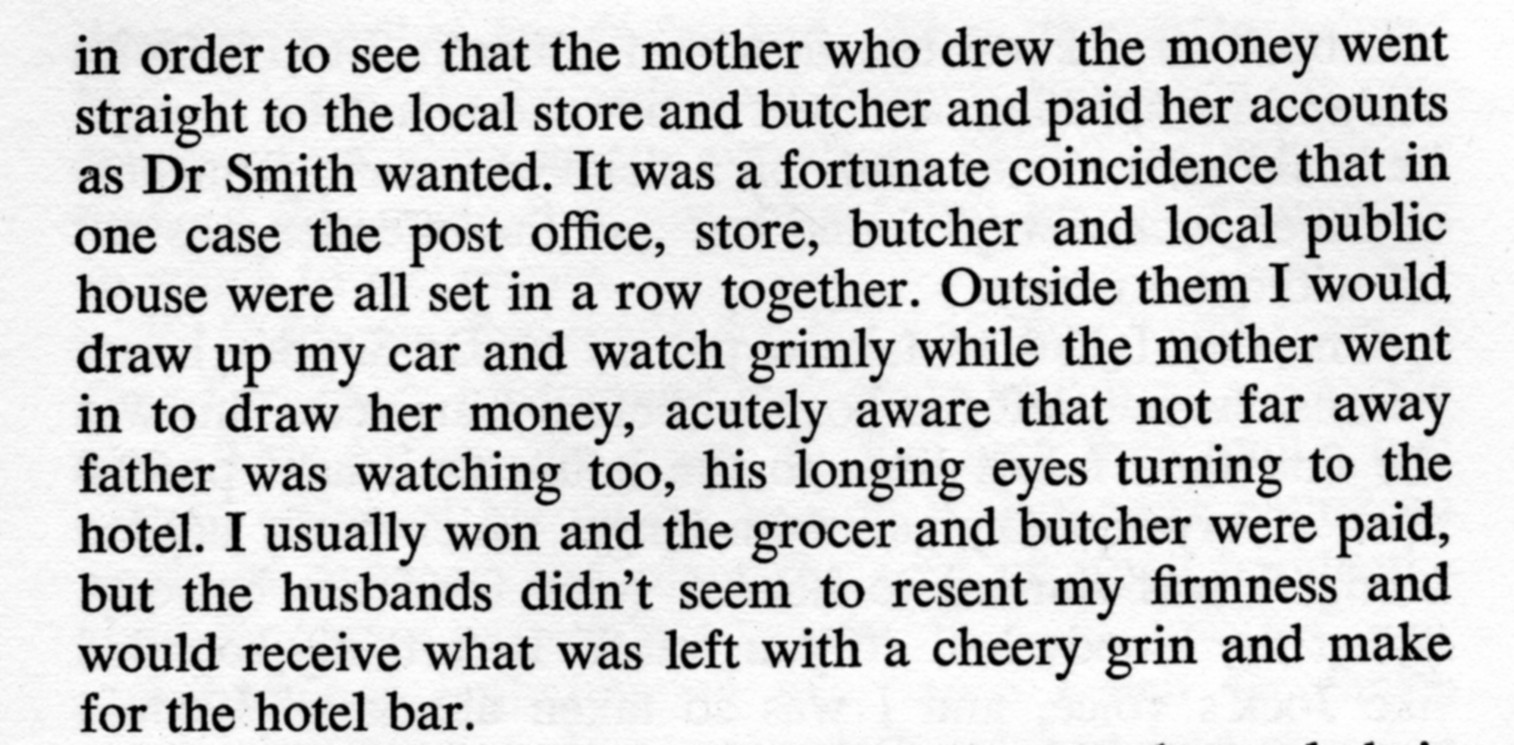
The best way to find out what happened in the past is to read first-hand accounts. The following excerpt is from a book called Nurse in the North and is by Barbara Ancott-Johnson, She worked in the Hokianga with a well-known doctor G M Smith - "Jock" - and writes here about her efforts to enforce his expectations about social security in Maori communities. As you read try to imagine such an approach happening today. Oh the screaming over privacy rights there would be;


Tapu Misa on private enterprise

Motivated by the government's plans to allow the private sector into prison management and accident insurance Tapu Misa today wades into the evils of privatisation. She ends with this;

As a former comptroller of the US, David Walker noted in 2007: "There's something civil servants have that the private sector doesn't. And that is the duty of loyalty to the greater good - the duty of loyalty to the collective best interest of all rather than the interests of a few. Companies have duties of loyalty to their shareholders, not the country."

There is something else civil servants have that the private sector doesn't. And that is access to funds that are guaranteed through the force of the state. Their jobs do not rely on producing either a good or service that customers will voluntarily meet the cost of.

I hope at some future date Tapu Misa is going to write a column slating private ownership of the media because companies only serve the interests of a few and profits go offshore. She could cite her own employer as an example.

Sunday, April 25, 2010

Coddington on Bennett

Deborah Coddington says Paula Bennett, despite being "not unintelligent", comes across as "a bit of a bint." I confess I had to consult a dictionary to confirm the meaning of bint which is a 'not too bright' woman. This is, according to Deborah, because of the content of her speech. For example, she (and John Key) over-use the word 'actually'.

We are all too familiar with lazy speech. Like, er, like, basically, it's er sort of, well, actually, like that. Absolutely, awesome (never with the -ly), piss poor communication.

I must just drop in a story here. My son's cousin knows a girl who goes to my son's school. The cousin asked her if she knew Robert. The girl replied, "He's that guy that uses big words that nobody can understand". Now that tickled both Robert and I. Robert uses interesting language because he reads a lot. Her inability to understand him isn't his problem. It's hers. Robert isn't about to change to accommodate her because he likes words. Yesterday I had cause to say to him "For goodness sake you," to which he quickly retorted "Don't you 'for goodness sake you' me," which instantly dispelled my annoyance.

Anyway here's the guts of it. We speak like the people we live with and spend time with. My message to the children is, don't use that word when there is a better one available. Don't overuse words until they lose all meaning. Don't swear often. Save your cursing for when it really matters, otherwise what will you have when the need arises?

The English language is rich. I have a responsibility to use it fully and sometimes, painstakingly. The way I communicate with my children is more important in my view than the way I feed them. The way I converse with my husband rubs off on them enormously.

But we are not conformists. We don't try to be like other people. The degradation of language and communication is a product of conformism and, a phenomenon Theodore Dalrymple identifies; the conformism is going in the wrong direction. A physical analogy is tattoos. Once a mark of lesser educated working-class men, now so-called intelligent middle class women flock to affect them. It is a sad fact that some politicians are downward conformists, not only because that is their inherent nature, but because they think it will buy votes.

I agree with Deborah Coddington. It's not good enough to say, speak how you like; that's freedom of expression isn't it? It's just evolving culture isn't it? 'I'm a Westie and proud of it'.

No. Freedom of thought and freedom of expression rely on the ability to think and communicate. Language is the tool by which we achieve both.

I am sick of the dumbing-down process. Never have I said so before because 'dumbing down' is, of itself, one of those hackneyed overused phrases. Apparently IQs are rising as the world becomes wealthier. If so, it's not particularly apparent.

Some of the worst displays of ungrammatical, grating, dull and repetitive language appear in and around sporting endeavours, from both commentators and players. Many times I have cursorily reflected to myself, all brawn and no brain (naturally a 'gender neutral' comment for those academics who do possess healthy linguistic repertoires, but nonetheless fill their written and oral communications with woolly concepts and overladen sentences). Still, the players at least use their physical abilities to best effect. The same cannot be said for commentators.

And it cannot be said for politicians.

Which brings me back to Paula Bennett. If there is merit in having an ex-beneficiary Maori single mother as Minister because she represents realised aspiration, then why not try to inspire people further? For any politician, there is no shame in being articulate.

It is a sad indictment if politicians are merely there to reflect ordinariness and lack of ambition - the characteristics that often go hand-on-hand with low-grade communication.

Saturday, April 24, 2010

Discovering 'poverty' in Japan

Apparently Japan has discovered 15.7 percent of its people are living in poverty and this is a blow to a society that has always considered itself mostly middle-class.

They made this discovery by adoption of international definitions. An example is used of a single mother raising a teenage daughter and working two jobs. She can't afford to send her daughter to vocational school, a special school that teaches animation acting. But most of the people living in poverty have enough to eat, cars and cellphones.

Contrast this to Brasilia, another story of poverty where people live in make-shift tents on rubbish dumps.

This is no doubt how Mrs Sato, the Japanese example, thinks of poverty.“I don’t want to use the word poverty, but I’m definitely poor,” said Ms. Sato, who works mornings making boxed lunches and afternoons delivering newspapers. “Poverty is still a very unfamiliar word in Japan.”

And may it stay unfamiliar. Japan is a country (as much as I know about it) that has strong families and low crime. In part that can be attributed to very limited state welfare.

When the US discovered 'poverty' and began the 'war' against it in the 1960s, all that happened was poverty became more entrenched and widespread.

If this article is anything to go by, and notice how one female academic is already talking about people not being able to participate fully in society (which is exactly what NZ officials said in 1973 before they created the DPB), then Japan may be about to start going down the same misguided pathway to not less poverty, but less prosperity.

If you doubt my warning consider that currently Japan has one in 7 children living in (let's label it accurately) relative poverty. But NZ has one in 5 living in relative poverty and most are in benefit-dependent households. Why would Japan want to copy western models of welfare?

Friday, April 23, 2010

IMF projected economic growth

The IMF have just released their outlook for economic growth in 2010-11. It contains masses of information but these two charts caught my interest given that China has now moved into the position of NZ's 2nd biggest trading partner. The US is also in the pink. I wonder if the colour use was intentional? The numbers represent % economic growth. (NZ ranks 26th in the world on GDP per capita in current prices and US dollars).


GST question

If beneficiaries,superannuitants and WFF recipients are going to get an income boost when gst rises, are they going to get an income cut if GST comes off food?

Around the newspapers

Jim Hopkins does what nobody else can better - leaves you wondering whether to laugh or cry.

Here's a man who survives the dangers of Afghanistan only to come to NZ and become of victim of something far more insidious - false rape accusations. Again it appears the complainants (female scumbags) get name suppression and no consequences. Surely this sort of vicious and malicious behaviour is almost as worrying as the physical danger taxi drivers face yet gets nowhere near the publicity.

In Taranaki a judge asks if the case of a man taking marijuana into court isn't the stupidest case of the day. The man, a mental health patient says he self-medicates to control his violence. Stupidest case or stupidest law?

Staying in Taranaki, and possibly with the theme of stupidest, Phil Goff was asked to complete the 6 word branding task it recently set members and gave it a go. Like most politicians he couldn't keep to the brief. A nearby observer did much better with 'boring and uninteresting' although even that is repetitious.

And the granddaughter from hell let's rip at a judge when she fails to convince him she has turned over a new leaf. Own goal. Definitely stupidest.

Thursday, April 22, 2010

March 2010 benefit statistics - a mixed bag

March 2010 benefit fact sheets are out.

Unemployment benefit 60,211
DPB 109,643
Sickness benefit 55,796
Invalid's benefit 84,877


Over the year to March unemployment benefit is up 62 percent ; DPB up 7 percent; sickness benefit up 9 percent; invalid benefit up 1 percent.


Over the quarter to March while the DPB also rose (+354) the unemployment (-6117), sickness (-3362) and invalid (-161) benefits fell.


Earlier in the month the Minister said;

1,110 sole parents also cancelled their DPB and went into paid work.

But more joined up to the DPB than left.


The quarterly fall in sickness beneficiaries is good but I am not sure what it means. Perhaps the December quarter had featured a temporary surge in short term recipients explaining why 2009 saw the biggest calendar year SB increase ever recorded.

The quarterly fall in the unemployment benefit is also obviously good but I still believe much of it represents a transfer to student allowances. There are still no 2010 statistics available for those.

Authoritarian National

A few days back I made a comment on Mulholland Drive about authoritarianism being in the ascendency with the National government.

This morning DPF blogs;

National has had an authoritarian streak to it recently, where they are whittling down the number of issues MPs traditionally are not whipped on. They even want to remove conscience voting on alcohol. There are MPs in National (and many party members) who support NZ becoming a Republic, and they should have been allowed to say so.

So what happened in Parliament yesterday of any value?

The Republican Bill was stopped from going to select committee. It's not a subject I have strong feelings about one way or the other but many do and it should have been debated.

ACT's bill to reintroduce a minimum youth rate was not allowed to go to select committee. There is conclusive evidence the lack of a youth rate is affecting youth unemployment.

BUT Paul Quinn's bill to further disenfranchise prisoners was given the green light to go up for public discussion. Hallelujah - not. Exactly what is taking the vote away from short term inmates supposed to achieve?

Oh and ACT voted for that too. It's not even as if there is any pattern of quid pro quo emerging whereby the Nats support ACT's bill in return for ACT supporting theirs.

My frustration with National/ACT is not unusual but DPF being very angry with them is. If that is a reliable barometer many New Zealanders must be starting to get a touch tetchy with this government.

Wednesday, April 21, 2010

More on the Declaration

A couple of quotes from separate media articles about the reasons why Canada won't sign;

Canada feels key parts of the text remain ambiguous and open to competing definitions that could, to give one example, allow native groups to reopen already settled land claims.


In his address to the General Assembly before the vote, Canada's UN ambassador, John McNee, said Canada had "significant concerns" over the declaration's wording on provisions addressing lands and resources, as well as another article calling on states to obtain prior informed consent with indigenous groups before enacting new laws or administrative measures.


And the following backs up Mai Chen's belief that the Declaration is a precursor to a more binding Convention;


Indigenous congress demands teeth for UN Declaration

THE UN Declaration on the Rights of Indigenous Peoples, achieved after a 20-year struggle, recognises the right of the world's 370 million indigenous people to autonomy, self-determination and control of their territory and resources for their own benefit.
However, as a mere declaration, it lacks the legally binding nature of UN conventions, which form part of the framework of international law. This is the goal that the leaders of native peoples are now pursuing


And just listening to the radio today, reading the blogs and newspapers etc I think Key has significantly under-estimated NZ's response to his actions and the secrecy surrounding them.

Define "temporary"

Paula Bennett was reportedly in the Hutt explaining how National's reforms would reduce welfare dependency. My reaction:

Nurturing neuroticism

Until the media told me about worried children I wasn't worried about it. Now I am worried about my 11 year-old worrying. And the writer intends to make me worry even more tomorrow and even more the day after that. And apparently stressed parents make 11 year-olds worried. Um. I think I see the solution.

Tuesday, April 20, 2010

The UN Declaration - Verbosity super-sized

Surely the United Nations Declaration on the Rights of Indigenous People could be distilled into a much smaller document. Multitudinous affirmations, re-affirmations, concerns, considerations, solemn proclamations, considerations, convictions, encouragements, beliefs, recognitions, emphases followed by 46 articles.

Here's a kicker.

Article 39
Indigenous peoples have the right to have access to financial and technical assistance from States and through international cooperation, for the enjoyment of the rights contained in this Declaration.


Translated: Maori have the right to taxpayer's money. Nothing to get enormously excited about in practice I suppose when there is already a sizeable transfer one way or another. But should National have signed up to an explicit individual right to taxpayer money based on an imprecise concept like indigeneity?

Monday, April 19, 2010

Unemployment insurance shouldn't be the priority

Revisiting an announcement from the Welfare Working Group Chair, Paula Rebstock last week, who said;

Ms Rebstock told Radio New Zealand that the employment insurance will be looked at by the Working Group.

"Right now, if you are in a relationship with someone and you become unemployed, the chances are you would not be entitled to a social welfare benefit.

"But if you are involved in an insurance scheme and you have contributed, then you would also be in receipt of an unemployment benefit for a period," Ms Rebstock told Radio New Zealand.

She said the system could be similar to Canada's Employment Insurance scheme.

"It is clearly within the terms of reference of the group," Ms Rebstock said.


When the Welfare Working Group was first announced the Minister was quite clear their job was to look at ways of reducing dependency and breaking the cycle. Most recently, “The Welfare Working Group will examine long term welfare dependence, identifying causes and solutions.”

Over recent years the unemployment benefit has not been a significant contributor to long term welfare dependence. Currently 84 percent have been on it for less than a year (at least in that current continuous spell). The numbers dropped to 22,748 (based on December quarter figures) at one point. Now they are back up to 60,00 due to the recession. Obviously the UB is very sensitive to the labour market. But generally when there is work the Unemployment Benefit numbers fall substantially. Not so for other benefits.

So it was interesting that Rebstock chose looking at unemployment insurance as her initial announcement. I am not against looking at unemployment insurance at all but it shouldn't be a priority. And while Rebstock says, "It is clearly within the terms of reference of the group" other benefits - the DPB and Invalid benefits in particular - are more in need of attention.

I sincerely hope that the 'hard stuff' will not be neglected.

Sunday, April 18, 2010

Promising a new and nauseating level of Nanny State

As the Liberal Democrats star seems to be in the ascendancy in the UK general election campaign I thought it would be timely to look at what they are promising with welfare. Britain's system is probably (with the exception of Australia's) closest to that of NZ and naturally the problems are similar. I looked but, hell, not one interesting or original idea could I find.

But something different must be building their following.

I searched on undettered and came across this glitzy teen mag lookalike pamphlet called Real Women. Go look but get your bucket ready first. Some policy examples;


Remove pre-interview sex discrimination with a ‘no name’ policy for job applications to stop employers making conscious (or subconscious) judgments about whether a woman can ‘do the job’.)

Scrap tuition fees for all part-time and full-time degree courses

Help women over 25 going back to study by paying the fees for their first Level 3 qualifications

A Citizen’s Pension for all based on residency and set above the poverty line, helping women who took time out from work to raise children. This would rise in line with earnings or inflation, whichever is higher

Recruit and train thousands more health visitors and midwives. These professionals will advise new mothers and families on parenting skills including, advice on the health of a baby and support for relationships, which can become particularly trained when a new child arrives. We would set these professionals free from meaningless targets so that they could focus on the well-being of families and children

Protect children from body image pressure by preventing the use of altered and enhanced images in advertising aimed at under 16s, through changes to Advertising Standards Authority rules. We would work with industry regulators and professionals to find ways to ensure that children have access to more realistic portrayals of women (and men) in advertising

Help women make informed choices by requiring adverts to clearly indicate the extent to which digital retouching technology has been used to create overly perfected and unrealistic images of women Encourage the British Fashion Council and design schools to ensure students are taught and judged on their ability to cut to a range of sizes and body types

Ensure that late night trains have a well-publicised ‘Secure Carriage’. This carriage would be where a guard would sit

Develop a 'stopping on request' element to night bus services so that women and men can get off the bus in between bus-stops, to minimise the distance they need to walk on their own


There you go ladies. If you don't ever want to think or do for yourself again this is the party for you. And sorry I don't have time now to go looking for their Real Men policy but anyone want a bet as to whether they have one?