I attended the Family First Forum as a speaker yesterday.
Bob McCoskrie conducted a sit down interview with John Key for an hour, and later in the morning repeated the exercise with Phil Goff.
The contrasting answers to a common question stuck in my memory are:
Who are the wisest, most influential people in your political lives?
Goff answered Mandela (and explained why), Ghandi (ditto) and Michael Joseph Savage.
Earlier John Key, with little hesitation answered his mother (and elaborated). And Wayne Eagleson, his chief-of-staff and a "clever" lawyer.
Make of it what you will.
Saturday, July 09, 2011

Thursday, July 07, 2011
Questions re NZ Herald-DigiPoll
Apparently:
Why unstated?
And where is the group that doesn't believe in work-testing at all? The policy setting up until last September.
Where are the people who want an even shorter term of assistance or would get rid of the DPB completely?
Lumped in the tiny 4.4 percent of 'don't knows'?
Most New Zealanders are against sending solo parents back to work before their children start primary school, according to a new poll.
The Government is looking into the Welfare Working Group's recommendations on reforming the welfare system into a work-focused programme, with an eye towards campaigning on welfare reforms at the election.
Among the group's more radical suggestions were having solo parents work 20 hours a week when their youngest child reached three years old, and if they had a subsequent child while on welfare, they would have to look for paid work when the child turned 14 weeks.
A New Zealand Herald-DigiPoll released today found just 9.8 per cent of New Zealanders were in favour of solo parents on the DPB having to look for work when their child turned three.
That compared with 31.6 per cent support for sending solo parents back to work when their child turned five, and 54.2 per cent when they turned six - the current age. Some 4.4 per cent said they did not know.
The poll had a margin of error of 3.6 per cent and an unstated sample size.
Why unstated?
And where is the group that doesn't believe in work-testing at all? The policy setting up until last September.
Where are the people who want an even shorter term of assistance or would get rid of the DPB completely?
Lumped in the tiny 4.4 percent of 'don't knows'?
I was wrong
I said it wasn't a hanging offence but I was wrong.
Note to self: be very cautious about alluding to overseas research that NZ women in particular do not want to hear about. Be very careful not to make attempts to 'explain' something come across as, or be interpreted as, attempts to 'justify' it.
Second thoughts, just keep your damn trap shut.
Then again, no-one can sack me.
Note to self: be very cautious about alluding to overseas research that NZ women in particular do not want to hear about. Be very careful not to make attempts to 'explain' something come across as, or be interpreted as, attempts to 'justify' it.
Second thoughts, just keep your damn trap shut.
Then again, no-one can sack me.
Wednesday, July 06, 2011
Average DPB payment versus 40 hours at minimum wage
Some members of the public are mislead into believing that someone on the DPB only receives $288.47 per week.
Or:
In fact they receive considerably more because all parents or caregivers receive Family Tax credits for dependent children and the majority receive an Accommodation Supplement (or live in a subsidised state house).
Under the Official Information Act I asked what are the average accommodation supplement and family tax credit payments made to DPB recipients.
Calculated at the end of March 2011 the respective payments provided to me were $89 and $135.76
That totals $513.23 net
The minimum wage for a 40 hour week is $520 before tax
The new entrants or training wage for a 40 hour week is $416 before tax
You do the maths.
(Even this calculation is inadequate because it does not include other available allowances.)
Or:
The alternative group, chaired by Massey University social policy expert Mike O'Brien and including former Green MP Sue Bradford, says current benefits of $194 a week for a single adult or $366 for a sole parent with one child are "simply too low to live on".
In fact they receive considerably more because all parents or caregivers receive Family Tax credits for dependent children and the majority receive an Accommodation Supplement (or live in a subsidised state house).
Under the Official Information Act I asked what are the average accommodation supplement and family tax credit payments made to DPB recipients.
Calculated at the end of March 2011 the respective payments provided to me were $89 and $135.76
That totals $513.23 net
The minimum wage for a 40 hour week is $520 before tax
The new entrants or training wage for a 40 hour week is $416 before tax
You do the maths.
(Even this calculation is inadequate because it does not include other available allowances.)
Tuesday, July 05, 2011
Tau Henare is right
Tau Henare is right that yet another inquiry into child abuse is a waste of time.
But the so-called child advocates insist on pressing ahead wasting time and money;
And that is why they are primarily wasting their time. Because they persist in coming at it from the wrong angle. Always they pin the essential problem on poverty.
Yes. Many Kiwi children live in (relative) poverty but many, most, do not suffer neglect or abuse.
Look at the figures that Simon Collins provides at the close of his article:
Children in poverty
22 per cent of all children
One in six European children
One in four Maori children
One in three Pacific children
By material measures Pacific children are the poorest.
Let's look at some reliable indicators of child neglect or abuse.
The ethnicity of children in Care and Protection Foster Care Placements in 2006.
7 percent were Pacific (412) whereas 48.7 percent (2,869) were Maori.
At 7 percent, because the Pacific population is very young, that proportion is probably an under-representation.
The number of Pacific children in CYF family homes was 22 compared to 166 Maori - again 7 percent versus 51 percent.
Of those children with Care and Protection notifications requiring further action, 12 percent were Pacific and 44 percent were Maori.
So what now? Poverty is the cause of Maori child abuse and neglect but not the cause of Pacific child abuse and neglect? And let's not even go looking for some Asian statistics.
If the problem is misdiagnosed, a remedy will never be found.
But committee chairman Tau Henare said the committee did not have time to do a proper inquiry before the election due in November.
"We'll take part in it, that's democracy. I'm the chairman and I'll chair the meetings to the best of my abilities," he said.
"But in the last 15 years there have been umpteen dozen reports. I don't think we are going to get anywhere if we continue to sit on our arses and do reports.
But the so-called child advocates insist on pressing ahead wasting time and money;
Maori Party MP Rahui Katene, who co-chairs the group with Green MP Metiria Turei, said she hoped the inquiry would open people's eyes to the fact that many Kiwi children lived in poverty.
And that is why they are primarily wasting their time. Because they persist in coming at it from the wrong angle. Always they pin the essential problem on poverty.
Yes. Many Kiwi children live in (relative) poverty but many, most, do not suffer neglect or abuse.
Look at the figures that Simon Collins provides at the close of his article:
Children in poverty
22 per cent of all children
One in six European children
One in four Maori children
One in three Pacific children
By material measures Pacific children are the poorest.
Let's look at some reliable indicators of child neglect or abuse.
The ethnicity of children in Care and Protection Foster Care Placements in 2006.
7 percent were Pacific (412) whereas 48.7 percent (2,869) were Maori.
At 7 percent, because the Pacific population is very young, that proportion is probably an under-representation.
The number of Pacific children in CYF family homes was 22 compared to 166 Maori - again 7 percent versus 51 percent.
Of those children with Care and Protection notifications requiring further action, 12 percent were Pacific and 44 percent were Maori.
So what now? Poverty is the cause of Maori child abuse and neglect but not the cause of Pacific child abuse and neglect? And let's not even go looking for some Asian statistics.
If the problem is misdiagnosed, a remedy will never be found.
Monday, July 04, 2011
People who lay false rape complaints should be exposed
Some people are very vindictive. Unhealthily so. And it seems the incidence of this form of mental instability is on the rise.
When reading about false rape accusations one can't help but wonder if the accuser, even in the knowledge that she will not succeed in bringing a conviction, is motivated by knowing a trial will make the accused's life miserable. His name will be dragged through the mud whereas she will remain unknown to the larger public.
It really is time that false accusations were punished. If not at least by removing name supression.
Two cases appear in headlines this morning. One in NZ:
And the other in Australia:
When reading about false rape accusations one can't help but wonder if the accuser, even in the knowledge that she will not succeed in bringing a conviction, is motivated by knowing a trial will make the accused's life miserable. His name will be dragged through the mud whereas she will remain unknown to the larger public.
It really is time that false accusations were punished. If not at least by removing name supression.
Two cases appear in headlines this morning. One in NZ:
In summing up the case yesterday, Murrell's defence lawyer, Fergus Steedman, said his client and the complainant had been friends. Murrell's testimony showed he cared about the complainant and knew her well.
Mr Steedman said the woman was yet to become an adult who took responsibility for her own mistakes. The false accusation had been made to prevent her from having to face her mistakes, Mr Steedman said.
The complainant was a compulsive liar, he said, and throughout the trial her testimony had been contradicted by other witnesses and evidence.
"She lies as a matter of routine. She lies when she doesn't need to. She is a liar, full stop," he said.
And the other in Australia:
A MOTHER has described as a ''gross injustice'' a legal process which she says led her son's life to the edge of destruction over a rape charge found to be baseless.
It was of small comfort to her that a judge has now ordered the Director of Public Prosecutions to pay defence costs of almost $20,000 after the case collapsed.
''We have been traumatised beyond belief by the system,'' she told The Age. ''We've been watching our son's life potentially get destroyed in front of our eyes.'' She had ''lived in abject fear of an injustice'' while her son, now 20, a third-year university student, had had his reputation ruined.
Sunday, July 03, 2011
'Life' imprisonment sentences leap
Statistics NZ has just released conviction and sentencing data for 2010. A couple of stand-outs are the increasing use of home detention over its short history, and a leap in life sentences handed down.
In 2010 50 such sentences were imposed.
The closest year to that previously was 1997 when 37 sentences occurred. In the last ten years the average was 27 life sentences.
Is it just an aberration? Brains more familiar with the legal system might have an explanation.
In 2010 50 such sentences were imposed.
The closest year to that previously was 1997 when 37 sentences occurred. In the last ten years the average was 27 life sentences.
Is it just an aberration? Brains more familiar with the legal system might have an explanation.
Friday, July 01, 2011
MSD Statistical Report released
If you wanted to do a crash course in the benefit system and current trends this weekend (in-law visit avoidance perhaps) you could bury yourself in the Statistical Report, released today. It is bursting with 300-odd pages of information about trends, expenditures, grants, reasons for leaving, historical data, and much more. Trouble is it only extends to June 2010. A year ago. So not a great deal is newsworthy. Just a few things caught my eye while browsing;
* Nearly two fifths of benefit expenditure was on the DPB and nearly a third on the Invalids benefit
* Older clients - aged 40-64 - account for nearly half of benefit expenditure. More precisely 47-49%.
My comment - why not rephrase that as younger clients account for over half of benefit expenditure? Not a good look really.
* Women accounted for the majority of total main benefit expenditure
That's enough for late on a Friday afternoon.
I have more enjoyable things to do.
* Nearly two fifths of benefit expenditure was on the DPB and nearly a third on the Invalids benefit
* Older clients - aged 40-64 - account for nearly half of benefit expenditure. More precisely 47-49%.
My comment - why not rephrase that as younger clients account for over half of benefit expenditure? Not a good look really.
* Women accounted for the majority of total main benefit expenditure
That's enough for late on a Friday afternoon.
I have more enjoyable things to do.
Thursday, June 30, 2011
ACT, don't forget the 'youths' on the DPB
NZPA reporting about ACT's push for the reintroduction of a youth rate mentions the following statistic:
It would add greater weight to consider also that there are 22,502 'youths' on the DPB.
If paying the adult minimum wage means young males are less likely to get work the same applies to young females. The only difference is they have an alternative benefit to go on. One that pays better and has more perks attached.
There were 17,726 youths - people aged 18-24 - on an unemployment benefit as of May.
It would add greater weight to consider also that there are 22,502 'youths' on the DPB.
If paying the adult minimum wage means young males are less likely to get work the same applies to young females. The only difference is they have an alternative benefit to go on. One that pays better and has more perks attached.
Image supression?
Not far below a NZ Herald photo of Chris Kahui's sister, who gave evidence at the Coroner's trial into the deaths of her twin nephews yesterday this appears:
Coroner Garry Evans granted suppression of Ms Kahui's image today, after she told the inquest her children were bullied during her brother's trial for the twins' murder.
Wednesday, June 29, 2011
Australia moves on welfare for teenage parents
The World Socialist Website reports on a pilot scheme to target teenage parents who receive welfare:
Good job too. The Welfare Working Group made extensive suggestions about conditions that must be put on young parents if they are to receive taxpayer funds.
The source of this excerpt is a socialist site which, naturally, can only see what is designed to enhance the life chance of both young mothers and their offspring, as part of a capitalist plot.
Sounds just like the Greens and soon, the Mana Party.
The program will affect some 4,000 parents, predominantly mothers, aged 19 or under who receive the Parenting Payment. When their baby turns six months old, they will be required to attend so-called support and engagement interviews at the government’s Centrelink agency. They will be forced to develop a “participation plan” which will include compulsory activities designed to ready them for the workforce, including placing their one-year-old infants in childcare while they finish secondary school, or engage in other training or paid work. Attendance at regular interviews will be mandatory until the parent completes Year 12 or its equivalent, or their child turns six years old, when they will then be obliged to look for work.
Good job too. The Welfare Working Group made extensive suggestions about conditions that must be put on young parents if they are to receive taxpayer funds.
The source of this excerpt is a socialist site which, naturally, can only see what is designed to enhance the life chance of both young mothers and their offspring, as part of a capitalist plot.
The Labor government’s objective is to increase business profitability and make Australian capitalism “internationally competitive” in order to attract globally mobile capital. The systematic dismantling of the welfare system will facilitate the lowering of business tax rates, while at the same time expanding the pool of exploitable labour, using those cut off welfare to leverage to drive down the wages and conditions of the working class as a whole.
The rationale driving the government’s stated goal of “breaking the cycle of welfare-dependency” is not that of helping the impoverished, but of eliminating the basic right to welfare altogether.
Sounds just like the Greens and soon, the Mana Party.
Seeking redemption or justice? Either way it's a joke
What does Macsyna King expect to achieve through telling her side of the story and naming who she thinks killed her children?
She has no moral compass afterall. So what is motivating her? She obviously liked sex, especially with younger men but didn't like the result. There seems not to be a mothering bone in her body. Does she understand that most people find her indifference to all of the children she has given birth to utterly abhorrent? Or has she changed her ways, perhaps become a Christian and needs forgiveness? That isn't an uncommon transformation and might explain Ian Wishart's involvement.
Don't look here for it.
She may be able to convince readers she is innocent of murder, but she will never convince me she was innocent of ongoing gross neglect and inhumanity. These I consider worse crimes than a murder committed by a child too young to know what he was doing.
If I seem harsh, here is a taste of what the book might read like:
A look of shock passed over the doctor's face as he examined the fatally injured Kahui twins, says their mother.
"His eyebrows raised, his eyes widened," said Macsyna King.
Macsyna King 31, was giving evidence in the High Court in Auckland where her former partner Chris Kahui is on trial for the murder of their three month-old twin boys Chris and Cru.
"I remember thinking that if he's looking like that and he's a doctor, then what else is wrong."
Ms King she decided after talking to Kahui to take the babies to their GP. Cru was due for a follow up visit and she was concerned about what had happened the night before, she said.
She collected the car seats and strapped the boys in, not stopping to change their nappies or clothes.
On the way to the doctors, they stopped at MacDonald's for breakfast but could not remember if she took the twins in with her, or left them strapped in their car seats in the car.
They arrived at the doctor's surgery about 1pm and told the reception they needed to see their GP, that it was "about the boys".
They waited about 20 minutes then were shown into the doctor's room where the twins were examined one at a time while they remained strapped in their car seats.
After examining the babies, Dr Nayar said he was concerned about the boys and would write a referral.
"He needed me to take the boys to Middlemore Hospital."
Asked by Crown lawyer Richard Marchant who was the dominant person in the relationship, Ms King replied "I thought I was".
"I would yell the loudest, I would swear at him and I just wouldn't stop till I got my way," she said.
"I've kicked him in the shin, I've slapped his face before."
Kahui, eight years her junior, was a quiet, softly spoken person who would bottle things up.
"That would come out when he'd get really angry – he'd lose it."
Ms King told the court she had three children to two different fathers prior to meeting Kahui in 2004. All three children were now cared for by their respective fathers and she did not have contact with them.
She started living with Kahui shortly after meeting him and quickly fell pregnant, giving birth to a boy, Shayne, in 2005.
In September that year, she split with Kahui for several months and went to live with her sister Emily.
During that time she got into a relationship with another man but then returned to Kahui.
She fell pregnant with the twins soon after her return.
Kahui's sister, Mona, later questioned her about the paternity of the twins.
"She asked me if Chris was the father of the twins" Ms King said.
"I said 'Yes'."
Ms King said she then went to Kahui and repeated the conversation to him and reassured him he was the father.
The next day, after a second argument with Kahui about taking time out, she left again for Emily's place.
About 6pm they went to visit a friend of Emily's where they drank and talked.
As she had only had one or two glasses of wine, Ms King said she drove them home about 1am, and she slept on the couch.
Although she could not recall anyone trying to wake her in the night, her sister told her in the morning that had attempted to, to tell her that Cru had "held his breath overnight", she said.
"That was the very first time I knew about that."
She got home about 10am, to find her brother Stuart King looking after the twins.
As he was telling me what happened the night before, Ms King said she was walking towards the nursery. She dropped the side of the cot, bent down and felt their breath on her cheek.
At the same time, she noticed a fresh bruise on baby Chris's face.
"I stood up and started on my brother about where the hell was he when all this was going on."
Then Kahui arrived and she started yelling at him.
Kahui told her Cru had held his breath the night before and had to be given CPR and that the bruise on baby Chris' face was from Shayne.
He told her he had left the babies on the couch in the nursery after feeding them, while he returned the bottles to the kitchen.
The door to the nursery had been left partially opened and Shayne had pushed it opened, climbed up on to the couch and "got at the boys".
She accepted his explanation but then Kahui started blaming her.
"He said "well you should have been home taking care of the kids," she said.
"He was blaming me. If I had stayed home and looked after the kids this would not have happened, I would know what happened."
KING ADMITTED VIOLENCE, SOCIAL WORKERS SAY
Earlier today, social workers told the court they had discussed referring Ms King to Child, Youth and Family in the weeks before their deaths.
Social worker Nadine Ingham said she first met Macsyna King after the twins were born and were being cared for in Middlemore Hospital’s neonatal unit.
Hospital staff were concerned about the lack of visits to the unit by Ms King and her partner Chris Kahui.
Ms King said she did not like being told what to do by hospital staff and had a problem with their "expectations".
She said she had not been up to the hospital because the house she was living in was unsuitable for the babies and she had to find somewhere else for them to live. She also had to train a new person to take over her job.
During her conversation with Ms Ingham, Ms King said she sometimes hit Kahui – but not around the head or face – and occasionally smacked their one-year-old son Shayne with an open hand. She also said she was attending an anger management course.
She also said she like to go out with her friends and get drunk but would get the babies "out of her hair" first.
Hospital staff had discussed referring her to Child, Youth and Family, but the referral was never made, she said.
'DELIBERATE KILLING'
The Crown alleges the babies were killed deliberately, with the fatal injuries being delivered shortly before an episode in which baby Cru’s eye rolled back, his lips turned blue and he stopped breathing.
Kahui was alone with the babies in the nursery for up to 10 minutes before the episode and was the only one who had the opportunity to harm them.
The babies' mother, Macsyna King, was not home at the time so could not have been the killer, the Crown alleged.
But in her opening address yesterday, Kahui’s lawyer Lorraine Smith said the mother was the most likely killer and had confessed that she "did it".
Medical experts would testify the babies’ injuries could have been caused earlier than the Crown alleged, at a time when Ms King was at home with the babies, she said.
This morning Counties Manukau District Health Board homecare nurse Jane Eyres said the twins showed no sign of being injured in the weeks before their deaths.
They slept in a "beautiful", clean, warm nursery, were feeding well and were putting on weight, she said.
Despite stripping each of the twins to examine them, she never saw bruises or any other sign that the babies were injured.
It was only after they were killed that she became aware one of the babies had an old brain injury and the other an old wrist fracture.
Middlemore Hospital play specialist Kathryn Greenwood said Macsyna King told her the babies had been hurt by their toddler brother.
Greenwood told the court she first met Kahui and Ms King when their twins were in the neo-natal unit in April 2006 at Middlemore Hospital.
She looked after their eldest child Shane, who was 10 months-old.
Miss Greenwood was working on June 13 when Ms King brought the twins into hospital and went to see her in the resuscitation room where the twins were being treated.
Ms King told Ms Greenwood that Shane had climbed onto a couch at home and into the twins cot and "got them".
Ms King talked about how busy she had been and how life was a balancing act, she said.
Initially Ms King was angry but became more in control over the course of the day, Ms Greenwood said.
Her observations of Shane before June 13 was that he was not an "active child" and was not able to hold himself up but could crawl, Miss Greenwood said.
She has no moral compass afterall. So what is motivating her? She obviously liked sex, especially with younger men but didn't like the result. There seems not to be a mothering bone in her body. Does she understand that most people find her indifference to all of the children she has given birth to utterly abhorrent? Or has she changed her ways, perhaps become a Christian and needs forgiveness? That isn't an uncommon transformation and might explain Ian Wishart's involvement.
Don't look here for it.
She may be able to convince readers she is innocent of murder, but she will never convince me she was innocent of ongoing gross neglect and inhumanity. These I consider worse crimes than a murder committed by a child too young to know what he was doing.
If I seem harsh, here is a taste of what the book might read like:
A look of shock passed over the doctor's face as he examined the fatally injured Kahui twins, says their mother.
"His eyebrows raised, his eyes widened," said Macsyna King.
Macsyna King 31, was giving evidence in the High Court in Auckland where her former partner Chris Kahui is on trial for the murder of their three month-old twin boys Chris and Cru.
"I remember thinking that if he's looking like that and he's a doctor, then what else is wrong."
Ms King she decided after talking to Kahui to take the babies to their GP. Cru was due for a follow up visit and she was concerned about what had happened the night before, she said.
She collected the car seats and strapped the boys in, not stopping to change their nappies or clothes.
On the way to the doctors, they stopped at MacDonald's for breakfast but could not remember if she took the twins in with her, or left them strapped in their car seats in the car.
They arrived at the doctor's surgery about 1pm and told the reception they needed to see their GP, that it was "about the boys".
They waited about 20 minutes then were shown into the doctor's room where the twins were examined one at a time while they remained strapped in their car seats.
After examining the babies, Dr Nayar said he was concerned about the boys and would write a referral.
"He needed me to take the boys to Middlemore Hospital."
Asked by Crown lawyer Richard Marchant who was the dominant person in the relationship, Ms King replied "I thought I was".
"I would yell the loudest, I would swear at him and I just wouldn't stop till I got my way," she said.
"I've kicked him in the shin, I've slapped his face before."
Kahui, eight years her junior, was a quiet, softly spoken person who would bottle things up.
"That would come out when he'd get really angry – he'd lose it."
Ms King told the court she had three children to two different fathers prior to meeting Kahui in 2004. All three children were now cared for by their respective fathers and she did not have contact with them.
She started living with Kahui shortly after meeting him and quickly fell pregnant, giving birth to a boy, Shayne, in 2005.
In September that year, she split with Kahui for several months and went to live with her sister Emily.
During that time she got into a relationship with another man but then returned to Kahui.
She fell pregnant with the twins soon after her return.
Kahui's sister, Mona, later questioned her about the paternity of the twins.
"She asked me if Chris was the father of the twins" Ms King said.
"I said 'Yes'."
Ms King said she then went to Kahui and repeated the conversation to him and reassured him he was the father.
The next day, after a second argument with Kahui about taking time out, she left again for Emily's place.
About 6pm they went to visit a friend of Emily's where they drank and talked.
As she had only had one or two glasses of wine, Ms King said she drove them home about 1am, and she slept on the couch.
Although she could not recall anyone trying to wake her in the night, her sister told her in the morning that had attempted to, to tell her that Cru had "held his breath overnight", she said.
"That was the very first time I knew about that."
She got home about 10am, to find her brother Stuart King looking after the twins.
As he was telling me what happened the night before, Ms King said she was walking towards the nursery. She dropped the side of the cot, bent down and felt their breath on her cheek.
At the same time, she noticed a fresh bruise on baby Chris's face.
"I stood up and started on my brother about where the hell was he when all this was going on."
Then Kahui arrived and she started yelling at him.
Kahui told her Cru had held his breath the night before and had to be given CPR and that the bruise on baby Chris' face was from Shayne.
He told her he had left the babies on the couch in the nursery after feeding them, while he returned the bottles to the kitchen.
The door to the nursery had been left partially opened and Shayne had pushed it opened, climbed up on to the couch and "got at the boys".
She accepted his explanation but then Kahui started blaming her.
"He said "well you should have been home taking care of the kids," she said.
"He was blaming me. If I had stayed home and looked after the kids this would not have happened, I would know what happened."
KING ADMITTED VIOLENCE, SOCIAL WORKERS SAY
Earlier today, social workers told the court they had discussed referring Ms King to Child, Youth and Family in the weeks before their deaths.
Social worker Nadine Ingham said she first met Macsyna King after the twins were born and were being cared for in Middlemore Hospital’s neonatal unit.
Hospital staff were concerned about the lack of visits to the unit by Ms King and her partner Chris Kahui.
Ms King said she did not like being told what to do by hospital staff and had a problem with their "expectations".
She said she had not been up to the hospital because the house she was living in was unsuitable for the babies and she had to find somewhere else for them to live. She also had to train a new person to take over her job.
During her conversation with Ms Ingham, Ms King said she sometimes hit Kahui – but not around the head or face – and occasionally smacked their one-year-old son Shayne with an open hand. She also said she was attending an anger management course.
She also said she like to go out with her friends and get drunk but would get the babies "out of her hair" first.
Hospital staff had discussed referring her to Child, Youth and Family, but the referral was never made, she said.
'DELIBERATE KILLING'
The Crown alleges the babies were killed deliberately, with the fatal injuries being delivered shortly before an episode in which baby Cru’s eye rolled back, his lips turned blue and he stopped breathing.
Kahui was alone with the babies in the nursery for up to 10 minutes before the episode and was the only one who had the opportunity to harm them.
The babies' mother, Macsyna King, was not home at the time so could not have been the killer, the Crown alleged.
But in her opening address yesterday, Kahui’s lawyer Lorraine Smith said the mother was the most likely killer and had confessed that she "did it".
Medical experts would testify the babies’ injuries could have been caused earlier than the Crown alleged, at a time when Ms King was at home with the babies, she said.
This morning Counties Manukau District Health Board homecare nurse Jane Eyres said the twins showed no sign of being injured in the weeks before their deaths.
They slept in a "beautiful", clean, warm nursery, were feeding well and were putting on weight, she said.
Despite stripping each of the twins to examine them, she never saw bruises or any other sign that the babies were injured.
It was only after they were killed that she became aware one of the babies had an old brain injury and the other an old wrist fracture.
Middlemore Hospital play specialist Kathryn Greenwood said Macsyna King told her the babies had been hurt by their toddler brother.
Greenwood told the court she first met Kahui and Ms King when their twins were in the neo-natal unit in April 2006 at Middlemore Hospital.
She looked after their eldest child Shane, who was 10 months-old.
Miss Greenwood was working on June 13 when Ms King brought the twins into hospital and went to see her in the resuscitation room where the twins were being treated.
Ms King told Ms Greenwood that Shane had climbed onto a couch at home and into the twins cot and "got them".
Ms King talked about how busy she had been and how life was a balancing act, she said.
Initially Ms King was angry but became more in control over the course of the day, Ms Greenwood said.
Her observations of Shane before June 13 was that he was not an "active child" and was not able to hold himself up but could crawl, Miss Greenwood said.
Tuesday, June 28, 2011
On Cactus standing for ACT
I am pleased to see Cactus is going to stand for ACT. Why? I'm not sure. I have never met Cactus. Not that I am aware of. We have communicated sporadically via e-mail. We seem to favour the same ACT types. Or maybe it was just Rodney. She has been incredibly loyal to ACT whereas I, as she puts it, "chucked my toys". Fair enough. Don't want to revisit why.
Cactus personifies what I value most in people. Honesty. But when she enters politics there will trouble. For everyone, including Kate. I expect she has the constitution to handle it. Although she is deep, I have seen no sign that she is sensitive. Or the trait is well-buried for her own protection.
Unavoidably politics is also about compromise. Does anyone see Cactus as a compromiser? Me neither. My sympathy is extended in anticipation.
But Lordy politics is not going to be dull if she is in the house. And no-one will be left wondering what the heck is going on with ACT. Unlike Heather Roy who essentially wasted her time as an MP and Minister, Cactus will take her portfolio and stamp herself indelibly all over it. I expect she will fearlessly rark up every one and everything she sees as needing it.
The other morning I was watching that awful Jacinda Ardern on television and musing mawkishly that she could be a future Prime Minister, such is the sad state of NZ politics. Now mercifully I can see the perfect foil for her.
Cactus personifies what I value most in people. Honesty. But when she enters politics there will trouble. For everyone, including Kate. I expect she has the constitution to handle it. Although she is deep, I have seen no sign that she is sensitive. Or the trait is well-buried for her own protection.
Unavoidably politics is also about compromise. Does anyone see Cactus as a compromiser? Me neither. My sympathy is extended in anticipation.
But Lordy politics is not going to be dull if she is in the house. And no-one will be left wondering what the heck is going on with ACT. Unlike Heather Roy who essentially wasted her time as an MP and Minister, Cactus will take her portfolio and stamp herself indelibly all over it. I expect she will fearlessly rark up every one and everything she sees as needing it.
The other morning I was watching that awful Jacinda Ardern on television and musing mawkishly that she could be a future Prime Minister, such is the sad state of NZ politics. Now mercifully I can see the perfect foil for her.
Monday, June 27, 2011
Crisis? What crisis?
The Alternative Welfare forum last Monday was addressed by Professor Paul Dalziel. According to Metiria Turei:
From page 58 of this report you can view the various modelling charts that attempt to estimate what will happen with the numbers of beneficiairies and associated costs. This is what the group found under a 'current trends' projection:
A rise from the current 12 percent to 16 percent would increase costs by a third.
GDP would have to rise much faster if the increased costs were to account for a lower percentage than now.
And even if working age welfare was consuming a smaller percentage of GDP, Super and the health costs of our ageing population will be consuming considerably more.
But isn't the crisis of sustainability as much about lives impaired by welfare as the financial cost? Is it OK to give our blessing to spending X amount of GDP on welfare and disregard the social fall-out?
The Greens and other adherents of the modern-day welfare state seem to think so.
Professor Paul Dalziel from Lincoln University pointed out that the Welfare Working Group attempt to portray some sort of “crisis of sustainability” in the welfare system was not backed by the evidence. Welfare payments as a percentage of GDP are actually dropping and will continue to drop, even under the Welfare Working Group’s worst case scenario. As I suspected, the whole basis upon which the Welfare Working Group’s report was based is flawed.
From page 58 of this report you can view the various modelling charts that attempt to estimate what will happen with the numbers of beneficiairies and associated costs. This is what the group found under a 'current trends' projection:
"....if current trends continue, there would be 16 percent of the working age population on a benefit by 2050. This would be unsustainable, particularly in the context of an ageing population, and would reduce the government’s ability to respond to a serious economic downturn."
A rise from the current 12 percent to 16 percent would increase costs by a third.
GDP would have to rise much faster if the increased costs were to account for a lower percentage than now.
And even if working age welfare was consuming a smaller percentage of GDP, Super and the health costs of our ageing population will be consuming considerably more.
But isn't the crisis of sustainability as much about lives impaired by welfare as the financial cost? Is it OK to give our blessing to spending X amount of GDP on welfare and disregard the social fall-out?
The Greens and other adherents of the modern-day welfare state seem to think so.
Saturday, June 25, 2011
Friday, June 24, 2011
Alternative to the alternative
Here is the one of the up shots of Monday's meeting of the Alternative Welfare Working Group. The one that wants more welfare. The Greens are sticking with their effective use of children (saccharin images) to promote policy. Policy that will unfortunately work against children's best interests.
This is a Green e-card designed to be sent to Paula Bennett. Below it I have used a different image and written some alternative (alternative to the alternative) text. Please feel free to e-mail this blog post to the Minister.

Dear Paula Bennett
Please reject the Welfare Working Group report.
The report's recommendations are extreme and will hurt vulnerable New Zealand families.
New Zealand kids deserve access to essentials and opportunities, especially in hard-times.
Cutting benefits, work-testing parents, and targeting the disabled will leave many people and their children out on the cold.
Please reject this report and give all our kids a chance.
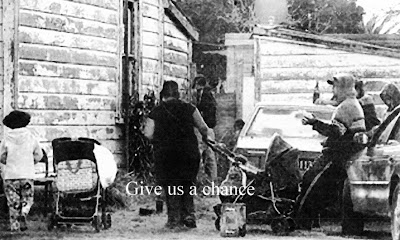
Please accept the Welfare Working Group Report.
The report's recommendations are rational and will improve the lives of New Zealand families, especially in the long term.
New Zealand children deserve access to essentials and opportunities. Most importantly, they deserve parents who will do everything in their power to support and care for them through work, and who will instil similar expectations in them.
As benefits will not be cut where genuine attempts to find and accept work are made, and the small number unable to support themselves will not be targeted, children will not be out in the cold.
Please accept this report and give all our kids a chance.
This is a Green e-card designed to be sent to Paula Bennett. Below it I have used a different image and written some alternative (alternative to the alternative) text. Please feel free to e-mail this blog post to the Minister.

Dear Paula Bennett
Please reject the Welfare Working Group report.
The report's recommendations are extreme and will hurt vulnerable New Zealand families.
New Zealand kids deserve access to essentials and opportunities, especially in hard-times.
Cutting benefits, work-testing parents, and targeting the disabled will leave many people and their children out on the cold.
Please reject this report and give all our kids a chance.

Please accept the Welfare Working Group Report.
The report's recommendations are rational and will improve the lives of New Zealand families, especially in the long term.
New Zealand children deserve access to essentials and opportunities. Most importantly, they deserve parents who will do everything in their power to support and care for them through work, and who will instil similar expectations in them.
As benefits will not be cut where genuine attempts to find and accept work are made, and the small number unable to support themselves will not be targeted, children will not be out in the cold.
Please accept this report and give all our kids a chance.
Thursday, June 23, 2011
What Thompson said is not a hanging offence...
...except maybe in this country.
Women Take Almost 50 Percent More Short-Term Sick Leave Than Men
http://www.sciencedaily.com/releases/2008/02/080204212846.htm
According to data from the U.S. Labor Department released last November, both married and unmarried women with children report a higher rate of absences from work than those without children.
http://abcnews.go.com/Health/story?id=4241746&page=1
Women take more sick days than men
http://www.telegraph.co.uk/news/newstopics/howaboutthat/8534796/Women-take-more-sick-days-than-men.html
And:
http://neweconomist.blogs.com/new_economist/2006/07/menstruation2.html
Why won't New Zealanders grow up and engage in rational debate instead of indulging emotion?
Women Take Almost 50 Percent More Short-Term Sick Leave Than Men
http://www.sciencedaily.com/releases/2008/02/080204212846.htm
According to data from the U.S. Labor Department released last November, both married and unmarried women with children report a higher rate of absences from work than those without children.
http://abcnews.go.com/Health/story?id=4241746&page=1
Women take more sick days than men
http://www.telegraph.co.uk/news/newstopics/howaboutthat/8534796/Women-take-more-sick-days-than-men.html
And:
In most Western countries illness-related absenteeism is higher among female workers than among male workers. Using the personnel dataset of a large Italian bank, we show that the probability of an absence due to illness increases for females, relative to males, approximately 28 days after a previous illness. This difference disappears for workers age 45 or older. We interpret this as evidence that the menstrual cycle raises female absenteeism. Absences with a 28-day cycle explain a significant fraction of the male-female absenteeism gap.
To investigate the effect of absenteeism on earnings, we use a simple signaling model in which employers cannot directly observe workers' productivity, and therefore use observable characteristics – including absenteeism – to set wages. Since men are absent from work because of health and shirking reasons, while women face an additional exogenous source of health shocks due to menstruation, the signal extraction based on absenteeism is more informative about shirking for males than for females. Consistent with the predictions of the model, we find that the relationship between earnings and absenteeism is more negative for males than for females. Furthermore, this difference declines with seniority, as employers learn more about their workers' true productivity. Finally, we calculate the earnings cost for women associated with menstruation. We find that higher absenteeism induced by the 28-day cycle explains 11.8 percent of the earnings gender differential.
http://neweconomist.blogs.com/new_economist/2006/07/menstruation2.html
Why won't New Zealanders grow up and engage in rational debate instead of indulging emotion?
What is the 'official' unemployment rate?
On the front page of Statistics NZ the unemployment is given as 6.6 percent for the March quarter.
That is the figure provided by the March quarter HLFS.
Yet when using Table Builder the rate appears as 7 percent.
That is a big difference.
And the sets of figures that produce the rate vary yet my understanding is the source for the data is the same.
Now this all may seem pedantic but when official unemployment rates are released a song and dance is made about them. They are taken as a significant indicator of how the economy is faring and add to or detract from business confidence.
NZ hasn't seen an unemployment rate of 7 percent or over this decade. Sorry, this century (according to TableBuilder). Was it there in March?
I will query Statistics NZ. There is probably an explanation but I want to know what it is.
Update: Very quick response from Statistics NZ. Inside two hours. Big tick.
Both figures are from the HLFS.
The 7.0% figure from Table Builder is the number of unemployed persons
expressed as a percentage of the labour force as of the quarter. These
statistics are averages for the three-month period.
The headline 6.6% figure is seasonally adjusted. Seasonal adjustment aims
to eliminate the impact of regular seasonal events on a time series. In the
labour market, cyclical events that affect labour supply and demand occur
around the same time each year. For example, in summertime a large pool of
student labour is both available for, and actively seeking, work. Demand
for labour in the retail sector and in many primary production industries
also increases.
Seasonal adjustment makes data for adjacent quarters more comparable by
smoothing out the effect on the times series of any regular seasonal
events. This ensures that the underlying movements in the time series are
more visible. Each quarter, the seasonal adjustment process is applied to
the latest and all previous quarters. This means that seasonally adjusted
estimates for any of the previously published quarters may change slightly.
That is the figure provided by the March quarter HLFS.
Yet when using Table Builder the rate appears as 7 percent.
That is a big difference.
And the sets of figures that produce the rate vary yet my understanding is the source for the data is the same.
Now this all may seem pedantic but when official unemployment rates are released a song and dance is made about them. They are taken as a significant indicator of how the economy is faring and add to or detract from business confidence.
NZ hasn't seen an unemployment rate of 7 percent or over this decade. Sorry, this century (according to TableBuilder). Was it there in March?
I will query Statistics NZ. There is probably an explanation but I want to know what it is.
Update: Very quick response from Statistics NZ. Inside two hours. Big tick.
Both figures are from the HLFS.
The 7.0% figure from Table Builder is the number of unemployed persons
expressed as a percentage of the labour force as of the quarter. These
statistics are averages for the three-month period.
The headline 6.6% figure is seasonally adjusted. Seasonal adjustment aims
to eliminate the impact of regular seasonal events on a time series. In the
labour market, cyclical events that affect labour supply and demand occur
around the same time each year. For example, in summertime a large pool of
student labour is both available for, and actively seeking, work. Demand
for labour in the retail sector and in many primary production industries
also increases.
Seasonal adjustment makes data for adjacent quarters more comparable by
smoothing out the effect on the times series of any regular seasonal
events. This ensures that the underlying movements in the time series are
more visible. Each quarter, the seasonal adjustment process is applied to
the latest and all previous quarters. This means that seasonally adjusted
estimates for any of the previously published quarters may change slightly.
Wednesday, June 22, 2011
What effect the earthquakes on beneficiary numbers?
With reports of increased domestic violence, stress, workplace bullying, and job losses I thought I would have a quick look at Canterbury beneficiary stats.
The national increase across all benefits was 2 percent. In Christchurch it was 3.8 percent. On the face of it, surprisingly small.
But intriguingly, DPB numbers, against the national trend, have dropped, but only very slightly. 15 to be exact. I suspect this is because single parent families have packed up and left. Beneficiaries have, in some respects, more economic mobility than others. Their registration would shift to whichever region they moved to. There have been some significant DPB rises in places like Invercargill and Timaru.
So if many leave (transfer registration) but quite a lot go on (newly register in Christchurch) we could see either a small net loss or gain. Consequently the earthquake may have contributed significantly to more people on benefits but it isn't immediately obvious by viewing the Canterbury statistics.
The national increase across all benefits was 2 percent. In Christchurch it was 3.8 percent. On the face of it, surprisingly small.
But intriguingly, DPB numbers, against the national trend, have dropped, but only very slightly. 15 to be exact. I suspect this is because single parent families have packed up and left. Beneficiaries have, in some respects, more economic mobility than others. Their registration would shift to whichever region they moved to. There have been some significant DPB rises in places like Invercargill and Timaru.
So if many leave (transfer registration) but quite a lot go on (newly register in Christchurch) we could see either a small net loss or gain. Consequently the earthquake may have contributed significantly to more people on benefits but it isn't immediately obvious by viewing the Canterbury statistics.
Tuesday, June 21, 2011
DPB - more going on than leaving
Just for the record, Paula Bennett told a Welfare and Social Sector Policy Reform conference in Wellington yesterday:
Part-time worktesting when the youngest child is six was introduced in September 2010.
Here are the DPB totals for each quarter over the past year:
June 2010 111,689
Sept 2010 112,765
Dec 2010 112,865
March 2011 113,077
Ops normal.
More people going on the DPB than leaving.
(While that conference was taking place so was another meeting of the Alternative Welfare Justice group and supporters. The organiser was the Catholic Social Justice Agency, Caritas. Expect rumblings from that today. The NZ Herald Social Issues reporter did not report on the conference Bennett attended so he may have been at the other.)
The number of those coming off the DPB since part-time work requirements were introduced had increased by 22 per cent over the past year - to more than 3,500 people.
Part-time worktesting when the youngest child is six was introduced in September 2010.
Here are the DPB totals for each quarter over the past year:
June 2010 111,689
Sept 2010 112,765
Dec 2010 112,865
March 2011 113,077
Ops normal.
More people going on the DPB than leaving.
(While that conference was taking place so was another meeting of the Alternative Welfare Justice group and supporters. The organiser was the Catholic Social Justice Agency, Caritas. Expect rumblings from that today. The NZ Herald Social Issues reporter did not report on the conference Bennett attended so he may have been at the other.)
Subscribe to:
Posts (Atom)


