

What Is Neoliberalism?
55 minutes ago
Today marks six months until the General Election.I’m privileged to have taken the reins of a party and Government that has worked hard to grow the economy, get Kiwis into work, lift their incomes and tackle devastating natural disasters.I emailed back:
Our challenge now is to sustain that growth, build on the success of the last few years and ensure those who need the most help get it.As a country, we also need to be ready to adapt to a still fragile and uncertain world.
We’ve started the year with real momentum - announcing 1125 new Police, rolling out broadband to 151 new towns and moving to ensure NZ Super is secure and sustainable into the future.We’re heading into the election with a clear plan for long-term prosperity and a strong, united team - a team committed to getting out on the road and continuing to inspire your confidence in the economy and in the direction of our country.
If you’re as committed as we are to seeing New Zealand succeed as a confident, forward-looking country, please make a donation to National's 2017 campaign now, Bill.
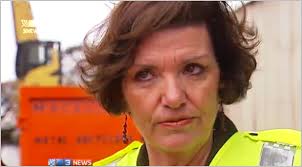
David Seymour: How long after the current Prime Minister’s retirement will the Government raise the age of entitlement to New Zealand superannuation?
Mr SPEAKER: No. Oh, I will let the Minister address it. It is a marginal question, I have to accept.
Hon ANNE TOLLEY: That is so far in the future I could not even contemplate it.
When income is procured through the threat system of taxation and redistribution, no wealth is created … The unproductive consumers are merely a conduit for funneling what was taken back to those who produced it in the first place. It is like trying to increase your bank account by writing yourself a check. And unless the receivers are required to spend 100 percent of the BIG [Basic Income Guarantee], the result will not even be zero-sum. It will be negative-sum. Dylan Pahman
Will you solve the foster-parent drought that makes it impossible to find placements for our mokopuna?
The current law gives priority to placing a child with a member of their family or wider hapū and, if that was not possible, then to someone with the same tribal, racial or cultural background as the child.....But new legislation removes that priority, and instead puts emphasis on the child's safety.It is particular troublesome to identify "tribal, racial or cultural background" as a priority for placement. Why?

"Just because we want to provide a safe and loving home doesn't make it mutually exclusive to a Maori home," Fox said.What she actually wants is the status quo - whanau first.
"I've known of too many children thrown from pillar to post between whanau members. I also know of hundreds of Maori who have been massively successful because they were lucky to have relations who would look after them.The government is currently recruiting people who can effectively adopt children under their Home For Life programme.
"But to apply a blanket whanau-first principle just does not in the circumstances make any sense," Peters said.
History has already resulted in a "stolen generation," said Fox.That ignores the current push to find permanent and stable homes for children.
"Children who were put into state care immediately went to the bottom of every disparaging statistic in this country. They immediately are more likely to offend, more likely to be in prison, more likely to fall out of education."
“The fundamental provision in this bill in the deliberate intention to remove Māori children from Māori whānau for good! It is an assimilationist policy!”Bunkum. It's long overdue policy to keep children safe. To give them the best chance of leading happy and fulfilling lives. If anything it's about ignoring (or at least de-proritising) race and culture and seeing the child as an individual foremost.
The [Expert Panel review of CYF] found children and young people said they crave nurturing and love, and feel the stigma of being in care. They feel powerless in the face of a system which is perceived to hold all the power and have no voice in important decisions being made about their future.
Minister Anne Tolley says that the goal of this bill, is to bring the focus squarely on the children.
“The bill makes changes to the purposes and the principles of the act, to imbed a truly child centric approach and ensure children's and young people's participation.”


To institute mandatory work preparedness requirements and pressure women leaving these violent relationships to go into work flies in the face of generations of work in this country to enable women to leave these violent relationships.”However, a letter in today's DomPost, from the National Council of Women (traditionally very left-wing), the Federation of Business and Professional Women, the Equal Opportunities Employment Commissioner, CTU and National Collective of Independent Women's Refugees says the following:
"....people affected by domestic violence should be able to take up to 10 days leave. This will help them move house, attend court hearings and meet with lawyers. Put simply: this bill will save lives. It will make it easier for people to leave a violent relationship and stay in employment. It will also keep victims safe at work from their abusers." (My emphasis)
Up to 34,000 workers at the Australian government’s Department of Human Services (DHS) are scheduled to hold rolling strikes over the next two weeks. They include staff at Centrelink, the agency that oversees welfare payments, along with Medicare and Child Services employees.
The limited industrial action has been called by the Community and Public Sector Union (CPSU) in the face of protracted opposition by public sector workers to the government’s demands for cuts to wages and conditions. There is also immense popular anger over the government’s draconian “debt recovery” scheme targeting current and former welfare recipients, which Centrelink workers are being forced to implement.

"...the report notes that welfare numbers have declined faster than unemployment in recent years, suggesting that not all those pushed off benefits have found jobs.
"Just what has happened to these people, and whether they are better or worse off, is a mystery." "

"18 percent of people who moved off a benefit but did not return, their main activity two years later was unknown. It is possible that some of these people were being supported by their partner."I suspect quite a large proportion as movements in and out of sole parenthood are common, and the rate of sole parent dependency has fallen the fastest.
I can find no warrant for such an appropriation in the Constitution, and I do not believe that the power and duty of the General Government ought to be extended to the relief of individual suffering which is in no manner properly related to the public service or benefit. The friendliness and charity of our countrymen can always be relied upon to relieve their fellow-citizens in misfortune. This has been repeatedly and quite lately demonstrated. Federal aid in such cases encourages the expectation of paternal care on the part of the Government and weakens the sturdiness of our national character, while it prevents the indulgence among our people of that kindly sentiment and conduct which strengthens the bonds of a common brotherhood.
– Grover Cleveland, " Letter to the House of Representatives" [1887]
"Poor Law dries up the springs of private charity."
"...and the class requiring assistance would begin to consider that they had a right to demand the money which was collected by means of the poor rate, whereas they ought rather to feel that any assistance they obtained was given as a charity".
"I consider that to be a most dangerous principle for any State to confirm."
"...work is more than just a means of income generation. Work also provides adults and their families with a time structure, a source of status and identity, a means of participating in a collective purpose, and opportunity for social engagement outside family life. A host of studies have connected joblessness to increased risk of family destabilization, suicide, alcohol abuse, and disease incidence, as well as reduced lifespan. Several large reviews of research conclude that unemployment not only reduces physical but also psychological well-being."


