Sunday, March 15, 2015

Half of NZ 15 year-olds sexually active?

A Massey post grad researcher told the Herald on Sunday,

"About half of New Zealand 15-year-olds were sexually active..."

What is the source for that?

Some googling turns up this from the Ministry of Health,

"Studies suggest that by the time they reach 15 years of age, about 10–30 percent of New Zealand young people have had sexual intercourse....There is evidence that a sizeable minority of New Zealand teenagers have had sexual intercourse before they reach 16 years of age...A 1986 study of 15-year-old girls living in Wellington’s Hutt Valley found that 29 percent had experienced sexual intercourse (Lewis 1987). Just under 2 percent of the group had first intercourse a age 12, while 12 percent had first intercourse at age 15. A similar study of 16–19-year-olds attending an urban coeducational high school found that 22 percent of students were sexually active before age 16 (McEwan et al 1988). When assessed at age 15 in 1992, 8.5 percent of young people in the Christchurch Health and  Development Study reported having had sexual intercourse at least once (Lynskey and Fergusson1993). Girls (10.2 percent) were more likely than boys (6.8 percent) to have had sex. A year later, at age 16, a quarter of the sample reported having had sexual intercourse (Fergusson et al 1994)."

Add to that information the latest research into the falling teenage birth rate finds:

"Delaying becoming sexual active among school-aged teenagers is an important factor in the declining teenage birth rate in New Zealand."
According to the Herald on Sunday the researcher thinks the reason HPV vaccination rates are low amongst Pakeha is a belief that "white girls don't have sex".

That would be a stunningly stupid idea but exaggerating the incidence of it doesn't aid her cause.

Update
Family First's Bob McCoskrie has also pointed to the following quote from the University of Auckland's  The Health and Wellbeing of NZ Secondary School Students in 2012,
Approximately three-quarters of students have never
had sexual intercourse. Twenty-five percent of male
students and 24% of female students reported ever
having had sex

Saturday, March 14, 2015

Only in Northland

There's something happening in Northland that's not happening anywhere else in New Zealand. Apart from a by-election that is.

Northland is the only region that has a rising teenage birth rate.

Researchers have attempted to understand why, to no avail. Yes, Maori have a higher teenage birthrate and the Maori population is high in Northland, but the same can be said of the East Coast. Yes, the unemployment rate is high in Northland, but the same could be said of the Bay of Plenty.


While Northland has a relatively high Māori population at ages15-19 (46%), it is not as high as in Gisborne (62%), which has better education and employment outcomes. Bay of Plenty has the highest  teenage unemployment rate (15%), and a relatively high proportion of Māori (41%), both similar to Northland, but the teenage birth rate (37.8) - while third highest after Northland (45.6) and Gisborne (45.4) - is considerably lower and has declined while Northland’s has not. These local regional differentials suggest a complex mix of economic circumstance and ethnicity.There may also be a rural-urban divide in terms of access to sexual health services, especially for teenager.
I don't expect any candidate to promise to change the trend, but whatever is driving it will be some policy failing - however indirect.

Friday, March 13, 2015

Child Support fiasco

NZ's  child support scheme is a direct result of the DPB. Some background:

New Zealand’s legal tradition is based on that of the UK. Until 1981, maintenance orders and agreements were determined and/or administered by the courts. In 1981, the Liable Parent Contribution Scheme was established to collect maintenance for the benefit of children living with income support recipients. The Scheme was administered by the Department of Social Welfare. Arrangements for parents not in receipt of income support continued to be made through the courts.
In 1992, the Child Support Scheme was established, administered by Inland Revenue. It is compulsory for custodial parents receiving income support to seek child support through the scheme. Other parents can use the scheme or can make voluntary or court-based agreements.
Due to increasing rates of separation and childbirth outside marriage, rates of sole parenthood have risen significantly in recent decades, and are higher than in Australia. Nearly half of mothers have spent some time as a sole mother before they turn 50. Young mothers are the most likely to be sole parents. Approximately 30% of sole parents have never lived with the other parent of their children. The rate of sole parenthood is much higher amongst Māori and Pacific Islands families.
So now we have this mammoth system that requires a ridiculous $180 million of taxpayer's money merely to adjust.

Anyway, from April 1 a new child support formula will apply. Already parents - custodial and non-custodial - a receiving new assessments. According to the IRD;

“Rather than being a one size fits all, from 1 April 2015 a new formula includes both parents' incomes and circumstances, and recognises a wider range of care. So the amount of child support some parents pay or receive may change".

The system is supposed to be fairer. Of course every parent that has to pay more isn't going to see it that way.

Already Stuff has ample examples of people angrily laying out their grievances. Hopefully they will be motivated to sort out a private arrangement instead of leaving it to the IRD. If neither parent receives a benefit that is their prerogative. Stop moaning and sort it yourselves.

One aspect of the changes which caught my attention however involves one parent being on welfare.

In the case laid out by the female parent, who pays CS to the male parent who is on  a sickness benefit (no longer exists so assuming a JobSeeker benefit), she claims her monthly payment has risen from $730 to $931  but he woesn't get any of it.

I am assuming she means he doesn't get any of the CS payment full stop - not just the increase. If he was on Sole Parent Support that would be the case because CS payments are kept by the state to offset that benefit. The same must apply to the JobSeeker benefit especailly as ex DPB with older children have been transferred to this benefit.

On my reading of the examples so far, most people are getting substanstantially increased CS bills (though naturally enough they are the most vociferous).

It will be most interesting to see how much the benefit clawback increases under this new regime. From memory it has never exceeded a paltry 10 percent.

Wednesday, March 11, 2015

For Gecko: work in progress

Gecko is kindly letting me use some of her photos to draw from. Her recent hare photos drew to mind the Albrecht Durer Young Hare sketch. This process of putting the images next to each other pinpoints what I need to change.


Catherine Isaac: Give charter schools a chance

The Dominion Post has a distinct anti-ACT bias. To their credit (though they may have had no choice) they have published a piece from Catherine Isaac today responding to a recent editorial. Isaac's piece is not on-line so I've scanned it. Well worth a read. No doubt it'll elicit a further range of responses from unionists and public education advocates seeking to protect their own interests.

(Left click on images for easy readability.)


Tuesday, March 10, 2015

On Labour waiting for their turn in government

 Labour supporter Phil Quinn writes:
Labour’s electoral problems are not especially complex or mysterious: the party’s appeal has shrunk to a handful of urban and suburban pockets; it has failed to rejuvenate in policy, personnel or organisational terms since its repeated drubbings; and it operates under a set of self-serving delusions, foremost among them the unshakeable belief that the tide will go out on National eventually so shut up and wait our turn.
Maybe I'm wrong. Perhaps it is disloyal to point any of this out. Maybe the key to electoral success lies in never questioning; in mindless devotion to whoever happens to be in charge. There is certainly a plausible case that Labour will win the next election due to the unwritten rule that Kiwis like their governments on a nine-year rotation. The next election will certainly remove any doubt on that point: if this Labour Party, broke, moribund and bereft of ideas, can win the 2017 election then the three term rule will rise to immutability.

 
The three term rule assumes predictable behaviour based on constant ethnic and age demographics, a condition currently lacking. Labour waiting for 'their turn' is then a highly dubious strategy.

By moving so readily and cheerfully to the centre-left ground, National has starved Labour of  its traditional vote.

The debates move further out to the fringes between the small versus big govt advocates. The masses in the middle, who take little day-to-day interest in politics, will stay with a government that doesn't shake their world.

Perhaps that is what Little is thinking as he systematically dumps any significant policy differences. 

Trouble is, not rattling cages only works for the incumbent party.

Monday, March 09, 2015

More 'who to believe' stuff

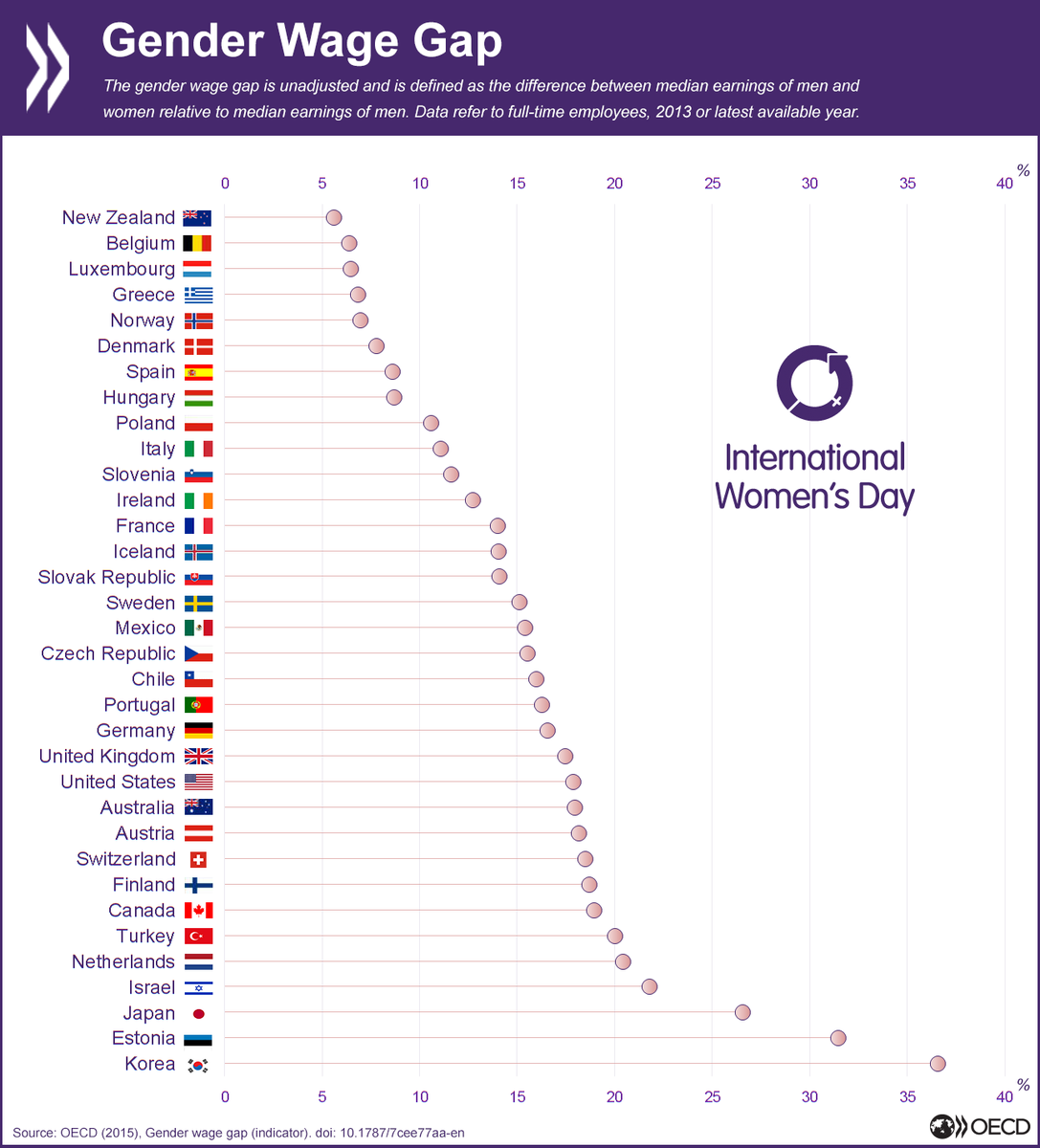
Labour MP Clare Curran is moaning about the gender wage gap:

In 2015 New Zealand women face a widening gender pay gap, ongoing harassment at work and are increasingly being blocked from senior positions, Dunedin South MP Clare Curran said today.
Delivering the opening speech of the YWCA Dunedin UN International Women’s Day event, Clare Curran said the gender pay gap in the public sector stood at 19%, the highest it has been since 2007.
‘The private sector performs slightly better at 15.6% but there is still a trend towards lengthening rather than narrowing the gap.

Yet Utopia - you are standing in it has this chart up:

 View image on Twitter

Whose research to believe?

On the declining teen birthrate:

The main direct factor in recent declines has been the increased use of contraception, but the other is delaying age of first sexual experience and the nature of that experience.
Underlying differences in the use of contraception and age at first sexual experience are a range of social, economic and cultural factors. Socio-economic disadvantage is a key factor, and this is broader than financial disadvantage: it involves broader social capital factors such as parental involvement, education, employment opportunities, leisure activities and community involvement.
That's according to the latest NZ research  commissioned by Superu and produced by the University of Waikato.

But the NZ Herald reports today:


A paper called Is Education the Best Contraception? The Case of Teenage Pregnancy in England, published in Social Science and Medicine, said: "Educational performance is significantly associated with lower teenage pregnancies and the estimated effects are large. For example, a 10 per cent increase in GCSE [end of school results] implies a reduction in the teenage conception rate of about 8 per cent."
Figures released last month showed the pregnancy rate for under-18s in England - although still among the highest in the west - has fallen by more than 40 per cent.
"Given that the numbers achieving five good GCSEs have increased by about 50 per cent since 2004, this factor alone has the potential to explain a large proportion of the recent decrease," the paper said.
Previously it was thought that long-acting, reversible forms of contraception (Larcs), such as IUDs, were a key factor. But the study found a large increase of the use of Larcs had only a small effect. A 10 per cent increase in their use was associated with a reduction in the under-18 conception rate of about 0.3 per cent.

The NZ finding is largely based on literature reviews from overseas countries. For instance:

Kearney and Levine (2012) compared the United States to countries with lower teenage birth rates and found the main difference was in the extent of contraception use rather than sexual activity. US teenager s had a lower level of sexual activity than many of the European countries with lower birth rates, but also had a much lower level of contraception use. However, both sexual activity and contraception use are moving in positive directions with sexual activity declining and contraception use increasing, thus both contributing to the decline in teenage births in the United States .

Are the welfare reforms given any credit for declining teenage birth rates? Again from the NZ literature review:


Levine (2002) and Hao et al (2007) found no relationship between teen
age pregnancy and welfare policies in general. But Hao et al (2007)
did find that strong enforcement of child support payment policies for fathers deters teenage pregnancies and births and increases school enrolment of teenage girls. Horton (2006) found a small decline (3.25% to 2.8%) in teenage childbearing following the 1997 US welfare reform aimed at making assistance temporary and encouraging work.
The NZ paper goes on:
Increased contraception use and reduced welfare benefits have been used to explain the first period of decline in the United States. But the role of policy is likely to be secondary as a similar decline has occurred in most other developed countries.
Except "most other developed countries" have been reforming their welfare systems similarly - the UK, Australia, Canada and NZ.

Here's the only thing I can say for sure.

If you have an opinion on why the teenage birth rate is declining - for example, welfare reform as a significant factor - it won't take you long to find a paper that supports it. And another that rejects it.


Saturday, March 07, 2015

Little on-song for Nats

The Nats will be cheering for Labour Leader Andrew Little this morning. Trying to derail their Northland by-election campaign he tells the NZ Herald,

"That poll result last night would have been a massive wake-up call for National. If a candidate other than National wins then the Government is down a vote and can't ram through things like the Resource Management Act reforms."

This is exactly the message National has been promoting  to win the election.

Has Little no idea how unpopular the RMA is?

Friday, March 06, 2015

Housing NZ stock doesn't match the need

MSD has published data pertaining to Housing NZ stock and tenancies.

I've done some analysis:

- only 9 percent of properties are bedsits or one bedroom, but 29 percent of tenants are one person households. That means 12,829 tenants have a 'spare bedroom'.

- Almost 80 percent of the properties are 2  and 3 bedroom

- Almost two thirds of tenancies are to people aged 45 plus; just over a fifth are to Superannuitants. It would appear that a lot of people remain in 2 and 3 bedroom properties after their children have grown up.

- the most common type of tenant is one parent with children (33%). A state house tenant is more than  twice as likely to be a sole parent than a couple with children.


It's only common sense to adjust the stock to fit the need. That would solve a good deal of the low-income housing shortage. A couple of rough graphs showing 1/ the number of tenancies by number of bedrooms and 2/ the number of tenancies by age group


Another feature adding to 'homelessness' is the number of properties described as 'vacant' - 2,226 or 3.4% of the total (66,215).  Properties being sold or moved may need to stand vacant for a short period though my own  local observations are some properties stand vacant for months.

(State housing is just another form of income redistribution riddled with inefficiencies, bad incentives and injustices. But it isn't going away. Not under this government.)

Thursday, March 05, 2015

Wealth and IQ in NZ

The following is compiled from the well-known Dunedin Multidisciplinary Health and Development Study and applies to cohort members at age 38.

I was most surprised to see the IQ variable included.


"The childhood IQ model also explains a low amount of wealth variation: again less than 2%. But IQ is also statistically significant, with each extra IQ point gaining a person $5,600 more wealth at age 38."

Wednesday, March 04, 2015

If you believe in end- of- life choice, do something about it

This debate is going to get messy when people don't tell the truth.

Just recently TV3 reported:

Nearly half of Kiwi doctors are in favour of euthanasia, or physician-assisted dying (PAD), according to a survey covered in the New Zealand Medical Journal today.

Yesterday, a report appeared on Stuff which contained the following statement:

Feedback from NZMA members on the issue showed universal opposition to voluntary euthanasia and doctor-assisted suicide.

If you favour voluntary euthanasia, and this kind of politicking frustrates you,  there is now something you can do about it.

Petition launched Thursday, 19 February 2015, 12:03 pm

Press Release: Voluntary Euthanasia Society Press Release from the Voluntary Euthanasia Society of NZ

The Voluntary Euthanasia Society of New Zealand has launched a petition urging Parliament to debate a law change that would allow doctors to help terminally ill patients end their suffering. “Unfortunately, even with over 80 per cent of New Zealanders wanting legalisation, politicians still sit on their hands, agonising and arguing about much less important issues,” VESNZ President Dr Jack Havill, of Hamilton, said in a statement today (Thursday).

Dr Havill, a retired intensive care specialist, said: “The petition will give New Zealanders a chance to get the issues discussed before a select committee. The case is excellent and the public want an honest and informed discussion."

The petition was formally launched on the eve of Friday’s arrival of one of the world’s leading experts on voluntary euthanasia, Dutchman Dr Rob Jonquière, for a nationwide 19-day speaking tour. Dr Jonquière, who helped draft the pioneering Dutch euthanasia legislation, is Communications Director of the World Federation of Right to Die Societies, which comprises 49 organisations committed to allowing people to make choices for a dignified death in 24 countries. He has been invited by VESNZ, which campaigns under the title End-of-Life Choice.

The petition reads: “The undersigned respectfully request that the New Zealand House of Representatives investigate fully the public attitudes towards the introduction of legislation which would permit medically assisted dying in the event of a terminal illness or an irreversible condition which makes life unbearable."

Former Labour MP Maryan Street, who proposed a private member’s Bill for a law change in the last Parliament, said: “We want MPs to see that there is a great deal of public support for this bill. It is a compassionate and closely prescribed bill, applying only to New Zealand residents aged 18 or over who have terminal illnesses or conditions which make their lives, by their own definition, unbearable. “We would like the petition to be heard by the Health select committee. It could prepare the way for an MP to put the End-of-Life Choice Bill back in the ballot. At the very least, it would present MPs with the opportunity to hear from a range of people about this important and enduring issue."

 This is where you need to go to  download the petition form to sign and/or collect other signatures. I'll be doing both.