A spokesman for the Wellington City Coucil commenting on a rehash of burial laws:
"There has to be strict controls in place," a spokesman said. "There's a
terrifying possibility of people just being able to ... dig a hole and
put granny in it and put some flowers in it. It raises all sorts of
obvious questions about procedure."
Terrifying? Like when a beloved pet expires and is buried in the garden? It'd be a whole lot cheaper than current procedures, good for the earth and a more peaceful ending than cremation. With the way families are these days, distributed all over the world, frequently remarried with complicated family relationships, cemeteries aren't as user-friendly.
Saturday, October 05, 2013

Thursday, October 03, 2013
Charter schools not an unpopular idea
Nearly 45 per cent of respondents supported charter schools because they felt they would provide a different approach to education.A finding from a recent Herald Digi-poll.
I was having a conversation with an ex ACT staffer about the charter school policy just the other day. He said he was surprised that Labour didn't constantly refer to the charter schools as "ACT's" charter schools thus demonising them in the public eye. I said I thought the policy was actually reasonably popular going on what I'd seen and heard. Then he speculated that's what Labour's polling might be telling them and to tag them ACT's schools would actually accrue credit to the party. It's a possibility given the above result.
I'm in favour of a different appproach as well. But my gut feeling is the upbringing and home environment is the bigger factor in educational failure.
We frequently hear about the 20 percent that come out of the education system without qualifications. And I constantly talk about the 20 percent of children who go onto a benefit at birth or shortly after. The proportion has fluctuated between 18 - 25 percent over the last couple of decades. What's the correlation or overlap?
As a research project it's doable but not by me. A team would need to identify a group and examine their benefit histories, so privacy issues would come into play. I was thinking about any existing research. Perhaps the Christchurch Health and Development Study. But that followed a 1973 birth cohort. Growing up on welfare was far less common in the seventies. In 2028 or thereabouts, the Growing Up In New Zealand Study would have the data but that's a long time to wait. And as I've observed before, the study already has considerable drop-out and those children are most likely to be on welfare and transient.
Of course, any results would be discounted by the opposition as down to poverty and not welfare dependence ... but my, it would be fascinating to know what the overlap is.
(There is a review here -p57- of various studies into the effect of income from welfare on child outcomes. I don't have time now to quote from it. Mixed results anyway.)
Wednesday, October 02, 2013

Graph of the day

Opportunities created by our ageing population
This changing demographic and social landscape provides New Zealand with opportunities to:
• develop innovative approaches to the provision of healthcare, transport, housing,
social and other services
• develop and grow businesses targeting older consumers from a range of cultural
backgrounds
• establish long-term, affordable and accessible rental housing for older people
and ensure social and supported housing is available for those who need it
• retain experienced and skilled employees to contribute to productivity growth and
to mentor young employees
• deliver Better Public Services, including greater creativity in connecting New
Zealanders with government information employment and further education (results
five and six) 3
• increase co-operation and partnership across government agencies, communities
and businesses to develop and enhance services, economic opportunities and living options.
Monday, September 30, 2013
2,000 benefits a week cancelled!
The Standard is hysterical over 2,000 benefits a week being cancelled. It's "warfare of welfare" they say. The NZ Herald today reported Paula Bennett saying:
In the April to June quarter 2013, 69, 043 people had their benefit cancelled.
213 people a week had their benefit cancelled due to a change in marital status; 74 because they went to prison; 266 because they became a full-time student; 49 because they passed away; 180 because they left the country; 76 because they had excess income or assets; 751 because they didn't renew, or contest a non-payment; and 34 because a child in their care was no longer dependent.
Only 136 had their benefit cancelled because they didn't meet work obligations.
I wonder how many benefits were cancelled under Labour?
Go back to 2003/04 when there was a similar number of main benefits in place (320,000-ish)
That year 277,000 benefits were cancelled. 34 percent because people obtained work. 37 percent for 'other reasons'. 26 percent were transferred to other benefits. (The remaining 3 percent are 16-17 year-olds with no cancellation reason given but they are most likely transfers to other benefits.)
Shock horror.
Under Labour 1,956 a week people a week had their benefit cancelled with no job to go to.
"On average 1500 benefits are cancelled every week because people get work, with another 2000 cancelled weekly for a variety of other reasons."The Standard says:
That’s 2000 people every week who do not have jobs having their benefit cancelled.That’s 2000 people, bashed and vilified at the best of times, having the safety net pulled out from under them every week and left without rent money or food money or any obvious means of support.
In the April to June quarter 2013, 69, 043 people had their benefit cancelled.
213 people a week had their benefit cancelled due to a change in marital status; 74 because they went to prison; 266 because they became a full-time student; 49 because they passed away; 180 because they left the country; 76 because they had excess income or assets; 751 because they didn't renew, or contest a non-payment; and 34 because a child in their care was no longer dependent.
Only 136 had their benefit cancelled because they didn't meet work obligations.
I wonder how many benefits were cancelled under Labour?
Go back to 2003/04 when there was a similar number of main benefits in place (320,000-ish)
That year 277,000 benefits were cancelled. 34 percent because people obtained work. 37 percent for 'other reasons'. 26 percent were transferred to other benefits. (The remaining 3 percent are 16-17 year-olds with no cancellation reason given but they are most likely transfers to other benefits.)
Shock horror.
Under Labour 1,956 a week people a week had their benefit cancelled with no job to go to.
UK ending the "something-for-nothing culture"
The Scotsman is reporting:
What amused me about the last sentence is what he says later:
THE long-term unemployed are to be put into community service, made to look for work every day or be put on a programme to tackle their underlying problems in a dramatic toughening up of the welfare system, Chancellor George Osborne will announce today.
In his address to the Conservative Party conference in Manchester, Mr Osborne will say that the option of simply signing on to receive unemployment benefits will end within months.
The Chancellor will promise an end to “the something-for-nothing culture”, in a move that is expected to go down well with Tory members.
The £300 million “Help to Work” package will see 200,000 people who have been unemployed for at least two years, including more than 20,000 Scots, being forced to work for their benefits or attend intensive programmes aimed at getting them a job. The programme is set to be rolled out in six months, and Mr Osborne will tell Tory members that it is part of his strategy to make the economic recovery last.
In a conference where the Tories are pitching themselves as the party “for hardworking people”, the Chancellor will explain that he is an “economic optimist”, but tell delegates he is offering an “economic plan, not a quick fix”.
And in a direct rebuff to Labour’s attacks on falling living standards, he will warn that “without an economic plan, you do not have living standards”.
The unemployment initiative was last night condemned by Labour as a return to the spirit of the workhouse, as strict new rules will see people lose their benefits if they do not follow the programme.
From April next year, people claiming Jobseekers Allowance will have to either do full-time community work, attend the jobcentre and search for work every day, or be placed on the new Mandatory Intensive Regime – a tough programme which will see claimants with problems such as drug addiction or mental health issues attend jobcentres regularly to tackle the difficulties which stop them working. They will regularly meet specialist advisers to deal with their individual problems.
If they fail to do one of the three options they will lose their benefits, at present worth up to £71.70 a week.
Mr Osborne will boast that the scheme is the first across the UK which will see people forced to work or lose their benefits.
The Chancellor will argue that under Labour, people were left “trapped on benefits”, with 1.4 million people in 2010 having spent nine out of the previous ten years on benefits.
Complaining about a “lost generation”, Mr Osborne will also point out that the number of workless households in the UK almost doubled under Labour, from 136,000 in 1997 to 269,000 in 2010. He will say: “By the time Labour left office, five million people were on out-of-work benefits. What a waste of life and talent. A generation of people recycled through the jobcentre, collecting their dole cheques year in, year out, and no-one seemed to notice.”
Recent statistics from the Office for National Statistics reveal that Glasgow has a higher proportion of workless households than any other part of the UK, with 30.2 per cent of homes in the city being workless. The figures showed huge disparity across Scotland. Only 12 per cent of households are out of work in Aberdeen and Moray, in contrast to many parts of west-central Scotland, such as North Ayrshire, where 28 per cent of homes had no-one working, and Inverclyde, where the figure was 25 per cent.
Mr Osborne will blame the “open door immigration policy” under Labour for keeping UK citizens out of the low-skilled labour market. Highlighting government achievements so far he will say: “Well, never again. We’ve capped benefits and our work programme is getting people into jobs. Immigration down by a third.”
What amused me about the last sentence is what he says later:
And in a bid to give an upbeat message he will add: “I’m an optimist about the world. “I am a believer in freedom and free markets. I see the global economy growing. I see hundreds of millions of people in places like India and China leaving grinding poverty to join it. That’s something to celebrate.”Maybe I am mistaken but I always thought that "freedom and free markets" stood alongside open immigration. Call it pragmatism if you like but politicians only ever sing from the right song sheet to the extent that it aligns with popular beliefs - and getting re-elected.
Children's Commissioner gets it wrong
An article from Stuff at the weekend described research into the increase in babies dying from head injuries.
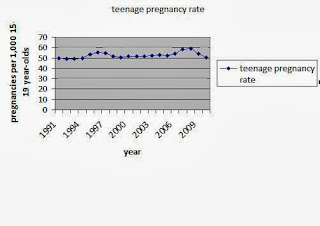
 I'm not denying that teenage births and sole parenting are factors in child abuse, but it's the dysfunctional welfare lifestyle that often accompanies these circumstances that's the problem. There were more teen pregnancies and births before the DPB but back then society dealt with them in a way that improved the outlook for the babies. Not the opposite. The genie got out of the bottle in the seventies. The last twenty years have seen something of a stabilisation in numbers but intergenerational dependency has continued to increase.
The number of babies dying from deliberately inflicted head injuries increased almost four-fold since 1991, with damage seen akin to that suffered in car accidents, a new study says. In the first study of its kind in New Zealand, researchers examined data from Auckland's Starship Hospital and the Auckland city forensic pathology department, examined clinical records, autopsies, and police reports from 1991 to 2010.At the end the Children's Commissioner comments.
Wills said over the 20 years studied, several factors could have led to the dramatic increase in inflicted injuries, including a sharp increase in teenage pregnancies, sole parenthood, and most likely an increase in domestic violence.There was no sharp increase in teenage pregnancy or sole parenthood over 1991 to 2010


Friday, September 27, 2013
Extending time on benefit by adding children
From the Taylor Fry actuarial report released yesterday here's a couple of interesting graphs. The first shows how many sole parents fall into each group by age of youngest child. Note that the largest group is those who have a youngest child 5 or older and have been on a benefit for more than one year. The smallest group is the same by age of child but have been on welfare for less than a year.
 The second graph shows the movement between these groups. Here we can see that 360 people who have been on a benefit more than a year who had a youngest child aged 5 or older have returned to the group with a youngest child 0-2. All up, in the year to June 2012, 3240 ( 810 x 4) sole parents returned to the group with children aged 0-2.
 That is interesting because the average annual number of children added to a sole parent benefit during 2006 - 2010 was 4,400.
The difference may be explained by the fact that someone can only return once within two years but could, during that period, have yet another child.
The new policy that only suspends work obligations for one year when a subsequent child is added (dependent on the age of next oldest child) didn't kick in until October 2012 so it'd be surprising if there has been a big reduction. Especially as the rate of adding children had been increasing.
Never let Labour near welfare again
When he was Minister for Social Development Steve Maharey either said or wrote repeatedly that the average duration on the DPB was 3 and a half years. He was wrong about that. More importantly, he made policy based on incorrect information.

If Labour is re-elected the next Minister will be Sue lets-extend-paid-parental-leave Moroney. Clearly another steeped in hand-out mentality who can't get her facts right.
The current Minister has a better handle on welfare than any previous. She has opened up the books and given data to people who know how to analyse it. She has subsequently targeted reforms at those people who are at greatest risk of being long-term dependent, for their sake and the rest of the country. She can go further but she'll need a mandate.
Whatever else your priorities are, factor in welfare when making a choice next year.
Thursday, September 26, 2013
"Sole parents spend an average 15.8 years on benefit"
Well.
After years of trying to tell people that sole parents spend many, many years on benefit I see MSD has just released a statement containing this:
I have repeatedly talked about Professor Bob Gregory's Australian research which found sole parents spend an average of 12 years on welfare not including benefits they may move to when they no longer had dependent children.
People have derided me for it in public forums. For instance Marilyn Waring sneeringly telling an audience I had included time spent on Super. Time and again politicians, welfare advocates, bloggers etc have sought to convince the population that the average time spent on the DPB is, most commonly, only about 3 years. They look at the available data but don't understand it.
This official finding only covers benefits up to age 65. It backs up what Gregory found. I can think of no reason why Australian and NZ sole parents would be markedly different.
Now I will go and read the latest actuarial valuation report to understand how the calculation was made (if my struggling lap-top can find the resource to open it.) It may not be rock solid. I don't know. But we are getting closer to the truth all the time.
After years of trying to tell people that sole parents spend many, many years on benefit I see MSD has just released a statement containing this:
"...sole parents spend an average 15.8 years on benefit with a lifetime cost2 of $234,000."
I have repeatedly talked about Professor Bob Gregory's Australian research which found sole parents spend an average of 12 years on welfare not including benefits they may move to when they no longer had dependent children.
People have derided me for it in public forums. For instance Marilyn Waring sneeringly telling an audience I had included time spent on Super. Time and again politicians, welfare advocates, bloggers etc have sought to convince the population that the average time spent on the DPB is, most commonly, only about 3 years. They look at the available data but don't understand it.
This official finding only covers benefits up to age 65. It backs up what Gregory found. I can think of no reason why Australian and NZ sole parents would be markedly different.
Now I will go and read the latest actuarial valuation report to understand how the calculation was made (if my struggling lap-top can find the resource to open it.) It may not be rock solid. I don't know. But we are getting closer to the truth all the time.
Detained because of your genetic make-up?
Makes a change to read something intellectually stimulating in the press. But it is the ODT:
An individual's freedom could be curtailed based on his or her genetic make-up. That's scary stuff. But early intervention to decrease negative effects of low MAO-A sounds more reasonable. In fact it probably already happens arbitrarily. Unfortunately the intervention eg removal from a bad home environment, doesn't guarantee a better home environment.
I don't know. This brave new future doesn't hold much appeal for me regardless of the "enhancements" promised. But then I live a relatively safe and secure middle class existence...
Research suggested people with genes causing low levels of an enzyme called MAO-A, when combined with a bad childhood, had a ''significantly higher'' rate of ''violent criminality'', he said.
In contrast, those with high levels of MAO-A, even those who experienced bad childhoods, were less prone to violence.
This and other genetic and neuroscientific research had already been used in the Italian justice system and it could be used here in ''two ways''.
It could be used to excuse a defendant of their conduct or ''reduce their culpability'' - for example having murder reduced to manslaughter or being given a lighter sentence.
''I have spoken to one judge fairly recently who said he would have no problem with admitting genetic evidence at [sentencing] if he was convinced it was reliable evidence.''
It could also be used as evidence to keep people in prison for longer, or deny parole, on the basis they were genetically predisposed to reoffend when released.
Prof Gavaghan, the director of the New Zealand Law Foundation Centre for Law and Policy in Emerging Technologies, said this could become more relevant if Justice Minister Judith Collins' Public Safety (Public Protection Orders) Bill passed, which would allow the most serious sexual or violent offenders to be detained after serving their sentence if they were judged to pose an imminent risk of reoffending.
As the science developed, there was a possibility of it being used in more disturbing ways, with The Anatomy of Violence author Adrian Raine raising the possibility of a future where all males at age 18 are given a brain scan - and if they failed they could be ''detained indefinitely''.
The development of science in this field raised ''important'' political questions over the course New Zealand should take, Prof Gavaghan said. He also said that a large proportion of the public would likely support the scenario envisaged by Mr Raine.
''If the public are offered a possibility that they and their children will be safe and the only cost will be a small number of dangerous people will be deprived of their freedom, I don't think politically that's a hard sell at all.''
Oxford Uehiro Centre for Practical Ethics director Prof Julain Savulescu explored the issue further and also looked into the idea of using drugs to enhance people's morals.
He suggested children with the low MAO-A producing gene could be prioritised by social service agencies, because they were more likely to commit violence if they were not well raised.
He also argued in favour of using drugs to enhance morals in ''targeted ways'', and not just for criminals.
''It is only a matter of time before the human brain can be under our control, as indeed our body is, in terms of physical enhancements,'' Prof Savulescu said.
An individual's freedom could be curtailed based on his or her genetic make-up. That's scary stuff. But early intervention to decrease negative effects of low MAO-A sounds more reasonable. In fact it probably already happens arbitrarily. Unfortunately the intervention eg removal from a bad home environment, doesn't guarantee a better home environment.
I don't know. This brave new future doesn't hold much appeal for me regardless of the "enhancements" promised. But then I live a relatively safe and secure middle class existence...
Tuesday, September 24, 2013
Weak start for Sue Moroney
A question irrelevant to the subject. I don't know why Bennett can't simply say 'No'.
Benefits—Outstanding Arrest Warrants
7. MELISSA LEE (National) to the Minister for Social Development: How is the Government’s new warrants to arrest policy for those on benefits ensuring a fairer welfare system?
Hon PAULA BENNETT (Minister for Social Development): As part of this Government’s substantial welfare reforms we said we would stop benefits for those who are on the run from the police with an outstanding warrant. Since this policy took effect on 15 July, 311 people have been matched and notification sent. Of these, 161 warrants have been cleared within 6 weeks of operation and 95 people have been sanctioned.
Melissa Lee: What process takes place before reducing or suspending benefit payments where there is an outstanding warrant?
Hon PAULA BENNETT: The new policy means that beneficiaries who have an outstanding warrant to arrest for more than 28 days will receive a letter from Work and Income asking them to clear their warrant or face their benefit payments being stopped or reduced. They get another 10 days to clear it, but if they do not the benefit is stopped. The exception to this is for parents, who, as with all sanctions, never lose more than half of their benefit.
Melissa Lee: How often has the discretion of the Commissioner of Police been applied in highrisk offending cases?
Hon PAULA BENNETT: We did make an exception for the Commissioner of Police to request an immediate benefit suspension for seriously high-risk offenders. To date this has happened in nine cases.
Sue Moroney: Does this policy help anyone on welfare to get a job?
Hon PAULA BENNETT: What this policy does is make it fair, and people who are on the run from the police are held to account. They should not actually be getting taxpayers’ money to be on the run from the police. It is that simple. This policy is about being fair.
Grant Robertson: I raise a point of order, Mr Speaker.
Sue Moroney: Point of order. You go. [Interruption]
Mr SPEAKER: Order! There is a point of order.
Grant Robertson: I think that Sue Moroney and I had the same point of order in mind. That was a very direct question, which the Minister did not answer.
Mr SPEAKER: I invite Sue Moroney to repeat the question, please.
Sue Moroney: To the Minister—another go. Does her policy—[Interruption]
Mr SPEAKER: Order! Start the question again.
Sue Moroney: Does her policy help anyone on welfare to get a job?
Hon PAULA BENNETT: Well, these people need to clear their warrants to start with, so currently they are actually breaking the law. We thought we might clear up the legal problems they have got and get them to account for that and then we will work on the job.
Grant Robertson: I raise a point of order, Mr Speaker. I am sorry to say that that still did not address the question. I presume the answer is no, so we can just move on. [Interruption]
Mr SPEAKER: Order! Order! On this occasion the question was then addressed.
Sunday, September 22, 2013
Best movie ever
It just might be. My best movie ever. RUSH. A review from me would be redundant when Variety says it all.
The rivalry and relationship between Formula One drivers James Hunt and Niki Lauder provides much more than just another movie. Seriously. Don't miss it.
...you’ve seldom felt more alive in a movie theater than you will experiencing “Rush.”
The rivalry and relationship between Formula One drivers James Hunt and Niki Lauder provides much more than just another movie. Seriously. Don't miss it.
Roger's reforms didn't work
I made a comment to a friend while discussing New Zealand's low wage economy. Roger Douglas' reforms, however well-intentioned, didn't work I said. But they did, she replied. Well yes some of the reforms were successful and have never been undone as a consequence. But what I was thinking about was low wages. A lack of trickle-down. A lack of increased wealth. Then I came across this graph which illustrates what I mean.

The reforms might have worked if they had been left to develop without state interference - bail-outs and excessive welfare for starters.
This conversation came out of one I'd had with a visiting local government candidate who kept telling me we live in a low wage economy. No doubt her solution was a living-wage based on the tenor of her conversation and the colour of her pamphlet. "But while we have a government that subsidises employers to keep wages down, and subsidises landlords to keep rents up, what's the answer?" I asked. She simply repeated back to me ,"We live in a low wage economy."
Very few people want to stop the hand-outs, whatever form they take. So we are trapped in a complex money go-round with the people on the low wages and benefits no better off since Roger's reforms. The left thinks that the problem is not enough state assistance and too few jobs. In fact there is too much state assistance, creating less productivity, and investment capital tied up in real estate instead of enterprise.
Friday, September 20, 2013
The Dutch put on notice
Thanks to Eternal Vigilance for drawing my attention to this development now being reported extensively.
Holland’s new king Willem-Alexander today declared the end of the welfare state in a nationally-televised annual address.More
The king, who is at 46 the youngest monarch in Europe, said a new 'participation society' would take its place, in which people must save and invest to create their own social safety net with less help from the national government.
Thursday, September 19, 2013
F&P win preferred supplier contract to beneficiaries
This is an interesting development:
“In this year’s Budget I announced we would work to get better value for beneficiaries and taxpayers in the way we help people purchase fridges, freezers and washing machines,” Social Development Minister Paula Bennett said.
Hardship grants are available to beneficiaries and people on low incomes to purchase whiteware products. These grants have to be repaid.
Over $10.5 million was spent over the last year in assistance for these purchases, however second-hand products are commonly bought which can ultimately cost hundreds of dollars extra in repair and maintenance costs, increasing debt for beneficiaries.
Whiteware will be provided under the Haier brand, by Fisher & Paykel Appliances Ltd, the sole distributor of the brand in New Zealand.
The initiative will see the Ministry of Social Development enter into a preferred supplier agreement with Fisher & Paykel Appliances Ltd. Beneficiaries will continue to apply for hardship assistance and if they qualify, will be provided with a high quality appliance which they will repay MSD for.
MSD are anticipating the arrangement will result in a $10 million reduction in hardship assistance for whiteware over five years.
“For people on low incomes, paying to get the fridge or washing machine fixed can often mean going without other essentials,” Mrs Bennett said.
It is estimated the new units will cost around the same as an average second-hand unit to buy, but maintenance costs over five years will be more than halved.
“We are ensuring people needing whiteware products are able to buy a quality, reliable product, which will come with at least a two-year warranty.”
“Fisher & Paykel is a company well trusted in New Zealand, and along with a strong distribution network already in place, also operate a 24/7 customer support service.”
“This means beneficiaries purchasing whiteware through the arrangement can have confidence in the product they’re buying.”
The rollout will begin in the South Island later this month, with the whole country covered by early next year.
As part of this agreement MSD and Fisher & Paykel are also working together to identify employment opportunities in the company for beneficiaries, another positive outcome of awarding the contract to a single supplier.
Some observations:
This is good news for beneficiaries. But if F&P is giving a preferential price, someone else is paying for it. That'll be other F&P customers.
Certainly it's very bad news for second-hand dealers who are already struggling to compete with Trade Me.
A "good deal for taxpayers?" If the grants are repayable I can't see why. It should be neutral to the taxpayer. Unless the debt is not being repaid. The more likely issue.
A good marketing/ PR move for F & P? You tell me.
Paula Bennett
18 September, 2013
Whiteware initiative good deal for beneficiaries and taxpayers
The Government has finalised a whiteware purchasing agreement which will provide a good deal for both beneficiaries and taxpayers.“In this year’s Budget I announced we would work to get better value for beneficiaries and taxpayers in the way we help people purchase fridges, freezers and washing machines,” Social Development Minister Paula Bennett said.
Hardship grants are available to beneficiaries and people on low incomes to purchase whiteware products. These grants have to be repaid.
Over $10.5 million was spent over the last year in assistance for these purchases, however second-hand products are commonly bought which can ultimately cost hundreds of dollars extra in repair and maintenance costs, increasing debt for beneficiaries.
Whiteware will be provided under the Haier brand, by Fisher & Paykel Appliances Ltd, the sole distributor of the brand in New Zealand.
The initiative will see the Ministry of Social Development enter into a preferred supplier agreement with Fisher & Paykel Appliances Ltd. Beneficiaries will continue to apply for hardship assistance and if they qualify, will be provided with a high quality appliance which they will repay MSD for.
MSD are anticipating the arrangement will result in a $10 million reduction in hardship assistance for whiteware over five years.
“For people on low incomes, paying to get the fridge or washing machine fixed can often mean going without other essentials,” Mrs Bennett said.
It is estimated the new units will cost around the same as an average second-hand unit to buy, but maintenance costs over five years will be more than halved.
“We are ensuring people needing whiteware products are able to buy a quality, reliable product, which will come with at least a two-year warranty.”
“Fisher & Paykel is a company well trusted in New Zealand, and along with a strong distribution network already in place, also operate a 24/7 customer support service.”
“This means beneficiaries purchasing whiteware through the arrangement can have confidence in the product they’re buying.”
The rollout will begin in the South Island later this month, with the whole country covered by early next year.
As part of this agreement MSD and Fisher & Paykel are also working together to identify employment opportunities in the company for beneficiaries, another positive outcome of awarding the contract to a single supplier.
Some observations:
This is good news for beneficiaries. But if F&P is giving a preferential price, someone else is paying for it. That'll be other F&P customers.
Certainly it's very bad news for second-hand dealers who are already struggling to compete with Trade Me.
A "good deal for taxpayers?" If the grants are repayable I can't see why. It should be neutral to the taxpayer. Unless the debt is not being repaid. The more likely issue.
A good marketing/ PR move for F & P? You tell me.
Wednesday, September 18, 2013
The Left attacking Maori
Mike Hosking interviewed (1.25) Raewyn Tipene this morning. She has one of the contracts to establish a charter school in the North and already has a track record of success with Maori children. Hosking asked how she felt about the PPTA response to charter schools and she said she hadn't read their releases having been forewarned by her admin manager that they are "bullying and threatening." That's the exact culture this school wants to avoid. Asked how she felt about the possibility Labour would close them if they win the election next year she was stoic. She said that Maori could not afford to live in fear of what might happen. She's quite an inspiration.
So this is a whole new ball game. The Left aggressively attacking initiatives aimed at improving the prospects of Maori children. Even threatening to isolate and ostracise them by, for instance , not playing sport with them. Pathetic.
I wonder what Shane Jones makes of it?
So this is a whole new ball game. The Left aggressively attacking initiatives aimed at improving the prospects of Maori children. Even threatening to isolate and ostracise them by, for instance , not playing sport with them. Pathetic.
I wonder what Shane Jones makes of it?
Great predictive quote about prohibition
It is an established fact that alcoholism, cocainism, and morphinism are deadly enemies of life, of health, and of the capacity for work and enjoyment; and a utilitarian must therefore consider them as vices. But this is far from demonstrating that the authorities must interpose to suppress these vices by commercial prohibitions, nor is it by any means evident that such intervention on the part of the government is really capable of suppressing them or that, even if this end could be attained, it might not therewith open up a Pandora's box of other dangers, no less mischievous than alcoholism and morphinism.
- Ludwig von Mises, Liberalism [1927]
Tuesday, September 17, 2013
Cunliffe calling it wrong already
My gut feeling is the public supports charter schools. That's because they need no persuading public schools are failing a good percentage of pupils. That's not to say the teachers in particular are at fault; the curriculum; the parents or the pupils themselves. It'll be a combination of all of these factors in different measures.
But there can be little doubt that an alternative approach must be worth a go. At this stage it's only 5 schools, a few hundred pupils. I hope desperately that those given the contracts will give it their very best.
After hearing Larry Williams interviewing the PPTA vice president tonight (a must-listen) and then listening to the outraged, contemptuous reactions to her bombarding Larry's in-box I am further convinced people want this policy to get a fair go.
It's no surprise that the Greens are threatening to undo it at first opportunity. But Cunliffe is also saying he would exclude charter schools because they are "barking mad".
To echo Mr Cunliffe's expression, that "sucks". It's a bad call. It's negative. It's anti-opportunity and anti-working class (to use Labour's descriptor) families that have previously had no option but same old state offering.
That old Strawbs song just popped into my head, "You don't get me I'm part of the Union".
No, I don't get you.
(Hat-tip to Cam Slater for supplying the link)
"Holes in safety net grow larger"
Nobody will have borrowed Margaret McClure's book, A Civilised Community: A History of Social Security in New Zealand 1898-1998, from the Lower Hutt library more than me.
Throughout there are hints of bias. No problem. I'm biased too. But today's column in the NZ Herald really showcases her left-leaning worldview.
But before you read her column go here first and look at table OT.3.
Then think about the title of her piece,
Throughout there are hints of bias. No problem. I'm biased too. But today's column in the NZ Herald really showcases her left-leaning worldview.
But before you read her column go here first and look at table OT.3.
Then think about the title of her piece,
Holes in safety net grow larger
Yet despite those growing holes, the net manages to catch ever greater numbers.
Subscribe to:
Posts (Atom)


