Two young women researchers are calling for a new form of sexual ethics that would allow women to have casual sex without feeling that they're "sluts".
I do not understand this or the extrapolations made. A new set of ethics can't just be 'called for'. They evolve. My morality is my understanding of what is right and what is wrong. I can't just expect others to adopt my morality wholesale (although I can try to persuade them why I hold it).
Does this mean they want parents and teachers to tell children casual sex is OK? How can they do that when feelings about sex are so personal?
If people want to have casual sex that's their business. Hopefully they can find a willing partner and it doesn't get messy emotionally. But I won't be imparting this set of 'new ethics' to my kids. I will be imparting what I have learnt through my own experience and hoping I can help them avoid some pitfalls and pain.
It seems to me these ladies are denying the human condition.
Saturday, December 08, 2007

Friday, December 07, 2007


The Family Party...
...has launched its website. They aim to take Mangere off Labour. I was interested to see what they had to say about welfare and especially sole parents as the Destiny Party was typically woolly. This is slightly more encouraging;
Sole Parents
THE FAMILY PARTY acknowledges the immense challenge of sole parenting when it comes to raising a family alone. In saying this, THE FAMILY PARTY is extremely concerned at a prevailing attitude amongst young girls who view the Domestic Purposes Benefit as a valid career choice; not understanding the detrimental affects such a lifestyle has on their children.
Don't try telling me they are wrong. I know and they know that this is fact. And it has to stop.
Sole Parents
THE FAMILY PARTY acknowledges the immense challenge of sole parenting when it comes to raising a family alone. In saying this, THE FAMILY PARTY is extremely concerned at a prevailing attitude amongst young girls who view the Domestic Purposes Benefit as a valid career choice; not understanding the detrimental affects such a lifestyle has on their children.
Don't try telling me they are wrong. I know and they know that this is fact. And it has to stop.
Abstinence opponents jump to conclusions
The US has experienced a rise in teenage births - the first in a long time. Some are saying it is a blip - others a reversal of a tend.
NZ figures are just the same. 2006 showed a marked increase over 2005. And the year-to-date Sept 2007 data showed a further increase.(Interesting that the Herald has printed the US story but ignored our own).
Without knowing more details - which ethnicity and socio-economic class are more affected, the teenage pregnancy and abortion rates for the same period - it is difficult to say what is causing this rise. But it is, for both countries, part of an overall increase in fertility.
Abstinence opponents are grasping on the idea that the rise in the US is a reaction to not being taught about contraception. Maybe. But we haven't had the abstinence drive here.
What role is welfare playing? Again difficult to say when each US state does it's own thing and can exempt up to 20 percent of welfare recipients from time-limits.
Then again, is there any point in trying to compare two countries with different ethnic make-ups?
NZ figures are just the same. 2006 showed a marked increase over 2005. And the year-to-date Sept 2007 data showed a further increase.(Interesting that the Herald has printed the US story but ignored our own).
Without knowing more details - which ethnicity and socio-economic class are more affected, the teenage pregnancy and abortion rates for the same period - it is difficult to say what is causing this rise. But it is, for both countries, part of an overall increase in fertility.
Abstinence opponents are grasping on the idea that the rise in the US is a reaction to not being taught about contraception. Maybe. But we haven't had the abstinence drive here.
What role is welfare playing? Again difficult to say when each US state does it's own thing and can exempt up to 20 percent of welfare recipients from time-limits.
Then again, is there any point in trying to compare two countries with different ethnic make-ups?
Thursday, December 06, 2007
Parentline
Hamilton's Parentline looks like it's a bit of a dog really and should probably be wound up. They have now had three years of staffing and governance problems. I had a look at their Annual Report and was disappointed in how captured by fashionable verbosity it has become. For instance;
In April 2007, the Trust Deed was updated by the Parentline Board when it was found the previous deed had not been registered following its adoption in November 2005. Independent legal advice recommended against continuing with the 2005 edition, and so the original 2003 constitution was reviewed and amended. This provided a further opportunity to review our ‘purpose’.
‘We wish to see an end to violence and neglect of children, and provide child advocacy. The aim is to enhance the lives of children and their families….’
- Parentline Charitable Trust Deed 2007, Clause D (iii)
The focus now is intervention, educating families and healing children.
‘We will explore means of empowering our communities to unify in the mission of promoting the well-being of all children & preventing child abuse and neglect, to ensure our children (irrespective of religion, race or gender) will live with dignity, in a safe and caring environment.
- Parentline Charitable Trust Deed 2007, Clause 3.1 Purposes
Mission statements are a waste of time when in practice the staff - what's left of them - are (allegedly) operating in an environment described as including;
An air of lethargy;
Low energy levels;
Spirit and soul gone;
Trying to keep the peace;
Not feeling safe.
Some of this will be to do with the kind of clients these social workers are dealing with. But I wouldn't mind betting that a great deal of their problems stem from being captured by government. 80 percent of their funding comes from the Ministry of Health and the Ministry of Social Development. In my experience this leads to organisations becoming obsessed with process and systems instead of results.
With all the bad publicity the organisation has had it is surprising they can raise any private money. It seems to me that volunteer organisations (which is what Parentline probably began as) should stay small and channel any ambition towards those they are trying to help.
We are going to hear a lot from National about welfare services being provided by the private sector as if it is some sort of magic bullet. Just remember many NGOs are but a tiny step removed from their major funders in character and effectiveness.
In April 2007, the Trust Deed was updated by the Parentline Board when it was found the previous deed had not been registered following its adoption in November 2005. Independent legal advice recommended against continuing with the 2005 edition, and so the original 2003 constitution was reviewed and amended. This provided a further opportunity to review our ‘purpose’.
‘We wish to see an end to violence and neglect of children, and provide child advocacy. The aim is to enhance the lives of children and their families….’
- Parentline Charitable Trust Deed 2007, Clause D (iii)
The focus now is intervention, educating families and healing children.
‘We will explore means of empowering our communities to unify in the mission of promoting the well-being of all children & preventing child abuse and neglect, to ensure our children (irrespective of religion, race or gender) will live with dignity, in a safe and caring environment.
- Parentline Charitable Trust Deed 2007, Clause 3.1 Purposes
Mission statements are a waste of time when in practice the staff - what's left of them - are (allegedly) operating in an environment described as including;
An air of lethargy;
Low energy levels;
Spirit and soul gone;
Trying to keep the peace;
Not feeling safe.
Some of this will be to do with the kind of clients these social workers are dealing with. But I wouldn't mind betting that a great deal of their problems stem from being captured by government. 80 percent of their funding comes from the Ministry of Health and the Ministry of Social Development. In my experience this leads to organisations becoming obsessed with process and systems instead of results.
With all the bad publicity the organisation has had it is surprising they can raise any private money. It seems to me that volunteer organisations (which is what Parentline probably began as) should stay small and channel any ambition towards those they are trying to help.
We are going to hear a lot from National about welfare services being provided by the private sector as if it is some sort of magic bullet. Just remember many NGOs are but a tiny step removed from their major funders in character and effectiveness.
Wednesday, December 05, 2007
Standing for National
Stephen Franks explains why he is standing for National. I couldn't resist commenting.
Newcomer
If you think I've been a bit light on blogging here's why;
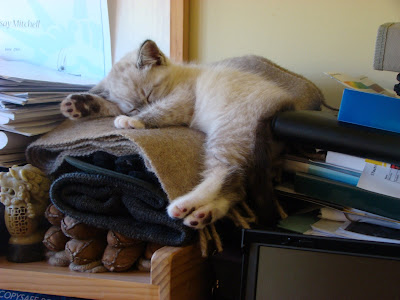
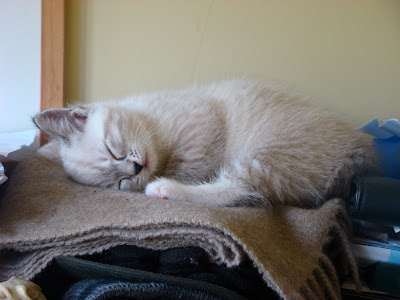
Our latest addition, she hasn't put a paw wrong since arriving on Monday. The dog is besotted and follows her everywhere with its nose just about up the kittens bottom. The kids are making just the most wonderful but restrained fuss over her showing me they are actually far more responsible than I might otherwise give them credit for.
She is 8 weeks old and come from a rather chaotic home where she has lived in the clay floor basement with her 3 brothers for the past two weeks. Her mother was hand reared after being discovered in an abandoned derelict car less than a year ago. She is gorgeous. Daisy. Named for my friend who wanted her to "grow up in luxury". She's making a good go of it.


Our latest addition, she hasn't put a paw wrong since arriving on Monday. The dog is besotted and follows her everywhere with its nose just about up the kittens bottom. The kids are making just the most wonderful but restrained fuss over her showing me they are actually far more responsible than I might otherwise give them credit for.
She is 8 weeks old and come from a rather chaotic home where she has lived in the clay floor basement with her 3 brothers for the past two weeks. Her mother was hand reared after being discovered in an abandoned derelict car less than a year ago. She is gorgeous. Daisy. Named for my friend who wanted her to "grow up in luxury". She's making a good go of it.
Barriers to work
I was thinking about a conversation I had earlier this week. It was with a friend who is on the DPB. Her youngest has recently started school. So she told Work and Income, I want to get back into the workforce. Her daughter has an improving and intermittent health problem which may mean she is more prone to need time off school. Work and Income tells my friend she needs to get the Doctor to sign a form stating the daughter is well enough for her mother to work. My friend says, but her father can take care of her if needed. He is willing and available. Work and Income say, but he is not allowed to be in your home because he isn't allowed to live in your home. So that answer is not satisfactory. As the Doctor had only recently signed a form confirming the daughter still suffers from this health condition and needs continuing medication he can't 'un-sign' until May next year. The upshot is while my friend wants to work, WORK and Income are telling her she can't. I said, if you weren't on a benefit they couldn't tell you what to do and what not to do. In reality there is nothing to stop her finding a job herself, which she intends doing. But she is effectively barred from using Work and Income employment services. And I am guessing if she finds work she could be faced with relinquishing her daughter's disability allowance, as she has more or less asserted her daughter is no longer sick by getting a job. Assuming I am getting the full story, how dumb is all of this?
Tuesday, December 04, 2007
Another stupid ban
This time in Devon, England where angel wings have been banned from nativity plays;
Linda Mitchell, headmistress at Sacred Heart Roman Catholic primary school in Paignton, Devon, told parents they would have to get rid of the wings on their little girls' angel outfits or they would be banned from taking part in the Christmas play.
Mrs Mitchell said that, because the wings, which are all made by the parents, had been of all shape and sizes, some of the children had been scratched during last year's nativity play.
She added: "We hold our services in a church where there are candles and if children turn around, there is a risk they could catch fire.
"For the safety of the children, staff decided that this year the angels would not have wings."
What next? Trees without Xmas lights, puddings without coins, crackers without bangers....what about a ban on fat Father Christmas' 'sending the wrong message to society' about healthy eating?
Stupid ban. Stupid people. There's no shortage of them.
Linda Mitchell, headmistress at Sacred Heart Roman Catholic primary school in Paignton, Devon, told parents they would have to get rid of the wings on their little girls' angel outfits or they would be banned from taking part in the Christmas play.
Mrs Mitchell said that, because the wings, which are all made by the parents, had been of all shape and sizes, some of the children had been scratched during last year's nativity play.
She added: "We hold our services in a church where there are candles and if children turn around, there is a risk they could catch fire.
"For the safety of the children, staff decided that this year the angels would not have wings."
What next? Trees without Xmas lights, puddings without coins, crackers without bangers....what about a ban on fat Father Christmas' 'sending the wrong message to society' about healthy eating?
Stupid ban. Stupid people. There's no shortage of them.
Monday, December 03, 2007
Looking forward to this
Let me know if you'd like a ticket.
 Next weekend, Heather Roy will host a special private screening of 'We're Here to Help' - the true story of Dave Henderson's battle, with a little help from ACT Leader Rodney Hide, against the IRD.
Date: Sunday, December 9 2007
Time: 7.30pm for 8pm screening
Venue: The Light House Cinema, Pauatahanui
Cost : $20 per ticket (no door sales)
RSVP: Lindsay Mitchell - dandl.mitchell@clear.net.nz or (04) 562 7944
All welcome. Only 60 tickets available, so RSVP today.
 Next weekend, Heather Roy will host a special private screening of 'We're Here to Help' - the true story of Dave Henderson's battle, with a little help from ACT Leader Rodney Hide, against the IRD.
Date: Sunday, December 9 2007
Time: 7.30pm for 8pm screening
Venue: The Light House Cinema, Pauatahanui
Cost : $20 per ticket (no door sales)
RSVP: Lindsay Mitchell - dandl.mitchell@clear.net.nz or (04) 562 7944
All welcome. Only 60 tickets available, so RSVP today.
New Minister Rejects Call For Work-testing
Media Release
NEW MINISTER REJECTS CALL FOR WORK-TESTING
Monday, December 3, 2007
In an updated report, Babies and Bosses, the OECD has once again recommended New Zealand work-test sole parents on welfare. The new Minister for Social Development Ruth Dyson has continued in the tradition of past Labour Ministers and rejected this advice.
Welfare Commentator Lindsay Mitchell was surprised that Ms Dyson , a committed social-democrat, would dismiss what is the norm in Scandinavian countries. "This government is usually quick to praise countries like Sweden and Denmark when it comes to social policy yet refuses to consider their approach to single parents. Neither country has a DPB equivalent. Scandinavian countries treat sole parents the same way as any other parent. Once paid parental leave expires they are work-tested for any further benefit receipt. "
"In Sweden sole parents only qualify for temporary social assistance as a very last resort, which results in their average duration of stay on welfare being just 5.9 months. In Denmark there is also no lone parent benefit. Out-of-work single parents are only entitled to a sickness or unemployment benefit. Both of these countries have employment rates for sole parents of between 70 and 80 percent."
"Even the United Kingdom and Australia have recently moved to more stringent testing, with the UK testing after the youngest child turns 12 and Australia, after the youngest child turns 6, with no eligibility for a Parenting Payment for new applicants with children 6 or older. They will be treated the same as the unemployed."
"While work-testing alone isn't enough to be highly effective, it would be an improvement on the status quo. Meanwhile, Ms Dyson claims NOT work-testing has been an effective approach yet there are still over 100,000 single parents reliant on welfare."
NEW MINISTER REJECTS CALL FOR WORK-TESTING
Monday, December 3, 2007
In an updated report, Babies and Bosses, the OECD has once again recommended New Zealand work-test sole parents on welfare. The new Minister for Social Development Ruth Dyson has continued in the tradition of past Labour Ministers and rejected this advice.
Welfare Commentator Lindsay Mitchell was surprised that Ms Dyson , a committed social-democrat, would dismiss what is the norm in Scandinavian countries. "This government is usually quick to praise countries like Sweden and Denmark when it comes to social policy yet refuses to consider their approach to single parents. Neither country has a DPB equivalent. Scandinavian countries treat sole parents the same way as any other parent. Once paid parental leave expires they are work-tested for any further benefit receipt. "
"In Sweden sole parents only qualify for temporary social assistance as a very last resort, which results in their average duration of stay on welfare being just 5.9 months. In Denmark there is also no lone parent benefit. Out-of-work single parents are only entitled to a sickness or unemployment benefit. Both of these countries have employment rates for sole parents of between 70 and 80 percent."
"Even the United Kingdom and Australia have recently moved to more stringent testing, with the UK testing after the youngest child turns 12 and Australia, after the youngest child turns 6, with no eligibility for a Parenting Payment for new applicants with children 6 or older. They will be treated the same as the unemployed."
"While work-testing alone isn't enough to be highly effective, it would be an improvement on the status quo. Meanwhile, Ms Dyson claims NOT work-testing has been an effective approach yet there are still over 100,000 single parents reliant on welfare."
Saturday, December 01, 2007
Equal pay does not lead to prosperity
Look at this harping headline, Women still paid 'significantly' less than men and then take a look at a OECD graph released yesterday here, which shows, amongst other things, New Zealand has the smallest gender pay gap of the OECD countries.
Not that it has helped us economically. It seems feminists are obsessed with two things; achieving equality and eradicating poverty. When are they going to make the connection?
Not that it has helped us economically. It seems feminists are obsessed with two things; achieving equality and eradicating poverty. When are they going to make the connection?
Friday, November 30, 2007
DNA sampling disarray
Remember this recent announcement?
A National-led government would require DNA samples to be taken from anyone arrested for imprisonable crimes, allow police to issue immediate protection orders and would toughen up bail laws.
Here's a report from the UK which already takes DNA samples from anyone arrested for an imprisonable crime:
Civil liberties campaigners and MPs have raised doubts about the national DNA database after the Home Office confirmed it contained more than 500,000 false or wrongly recorded names.
Suspects arrested over any imprisonable offence, including rape and murder, can have their DNA held even if they are not charged or are acquitted.
The database, the biggest in the world, contains about four million names.
But it has been dogged by problems. Statistics released by the Home Office show it contains around 550,000 files with wrong or misspelt names.
It always gives me the shivers when I hear people say, if you have done nothing wrong you have nothing to hide, and then go on to advocate taking DNA samples at birth. Their trust in the administration and use of these databases is touching. I do not share it.
A National-led government would require DNA samples to be taken from anyone arrested for imprisonable crimes, allow police to issue immediate protection orders and would toughen up bail laws.
Here's a report from the UK which already takes DNA samples from anyone arrested for an imprisonable crime:
Civil liberties campaigners and MPs have raised doubts about the national DNA database after the Home Office confirmed it contained more than 500,000 false or wrongly recorded names.
Suspects arrested over any imprisonable offence, including rape and murder, can have their DNA held even if they are not charged or are acquitted.
The database, the biggest in the world, contains about four million names.
But it has been dogged by problems. Statistics released by the Home Office show it contains around 550,000 files with wrong or misspelt names.
It always gives me the shivers when I hear people say, if you have done nothing wrong you have nothing to hide, and then go on to advocate taking DNA samples at birth. Their trust in the administration and use of these databases is touching. I do not share it.
Thursday, November 29, 2007
What a difference a day makes
Sue Bradford is hollering about the fate of babies whose mothers go home shortly (about one day sooner than is already the case) after the birth of their child.
"One of the major contributors to the battering and killing of babies and young children is a lack of successful bonding between mother and baby. The situations where this is most likely to happen are in households where people do not have enough money to survive with any degree of comfort.
"These are also the households where the mother is most likely to take a $100 bribe to vacate the hospital immediately.
"In some cases she will be going home to poverty, chaos, and an expectation that she will meet the demands of other children as well as those of her new baby.
"Such mothers risk not being able to establish breastfeeding properly; not bonding well with their new child; post-natal depression and despair, as well as sinking into the addiction and crime subculture to which such households are vulnerable.
Over-egging it I think.
You have to wonder, if they are going home to such a household, why they had another child. Perhaps because, (Sue says they are the most likely to take the $100 bribe), they are also interested in the extra money and on-going benefit the new baby guarantees.
"One of the major contributors to the battering and killing of babies and young children is a lack of successful bonding between mother and baby. The situations where this is most likely to happen are in households where people do not have enough money to survive with any degree of comfort.
"These are also the households where the mother is most likely to take a $100 bribe to vacate the hospital immediately.
"In some cases she will be going home to poverty, chaos, and an expectation that she will meet the demands of other children as well as those of her new baby.
"Such mothers risk not being able to establish breastfeeding properly; not bonding well with their new child; post-natal depression and despair, as well as sinking into the addiction and crime subculture to which such households are vulnerable.
Over-egging it I think.
You have to wonder, if they are going home to such a household, why they had another child. Perhaps because, (Sue says they are the most likely to take the $100 bribe), they are also interested in the extra money and on-going benefit the new baby guarantees.
The $100 'bribe'
Wellington mothers are being "bribed" with $100 grocery vouchers to leave hospital within six hours of giving birth.
But I thought people couldn't be incentivised with money?? I mean, nobody gets pregnant for the DPB.
I was part of the 'nappy-bribe' generation. Not that I needed them in either sense. I didn't need an incentive to get out of the place asap and I gave the nappies to somebody who might materially appreciate them. The place was dirty. I watched a 'cleaner' enter the room with a mop and create a wet snail-trail in and around the beds and depart. Doing the recommended walking during labour resulted in feet dirtier than if I had gone outside and walked up and down the footpath (No I don't possess a pair of slippers). The vending machines offered more appetising choices than the hospital kitchens. And lying awake listening to screaming babies all night is hardly restful. If I had been of the era when they made you stay in hospital for days to 'recuperate' I would have been tearing my hair out. I can't understand why anyone wouldn't want to go home at the first possible opportunity.
But I had to shake my head at the last line in the news item.
Hospitals used to offer free nappies to encourage mothers to leave early, but this policy had largely been abandoned.
In 2005, Hutt Valley District Health Board said it stopped the practice as it "had concerns this may be an inappropriate incentive for unwell women to go home".
How archetypically illustrative of bureaucratic bungling. Chopping and changing policies with neither reason nor rhyme. Propelled by pragmatism. In all its wisdom, Capital and Coast has decided incentives are appropriate with a qualifier - cash is and nappies are not.
But I thought people couldn't be incentivised with money?? I mean, nobody gets pregnant for the DPB.
I was part of the 'nappy-bribe' generation. Not that I needed them in either sense. I didn't need an incentive to get out of the place asap and I gave the nappies to somebody who might materially appreciate them. The place was dirty. I watched a 'cleaner' enter the room with a mop and create a wet snail-trail in and around the beds and depart. Doing the recommended walking during labour resulted in feet dirtier than if I had gone outside and walked up and down the footpath (No I don't possess a pair of slippers). The vending machines offered more appetising choices than the hospital kitchens. And lying awake listening to screaming babies all night is hardly restful. If I had been of the era when they made you stay in hospital for days to 'recuperate' I would have been tearing my hair out. I can't understand why anyone wouldn't want to go home at the first possible opportunity.
But I had to shake my head at the last line in the news item.
Hospitals used to offer free nappies to encourage mothers to leave early, but this policy had largely been abandoned.
In 2005, Hutt Valley District Health Board said it stopped the practice as it "had concerns this may be an inappropriate incentive for unwell women to go home".
How archetypically illustrative of bureaucratic bungling. Chopping and changing policies with neither reason nor rhyme. Propelled by pragmatism. In all its wisdom, Capital and Coast has decided incentives are appropriate with a qualifier - cash is and nappies are not.
Wednesday, November 28, 2007
Who to believe
Principal Youth Court Judge Andrew Becroft makes a habit of being outspoken. That's good. At least we get a view even if we choose to disbelieve it. Fewer youths are being given diversion and he blames it on a lack of police resources. The police however blame it on the more serious nature of youth offending. Not shown in this link but in the hard copy is the judge claiming that violent offending is rising in all cohorts, particularly 51-99. That's a twist. Violent youth offending is rising, but as every other group's is, we should discount it?
Despite the successful use of diversion since reforms in 1989, its use had fallen markedly in the past two years, Judge Becroft said.
What constitutes "successful"? That some potential criminal careers have been nipped in the bud by keeping the individual out of court? I am sure that is true. But how many other individuals have gotten deeper into the poo because they weren't punished? Their misdemeanours were pandered to by a justice system that teaches them they are the 'victims'.
Because if the present situation constitutes "success" we don't even want to begin to imagine failure.
"This is a great provision," he said. "There's no other youth justice system in the world that has a provision like that ... that instructs authorities: don't charge."
It fascinates me what people say when they are addressing the like-minded. Maybe my reaction is heightened because this statement is taken out of context. But really. For all those do-gooders who constantly chatter about 'sending messages' this is very much an own goal.
Try rephrasing it. New Zealand bends over backwards to avoid holding young thugs and thieves to account.
Despite the successful use of diversion since reforms in 1989, its use had fallen markedly in the past two years, Judge Becroft said.
What constitutes "successful"? That some potential criminal careers have been nipped in the bud by keeping the individual out of court? I am sure that is true. But how many other individuals have gotten deeper into the poo because they weren't punished? Their misdemeanours were pandered to by a justice system that teaches them they are the 'victims'.
Because if the present situation constitutes "success" we don't even want to begin to imagine failure.
"This is a great provision," he said. "There's no other youth justice system in the world that has a provision like that ... that instructs authorities: don't charge."
It fascinates me what people say when they are addressing the like-minded. Maybe my reaction is heightened because this statement is taken out of context. But really. For all those do-gooders who constantly chatter about 'sending messages' this is very much an own goal.
Try rephrasing it. New Zealand bends over backwards to avoid holding young thugs and thieves to account.
Tuesday, November 27, 2007
Where most babies are born

Part of this effect is people have babies at a time in their lives when they haven't accumulated much wealth but the graph still seems heavily skewed toward the Decile Ten areas.
Teenage birthrate almost ten-fold in poorest areas
Media Release
TEENAGE BIRTHRATE ALMOST TEN-FOLD IN POOREST AREAS
Tuesday, November 27, 2007
Released today by the Paediatric Society of New Zealand, "Monitoring the Health of New Zealand Children and Young People " reveals teenage birth rates that vary enormously across geographic and economic regions.
"These statistics confirm a strong correlation between low income and teenage births, "said Lindsay Mitchell, welfare commentator . "The birth rate in the most deprived areas (decile 10) is 60.49 per 1,000 15-19 year-olds. This drops to 6.56 in decile 1 areas. This confirms that it is those girls who are least able to financially afford to raise children who are having them. Hence so many end up on welfare."
"The teenage birthrate also varies geographically from a low of 13.5 in Otago to a high of 59.4 in Gisborne, which is also home to the highest number of children living in one parent homes."
"Maori have the highest teenage birthrate at 77.64 compared to 16.43 for Europeans. Earlier Ministry of Social Development data shows that Maori are 8 times more likely to be a teenage parent on welfare."
"As the report notes, 'High teenage pregnancy rates are a cause for concern as young maternal age has been associated with a number of adverse birth outcomes ... and impact on the educational attainment, not only of the young women themselves but also the aspirations and opportunities available to their children.' "
"The government must now face facts and examine how paying girls to have babies is influencing this unacceptable situation. Employing eight people to work with teenage parents, when over 4,000 give birth each year, is not an answer."
TEENAGE BIRTHRATE ALMOST TEN-FOLD IN POOREST AREAS
Tuesday, November 27, 2007
Released today by the Paediatric Society of New Zealand, "Monitoring the Health of New Zealand Children and Young People " reveals teenage birth rates that vary enormously across geographic and economic regions.
"These statistics confirm a strong correlation between low income and teenage births, "said Lindsay Mitchell, welfare commentator . "The birth rate in the most deprived areas (decile 10) is 60.49 per 1,000 15-19 year-olds. This drops to 6.56 in decile 1 areas. This confirms that it is those girls who are least able to financially afford to raise children who are having them. Hence so many end up on welfare."
"The teenage birthrate also varies geographically from a low of 13.5 in Otago to a high of 59.4 in Gisborne, which is also home to the highest number of children living in one parent homes."
"Maori have the highest teenage birthrate at 77.64 compared to 16.43 for Europeans. Earlier Ministry of Social Development data shows that Maori are 8 times more likely to be a teenage parent on welfare."
"As the report notes, 'High teenage pregnancy rates are a cause for concern as young maternal age has been associated with a number of adverse birth outcomes ... and impact on the educational attainment, not only of the young women themselves but also the aspirations and opportunities available to their children.' "
"The government must now face facts and examine how paying girls to have babies is influencing this unacceptable situation. Employing eight people to work with teenage parents, when over 4,000 give birth each year, is not an answer."
Helping children from poor homes
The children who form the group covered by a damning Paediatric Society report are overwhelmingly those on welfare and those living in one parent homes - the poorest homes by a long margin. The automatic response from child health advocates therefore is to call on government to give more money to their parents - they cannot give it directly to the children - and to spend more money on their housing.
The second recommendation may have some substance. If the government is going to keep a stock of state homes it would be wise to maintain them. However that maintenance doesn't fall solely to the landlord. Tenants would benefit from looking after properties too. That means not breaking windows and leaving them unrepaired during winter months. Removing condensation in bathrooms so paint and wood do not deteriorate. Spending money on heating homes instead of using the money on alcohol, tobacco and drugs - the last of which can gobble up a benefit payment within a couple of days. Unfortunately when people do not own their property they have far less interest in looking after it.
The first recommendation is however made without thought and is without merit. In fact I would go so far as to say pumping more cash into the homes of these children may even worsen the overall picture.
That is because raising benefit levels has been demonstrated to attract more people onto benefits. It is interesting that the government accepts that raising the pay levels of teachers, nurses and policeman will attract more of them but doesn't use the same argument to resist calls to increase benefit levels - the current campaign being run by the Child Poverty Action Group and supported by the Greens and the Maori Party.
New Zealand's social assistance levels are already generous by international standards. So generous that many parents prefer living on a benefit to working. Not all, by any means, but a good percentage. They will justify this preference by pointing out that taking a job will mean they 'earn less' than they do on a benefit. This may have been the case in previous years but with the lowered abatement rates and In Work tax credits nobody should be disadvantaged when moving into work. And yet we still see thousands of parents move onto the DPB every year, especially teenagers who have little idea about child rearing or home maintenance yet are given that responsibility.
So in our employment-rich environment many parents would be better off - which is what the advocates want - if they got a job. Maybe not much better off immediately but there is more chance of income from employment rising than income from a benefit rising. As well many have only school age children. If the parent were also absent from the home more frequently less electricity would be used, power bills being one of their main expenses. And if some pre-school children's home environments are so very unhealthy then it would benefit them to also be elsewhere for at least some of the day.
At some point the role of a parent, the adult in the equation, must be questioned. It cannot continue to be the financial obligation of society to solve problems knowingly caused by individuals. Those caused by people producing children they cannot afford to raise being a major example. Socialising problems exacerbates rather than alleviates them.
So yes, the government may need to put some more money into existing state home stock but even more importantly, tenants need to take responsibility for keeping their homes in a sound and hygienic state.
Meantime what would make a huge difference for those parents who are struggling, be it their own fault or not, is more personal attention. More mentoring and practical help from private citizens. The faceless bureaucratic services cannot sort out the current mess by simply pouring more money into the homes of these children. Over thirty years of doing that already has shown it will not work.
The many child advocates promoting this solution mean well. I have no doubt. But they must look at the bigger and historical picture if they want the lives of New Zealand children to be better in the future.
In 1904 a Wellington trustee of the Charitable Aid Board said that the more the Government tried to assist the destitute the greater became the demands. This is as true today. Yet it seems many are destined to promote soft but unsuccessful solutions.
The second recommendation may have some substance. If the government is going to keep a stock of state homes it would be wise to maintain them. However that maintenance doesn't fall solely to the landlord. Tenants would benefit from looking after properties too. That means not breaking windows and leaving them unrepaired during winter months. Removing condensation in bathrooms so paint and wood do not deteriorate. Spending money on heating homes instead of using the money on alcohol, tobacco and drugs - the last of which can gobble up a benefit payment within a couple of days. Unfortunately when people do not own their property they have far less interest in looking after it.
The first recommendation is however made without thought and is without merit. In fact I would go so far as to say pumping more cash into the homes of these children may even worsen the overall picture.
That is because raising benefit levels has been demonstrated to attract more people onto benefits. It is interesting that the government accepts that raising the pay levels of teachers, nurses and policeman will attract more of them but doesn't use the same argument to resist calls to increase benefit levels - the current campaign being run by the Child Poverty Action Group and supported by the Greens and the Maori Party.
New Zealand's social assistance levels are already generous by international standards. So generous that many parents prefer living on a benefit to working. Not all, by any means, but a good percentage. They will justify this preference by pointing out that taking a job will mean they 'earn less' than they do on a benefit. This may have been the case in previous years but with the lowered abatement rates and In Work tax credits nobody should be disadvantaged when moving into work. And yet we still see thousands of parents move onto the DPB every year, especially teenagers who have little idea about child rearing or home maintenance yet are given that responsibility.
So in our employment-rich environment many parents would be better off - which is what the advocates want - if they got a job. Maybe not much better off immediately but there is more chance of income from employment rising than income from a benefit rising. As well many have only school age children. If the parent were also absent from the home more frequently less electricity would be used, power bills being one of their main expenses. And if some pre-school children's home environments are so very unhealthy then it would benefit them to also be elsewhere for at least some of the day.
At some point the role of a parent, the adult in the equation, must be questioned. It cannot continue to be the financial obligation of society to solve problems knowingly caused by individuals. Those caused by people producing children they cannot afford to raise being a major example. Socialising problems exacerbates rather than alleviates them.
So yes, the government may need to put some more money into existing state home stock but even more importantly, tenants need to take responsibility for keeping their homes in a sound and hygienic state.
Meantime what would make a huge difference for those parents who are struggling, be it their own fault or not, is more personal attention. More mentoring and practical help from private citizens. The faceless bureaucratic services cannot sort out the current mess by simply pouring more money into the homes of these children. Over thirty years of doing that already has shown it will not work.
The many child advocates promoting this solution mean well. I have no doubt. But they must look at the bigger and historical picture if they want the lives of New Zealand children to be better in the future.
In 1904 a Wellington trustee of the Charitable Aid Board said that the more the Government tried to assist the destitute the greater became the demands. This is as true today. Yet it seems many are destined to promote soft but unsuccessful solutions.
Monday, November 26, 2007
'Buying elections'
There is an obvious point about Labour's justification for the Electoral Finance Bill which needs fleshing out somewhat. Chris Carter's assistant highlights it here when defending Carter's response to an e-mailer;
A spokeswoman for Mr Carter said the question was the minister's standard response to messages against the Electoral Finance Bill.
"He was making a point about people trying to buy elections. He's trying to make the point that the Exclusive Brethren tried to influence the 2005 election secretly."
For Labour 'buying the election' means people spending their own money to influence how other people vote.
It doesn't mean spending taxpayer's money, half of whom do not support them, furnishing bribes to would-be voters. This type of politicking has gone on so long in New Zealand that most people are inured to it. Perhaps we should start pointing out that if those of us opposing the EFB are 'buying elections' then Labour and its lapdogs are 'stealing' them.
Let's just remind ourselves of the many ways this is so;
The whopper 'steal' was of course Working For Families which promised substantial pay-outs to earners and beneficiaries with dependent children. This is costing over $1 billion a year. There are at least 360,000 families benefiting. A very quick guess is non-recipients are paying on average around $6-700 each to fund these fairly secure votes for Labour.
To keep the more secure working-age beneficiary vote (beyond the WFF recipients) costs taxpayers around $4-5,000 each.
Then there are all those people who pay for private health insurance and private schools for their children who fund the votes of those staunch believers in the 'free' public health and education systems.
We have the ongoing and expanding system of health and education funding according to residential decile rating leading to large subsidies for Labour voters.
Other 2005 election bribes included interest free student loans, free 20 hours childcare, increased Super and issuing the Goldcard, Kiwisaver, and Welcome Home loans.
I am guessing next years bribes will include a full years paid parental leave, and some way of capitalising WFF for first home buyers (in the way family benefit used to be able to paid up front for a home deposit).
So the gall of these harping hypocrites who tell us those who oppose them are trying to 'buy elections' is staggering. It shows just how out of touch and removed from reality these redistributive robots are.
And the very worst aspect of it all? Their ideology is steadily diminishing New Zealand's prospects - economically and socially.
A spokeswoman for Mr Carter said the question was the minister's standard response to messages against the Electoral Finance Bill.
"He was making a point about people trying to buy elections. He's trying to make the point that the Exclusive Brethren tried to influence the 2005 election secretly."
For Labour 'buying the election' means people spending their own money to influence how other people vote.
It doesn't mean spending taxpayer's money, half of whom do not support them, furnishing bribes to would-be voters. This type of politicking has gone on so long in New Zealand that most people are inured to it. Perhaps we should start pointing out that if those of us opposing the EFB are 'buying elections' then Labour and its lapdogs are 'stealing' them.
Let's just remind ourselves of the many ways this is so;
The whopper 'steal' was of course Working For Families which promised substantial pay-outs to earners and beneficiaries with dependent children. This is costing over $1 billion a year. There are at least 360,000 families benefiting. A very quick guess is non-recipients are paying on average around $6-700 each to fund these fairly secure votes for Labour.
To keep the more secure working-age beneficiary vote (beyond the WFF recipients) costs taxpayers around $4-5,000 each.
Then there are all those people who pay for private health insurance and private schools for their children who fund the votes of those staunch believers in the 'free' public health and education systems.
We have the ongoing and expanding system of health and education funding according to residential decile rating leading to large subsidies for Labour voters.
Other 2005 election bribes included interest free student loans, free 20 hours childcare, increased Super and issuing the Goldcard, Kiwisaver, and Welcome Home loans.
I am guessing next years bribes will include a full years paid parental leave, and some way of capitalising WFF for first home buyers (in the way family benefit used to be able to paid up front for a home deposit).
So the gall of these harping hypocrites who tell us those who oppose them are trying to 'buy elections' is staggering. It shows just how out of touch and removed from reality these redistributive robots are.
And the very worst aspect of it all? Their ideology is steadily diminishing New Zealand's prospects - economically and socially.
Subscribe to:
Posts (Atom)


