This is the only international report I have seen about the Kahui killings. Has to be read to be believed;
The tragic deaths in New Zealand last month of 11-week old Maori twins is being used to justify a wide-ranging campaign by the media, police and political establishment against the most oppressed and impoverished layers of the country’s Maori population.....
The purpose of this vicious campaign has been to avoid any probing of the deeper social causes of the tragedy. While the violence committed against the Kahui twins was particularly horrendous, so too are the social conditions under which the most vulnerable are forced to live their lives. The hysteria is aimed at directing any real examination away from where the real responsibility lies—with successive governments of all stripes and their social agendas.....
Far from tackling the terrible social problems that lie at the heart of the Kahui twins’ death, these “solutions” will simply create the conditions for more such tragedies. They will serve to further brutalise the most oppressed sections of society and to create even more intolerable pressures on their daily lives. At the same time, they will be used to drastically reduce government expenditure on social programs—a key demand of New Zealand big business.
Saturday, July 15, 2006

He is wrong
Now I am really pissed at Bob Geldof who says it is no defence that New Zealand's non-government aid to the Third World is high. Much of global poverty was government business. Only governments could deal with the structures of extreme poverty. Private aid dealt with the symptoms.
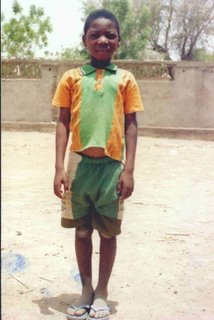
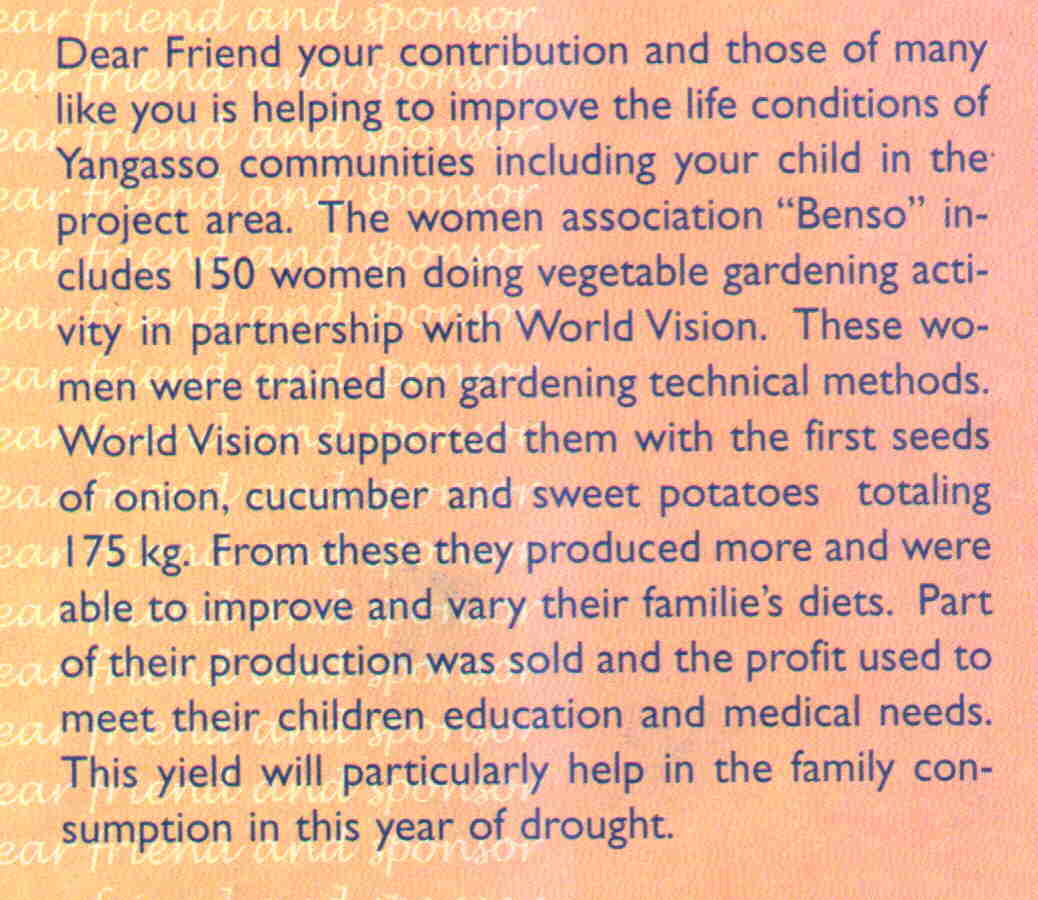
Below is one of the kids we've sponsored and a typical piece from the regular progress reports we receive. He lives in Mali, one of the poorest countries in the world with 65 percent of its land desert or semi-desert. World Vision builds schools, irrigation systems, they train people in income generating activities and they educate about loan management, primary health and nutrition. That doesn't sound like dealing with the symptoms to me.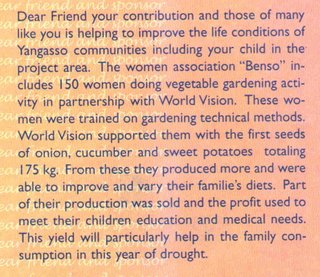
If government taxes more to increase their international aid contribution, taxpayers are likely to donate less to those private charities which are so effective. The first part is exactly what Geldof is pushing for and the second part is what obviously doesn't matter to him because he believes private charity only deals with the symptoms.
Below is one of the kids we've sponsored and a typical piece from the regular progress reports we receive. He lives in Mali, one of the poorest countries in the world with 65 percent of its land desert or semi-desert. World Vision builds schools, irrigation systems, they train people in income generating activities and they educate about loan management, primary health and nutrition. That doesn't sound like dealing with the symptoms to me.

If government taxes more to increase their international aid contribution, taxpayers are likely to donate less to those private charities which are so effective. The first part is exactly what Geldof is pushing for and the second part is what obviously doesn't matter to him because he believes private charity only deals with the symptoms.
Friday, July 14, 2006
Sorry, but....
 ...bugger off Bob. Heard him on radio lambasting New Zealand for our governments "pathetic" contributions to international aid. Good. Governments give away taxpayer's money willy-nilly. Has he looked at New Zealander's support for private agencies like World Vision and CCF?
We put our money where we know agencies are getting results because they account to us. Govt to govt aid is probably the most likely to be subject to corruption.
Geldof is well-intended I know, and likeable to boot but....talk about a statist.
Friday funny
A married couple rushed to the hospital because the woman was in labour. The doctor told them, "There's a new machine you might want to try; it transfers some of the labour pains from the mother to the father." The couple agreed to try it, so the doctor hooked the machine up and set it to transfer 10 percent of the pain from the mother to the father. The husband said, "I feel okay, so turn it up more." The doctor turned it up to 50 percent, and the husband said "Why not put it all on me because I'm not feeling a thing." The doctor warned them "This much could kill you if you're not prepared," and only when the husband confirmed he was ready, turned the machine up to 100 percent. Still the husband didn't feel a thing, and both went home happy it had been a pain-free labour. When they got home they found the gardener dead on the front lawn.
Maori Party and IT
The Maori Party website is one of the best political sites. Hats off to them for some of the IT possibilities they are exploring. Like this;
Join your Maori Party Members of Parliament to discuss
The Māori Electoral Option
LIVE from the studios of Radio Kahungunu in Hawkes Bay
Friday July 14th, at 10am
Click here to listen or http://www.irirangi.net/stations2.asp?id=19#
PHONE (06) 872 8943 WITH YOUR QUESTIONS
Unfortunately I won't be near the computer at that time.
Join your Maori Party Members of Parliament to discuss
The Māori Electoral Option
LIVE from the studios of Radio Kahungunu in Hawkes Bay
Friday July 14th, at 10am
Click here to listen or http://www.irirangi.net/stations2.asp?id=19#
PHONE (06) 872 8943 WITH YOUR QUESTIONS
Unfortunately I won't be near the computer at that time.
Legalize tinnie houses now!
People in Twizel are complaining to the council because houses are being built of unpainted corrugated iron and they are too shiny;
Shiny houses are out as far as the Twizel Community Board is concerned.
Board chairman Bruce White said at a recent community board meeting they had received complaints about the use of unpainted corrugated iron cladding on new houses.
He said people were complaining because of the reflection from the tin.
"People are getting headaches when they drive past."
The community board were not opposed to the use of corrugated iron but it needed to be painted he said.
Mackenzie District Council senior planner Hayley Shearer said there was a recommended colour palette in place for Twizel since 1994 but it was not a requirement.
Shiny houses are out as far as the Twizel Community Board is concerned.
Board chairman Bruce White said at a recent community board meeting they had received complaints about the use of unpainted corrugated iron cladding on new houses.
He said people were complaining because of the reflection from the tin.
"People are getting headaches when they drive past."
The community board were not opposed to the use of corrugated iron but it needed to be painted he said.
Mackenzie District Council senior planner Hayley Shearer said there was a recommended colour palette in place for Twizel since 1994 but it was not a requirement.
Some good news
In the interests of balance and objectivity I am bound to report that New Plymouth prison has apparently found the key to keeping prisons drug-free. Closer work with police, greater use of drug dogs but most particularly the confiscation of mobile phones. Good work.
Spend it on prevention
It'll be mildly interesting watching Labour deal with the report described on the front-page of today's NZ Herald;
Crime costs New Zealand $9.1 billion a year, and Government efforts to fight it are not working, says a hard-hitting Treasury report.
But according to Annette King, on becoming Minister of Police, “In the past six years, we have added more than 1400 police staff, the crime rate has reduced 13.8 percent, and crime resolution rates are increasingly steadily. Recorded crime is down to levels last seen over 20 years ago and our resolution rates equate exceedingly well with other police agencies world-wide."
Back to the Herald, It singles out the rising number of people in prison and the cost of keeping them there, as an example, and makes several suggestions aimed at reducing both.
They include reviewing the policy of longer sentences and re-introducing suspended sentences.
But Labour has claimed repeatedly that crime is down due, in part, to the success of the Sentencing and Parole Reform Act.
Personally I don't mind if we spend 7 percent of gdp on crime but let's get the balance right. The figures should look more like $7b on fighting and preventing crime and $2b on picking up the costs of any failure. Not the other way around.
Oh, and the first thing we should be doing is discouraging the births of more budding criminals right now.
Crime costs New Zealand $9.1 billion a year, and Government efforts to fight it are not working, says a hard-hitting Treasury report.
But according to Annette King, on becoming Minister of Police, “In the past six years, we have added more than 1400 police staff, the crime rate has reduced 13.8 percent, and crime resolution rates are increasingly steadily. Recorded crime is down to levels last seen over 20 years ago and our resolution rates equate exceedingly well with other police agencies world-wide."
Back to the Herald, It singles out the rising number of people in prison and the cost of keeping them there, as an example, and makes several suggestions aimed at reducing both.
They include reviewing the policy of longer sentences and re-introducing suspended sentences.
But Labour has claimed repeatedly that crime is down due, in part, to the success of the Sentencing and Parole Reform Act.
Personally I don't mind if we spend 7 percent of gdp on crime but let's get the balance right. The figures should look more like $7b on fighting and preventing crime and $2b on picking up the costs of any failure. Not the other way around.
Oh, and the first thing we should be doing is discouraging the births of more budding criminals right now.
Thursday, July 13, 2006
"Fathers out of the picture"
The Times says, "Fathers out of the picture." As if that's a new development. Many fathers have been either willingly or unwillingly out of the picture for a long time.
But this headline pertains to reform of an act governing requirements for IVF. Single mothers and lesbians will no longer be discriminated against. Clinics won't have to consider a father as necessary to a child's welfare.
Indulging some sentimentality for a moment - I don't like to think what my life would have been like without my dear Dad. But I've been lucky. A few kids are better off not knowing their Dads or even their Mums.
Children born through IVF treatment are sure to be wanted and cherished.
But, just as an after-thought, I wonder if the applicant for treatment has to prove financial capability for raising the child? Harder for a would-be single mother. I guess if the clinic can't discriminate against a lesbian or single mother they can't discriminate against a would-be beneficiary.
(Govt funded IVF treatment for single women and lesbians was introduced here in 2000. Muriel Newman described it as "start-up" finance for getting on the DPB.)
But this headline pertains to reform of an act governing requirements for IVF. Single mothers and lesbians will no longer be discriminated against. Clinics won't have to consider a father as necessary to a child's welfare.
Indulging some sentimentality for a moment - I don't like to think what my life would have been like without my dear Dad. But I've been lucky. A few kids are better off not knowing their Dads or even their Mums.
Children born through IVF treatment are sure to be wanted and cherished.
But, just as an after-thought, I wonder if the applicant for treatment has to prove financial capability for raising the child? Harder for a would-be single mother. I guess if the clinic can't discriminate against a lesbian or single mother they can't discriminate against a would-be beneficiary.
(Govt funded IVF treatment for single women and lesbians was introduced here in 2000. Muriel Newman described it as "start-up" finance for getting on the DPB.)
Strange choice of words
The Societ for the Protection of Community Standards has a real bee in its bonnet over Charles Chauvel's becoming an MP. This is a strange choice of words;
The fact that Mr Chauvel is practising homosexual man is hugely significant to the Labour Party.
Practising? Have you ever heard any other MP described as a practising heterosexual?? And if he wasn't "practising" would he be less significant to the Labour Party?
The fact that Mr Chauvel is practising homosexual man is hugely significant to the Labour Party.
Practising? Have you ever heard any other MP described as a practising heterosexual?? And if he wasn't "practising" would he be less significant to the Labour Party?
Logistics of the welfare state
Some interesting statistics from the US, relevant here as many 'western' countries are following the same trends.
Longer life expectancy, delayed marriage and childbearing, and increased childlessness add up to a longer life without kids, says Barbara Dafoe Whitehead in a new report released by the nonpartisan National Marriage Project at Rutgers University.
Looking through U.S. Census data as well as cultural and social research, Whitehead found:
* In 1970, 73.6 percent of women ages 25-29 had at least 1 minor child at home; 30 years later, only 48.7 percent did.
* In 1990, the most common household type was married couples with children. Now, single-parent, childless households are the most prevalent.
* Today, more women in their 40s are childless, the report says. Only 1 in 10 were childless in 1976; while in 2004, it was about 1 in 5.
It's ironic that welfare states in developed countries have actually reduced the number of children produced yet the life-blood of welfare states is an adequate supply of budding taxpayers. There is no way that current demographic trends will allow our welfare state to continue as we know it.
Longer life expectancy, delayed marriage and childbearing, and increased childlessness add up to a longer life without kids, says Barbara Dafoe Whitehead in a new report released by the nonpartisan National Marriage Project at Rutgers University.
Looking through U.S. Census data as well as cultural and social research, Whitehead found:
* In 1970, 73.6 percent of women ages 25-29 had at least 1 minor child at home; 30 years later, only 48.7 percent did.
* In 1990, the most common household type was married couples with children. Now, single-parent, childless households are the most prevalent.
* Today, more women in their 40s are childless, the report says. Only 1 in 10 were childless in 1976; while in 2004, it was about 1 in 5.
It's ironic that welfare states in developed countries have actually reduced the number of children produced yet the life-blood of welfare states is an adequate supply of budding taxpayers. There is no way that current demographic trends will allow our welfare state to continue as we know it.
The problem for Pita
Because the NZ Living Standards 2004 report showed more beneficiaries were experiencing hardship many groups are once again calling for higher payments. Benson-Pope says that changes after 2004 have already done that.
What caught my eye was Pita Sharple's comment which illustrates the 'rock and a hard place' the Maori Party have got themselves into with their 'welfare policy'.
Maori Party co-leader Pita Sharples said while he did not like benefits because they entrenched dependency, people receiving them needed to be paid a realistic income.
He called on central and local government agencies and large companies to address the real problem, which he said was despondent communities with no jobs caught in a cycle of hopelessness.
BUT increasing benefit rates entrenches dependency. There has to be a significant advantage in working or some people simply will not.
And the second part of his comment is not much use either. We had the 'jobs jolt' policy which was supposed to stop people moving to these 'despondent communities with no jobs'. The major failure of that policy was it didn't include people on the DPB. If a parent can get a benefit then someone else can tag along. And we still have the populations of these communities being artificially sustained by procreation on a benefit.
How low does unemployment have to go before we admit that it is no longer responsible for the cycle of hopelessness? There are plenty of employers crying out for workers but welfare has made, and continues to make potentially productive people unreliable and unemployable.
Update; Just watched Tariana on Breakfast TV. She said the Maori Party doesn't like the welfare system but there will always be people on benefits so we need to look after them properly (read pay them more). It's a bit like Sue Kedgely saying the Greens don't like soft drinks but we should make the cans bigger so people don't go thirsty.
What caught my eye was Pita Sharple's comment which illustrates the 'rock and a hard place' the Maori Party have got themselves into with their 'welfare policy'.
Maori Party co-leader Pita Sharples said while he did not like benefits because they entrenched dependency, people receiving them needed to be paid a realistic income.
He called on central and local government agencies and large companies to address the real problem, which he said was despondent communities with no jobs caught in a cycle of hopelessness.
BUT increasing benefit rates entrenches dependency. There has to be a significant advantage in working or some people simply will not.
And the second part of his comment is not much use either. We had the 'jobs jolt' policy which was supposed to stop people moving to these 'despondent communities with no jobs'. The major failure of that policy was it didn't include people on the DPB. If a parent can get a benefit then someone else can tag along. And we still have the populations of these communities being artificially sustained by procreation on a benefit.
How low does unemployment have to go before we admit that it is no longer responsible for the cycle of hopelessness? There are plenty of employers crying out for workers but welfare has made, and continues to make potentially productive people unreliable and unemployable.
Update; Just watched Tariana on Breakfast TV. She said the Maori Party doesn't like the welfare system but there will always be people on benefits so we need to look after them properly (read pay them more). It's a bit like Sue Kedgely saying the Greens don't like soft drinks but we should make the cans bigger so people don't go thirsty.
Wednesday, July 12, 2006
Drugs in prisons
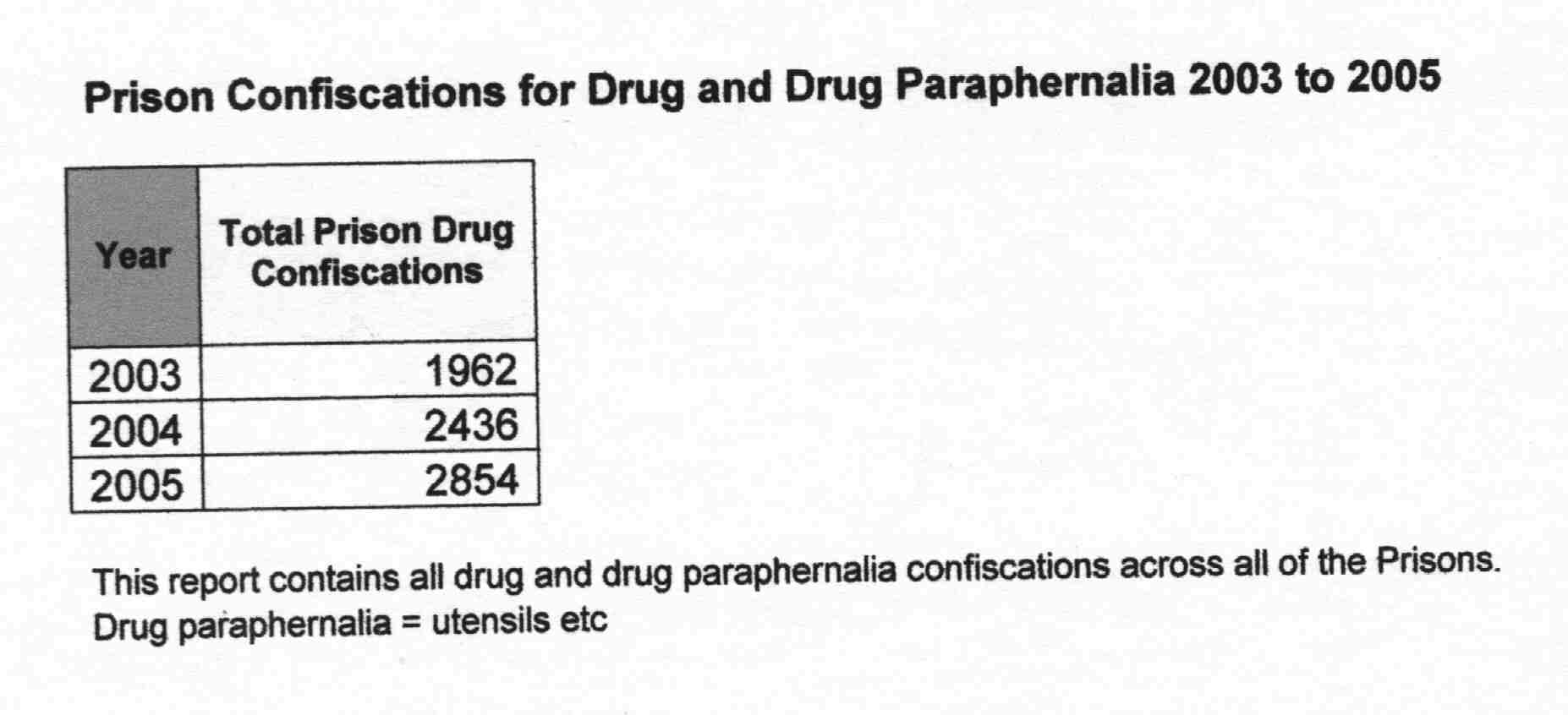
My own feeling is drugs are tacitly okayed or turned-a-blind-eye to in prison. It must be easier to handle prisoners who are 'satisfied' for want of a better word. This table is a response to a question from Simon Power published today;

For perspective there are around 7,000 inmates at any given time. What stands out is the huge increase, forty five percent, between 2003 and 2005. Inside and out, drugs are becoming more pervasive. I believe they are also one reason for more beneficiaries experiencing severe hardship. Only my opinion though, I hasten to add.
For perspective there are around 7,000 inmates at any given time. What stands out is the huge increase, forty five percent, between 2003 and 2005. Inside and out, drugs are becoming more pervasive. I believe they are also one reason for more beneficiaries experiencing severe hardship. Only my opinion though, I hasten to add.
From my archives
Oswald has reminded me about my DPB campaign and I took a moment to reflect on its beginnings. Back in 2001 a local newspaper ran a story about my petition which kicked off a storm of letter-writing that ran about 50/50 for/against. Eventually the editor had to close the debate.
One letter was from an indignant woman who believed it was entirely her right to have raised her children on the DPB and for them to be in turn raising their's on the DPB. Oswald will appreciate this response, headed up, DPB? Let me introduce myself...
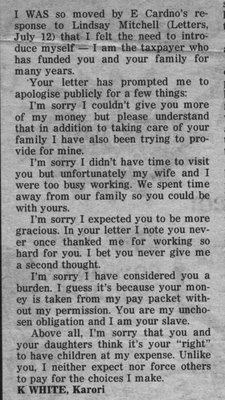
One letter was from an indignant woman who believed it was entirely her right to have raised her children on the DPB and for them to be in turn raising their's on the DPB. Oswald will appreciate this response, headed up, DPB? Let me introduce myself...

Jeremy Clarkson on the US
From the Times-on-line this is very funny;
I know Britain is full of incompetent water board officials and stabbed Glaswegians but even so I fell on my knees this morning and kissed the ground, because I’ve just spent three weeks trying to work in America.
It’s known as the land of the free and I’m sure it is if you get up in the morning, go to work in a petrol station, eat nothing but double-egg burgers — with cheese — and take your children to little league. But if you step outside the loop, if you try to do something a bit zany, you will find that you’re in a police state.
(Cont)
I know Britain is full of incompetent water board officials and stabbed Glaswegians but even so I fell on my knees this morning and kissed the ground, because I’ve just spent three weeks trying to work in America.
It’s known as the land of the free and I’m sure it is if you get up in the morning, go to work in a petrol station, eat nothing but double-egg burgers — with cheese — and take your children to little league. But if you step outside the loop, if you try to do something a bit zany, you will find that you’re in a police state.
(Cont)
Tuesday, July 11, 2006
Budgeting tips
On the back of the Living Standards report showing it's not just about income, Big News has some tips for beneficiary budgeting. From working with people on benefits I can add some I would never otherwise have known about;
- Don't take out APs on Clothes Trucks. This is an insidious practice by companies who visit low income people with their trucks (which sell more than just clothes). They appeal to people's instant gratification impulse. The purchaser authorises an automatic payment so they can purchase but when the item is paid off the AP continues. If the customer attempts to get the money back in cash they are told no, you can only use your credit on the truck. At which point the company may throw in a sweetener of a bit of extra credit. But the goods are well over-priced. The APs tend to just turn over.
- Resist offers to up your bankcard credit limit.
- Don't think having WINZ pay you a small weekly amount for a cellphone is better than having a landline. You can be contacted but will quickly use up your outgoing allowance. Looking for jobs is virtually impossible if you can't make outgoing phonecalls. In fact, your everyday life is extremely restricted. Better to pay your phonebill in the first place.
- Don't hoard advertising throw-aways "just in case you miss a bargain". If you haven't thought about it first you don't need it.
- for females, use contraceptive injections which stop you menstruating. Saves you know where.
- for males, use condoms. They are much cheaper than child support payments, even at the beneficiary level of about $12 a week. Over the life of a child you will spend $11,232. What's a packet of condoms worth?
- Don't take out APs on Clothes Trucks. This is an insidious practice by companies who visit low income people with their trucks (which sell more than just clothes). They appeal to people's instant gratification impulse. The purchaser authorises an automatic payment so they can purchase but when the item is paid off the AP continues. If the customer attempts to get the money back in cash they are told no, you can only use your credit on the truck. At which point the company may throw in a sweetener of a bit of extra credit. But the goods are well over-priced. The APs tend to just turn over.
- Resist offers to up your bankcard credit limit.
- Don't think having WINZ pay you a small weekly amount for a cellphone is better than having a landline. You can be contacted but will quickly use up your outgoing allowance. Looking for jobs is virtually impossible if you can't make outgoing phonecalls. In fact, your everyday life is extremely restricted. Better to pay your phonebill in the first place.
- Don't hoard advertising throw-aways "just in case you miss a bargain". If you haven't thought about it first you don't need it.
- for females, use contraceptive injections which stop you menstruating. Saves you know where.
- for males, use condoms. They are much cheaper than child support payments, even at the beneficiary level of about $12 a week. Over the life of a child you will spend $11,232. What's a packet of condoms worth?
Living standards
Media release
LIVING STANDARDS ABOUT MORE THAN INCOME
Tuesday, July 11, 2006
According to the latest Ministry of Social Development New Zealand Living Standards 2004 report the majority of sole-parent families are reliant on benefits.
Welfare commentator, Lindsay Mitchell, calculates that between 64 and 69 percent of sole-parent families currently rely on benefits. In 2004 the MSD put the figure at 62 percent.
The report says sole-parent families are three times more likely to be experiencing 'severe hardship' than two-parent families.
"But it is interesting to note what constraints are reported by parents categorised as suffering 'severe hardship', " said Mitchell. "Thirty seven percent of children didn't have or participate in play station or x-box. One assumes then that 63 percent did have access to or own these electronic devices. Yet in the same 'severe hardship' category parents reported not buying books, being unable to afford school outings or postponing children's doctors and dentist visits."
While 32 percent of sole-parent beneficiaries are in the 'severe hardship' category 29 percent reported 'fairly comfortable, comfortable or good'living standards.
The wide variation amongst living standards cannot be explained by variation of income given these families would have similar entitlements.
The problems associated with being in 'severe hardship' would appear to have more to do with how money is spent than the level of income received.
The implications of this have once again been ignored by the Child Poverty Action Group, Green Party and Maori Party who continue to call for increased benefit payments into these homes. That is not the answer.
Only 6 percent of sole-parent families with market income were experiencing 'severe hardship' while 54 percent had 'fairly comfortable' or better living standards. The improvement of living standards for sole-parents lies with paid work and better priorities.
LIVING STANDARDS ABOUT MORE THAN INCOME
Tuesday, July 11, 2006
According to the latest Ministry of Social Development New Zealand Living Standards 2004 report the majority of sole-parent families are reliant on benefits.
Welfare commentator, Lindsay Mitchell, calculates that between 64 and 69 percent of sole-parent families currently rely on benefits. In 2004 the MSD put the figure at 62 percent.
The report says sole-parent families are three times more likely to be experiencing 'severe hardship' than two-parent families.
"But it is interesting to note what constraints are reported by parents categorised as suffering 'severe hardship', " said Mitchell. "Thirty seven percent of children didn't have or participate in play station or x-box. One assumes then that 63 percent did have access to or own these electronic devices. Yet in the same 'severe hardship' category parents reported not buying books, being unable to afford school outings or postponing children's doctors and dentist visits."
While 32 percent of sole-parent beneficiaries are in the 'severe hardship' category 29 percent reported 'fairly comfortable, comfortable or good'living standards.
The wide variation amongst living standards cannot be explained by variation of income given these families would have similar entitlements.
The problems associated with being in 'severe hardship' would appear to have more to do with how money is spent than the level of income received.
The implications of this have once again been ignored by the Child Poverty Action Group, Green Party and Maori Party who continue to call for increased benefit payments into these homes. That is not the answer.
Only 6 percent of sole-parent families with market income were experiencing 'severe hardship' while 54 percent had 'fairly comfortable' or better living standards. The improvement of living standards for sole-parents lies with paid work and better priorities.
Tell us something we don't know
"This is such a useful piece of paper we should cut it into strips and put it in the gents". So said Tim Dower, NewstalkZB host. "How much did this 'research' cost me?"
He was referring to a press release from the Ministry of Social Development which contains the following earth-shattering news;
“The report shows that a number of key factors contribute to living standards,” Deputy Chief Executive of Social Development Policy and Knowledge, Marcel Lauzière, said.
“While income can certainly help improve our living standards, this research demonstrates the importance of sustained employment, higher levels of education, home ownership and other assets".
“People tend to have lower living standards if they have experienced events such as multiple marriage break-ups, financial or employment shocks, or serious health issues."
“These factors seem to have a cumulative effect. People with up to seven life shocks have a similar average living standard to those with no life shocks. Eight seems to be the turning point, leading to substantially lower average living standards and a high likelihood of hardship,” Marcel Lauzière, said.
He was referring to a press release from the Ministry of Social Development which contains the following earth-shattering news;
“The report shows that a number of key factors contribute to living standards,” Deputy Chief Executive of Social Development Policy and Knowledge, Marcel Lauzière, said.
“While income can certainly help improve our living standards, this research demonstrates the importance of sustained employment, higher levels of education, home ownership and other assets".
“People tend to have lower living standards if they have experienced events such as multiple marriage break-ups, financial or employment shocks, or serious health issues."
“These factors seem to have a cumulative effect. People with up to seven life shocks have a similar average living standard to those with no life shocks. Eight seems to be the turning point, leading to substantially lower average living standards and a high likelihood of hardship,” Marcel Lauzière, said.
Quote of the day
From Karl du Fresne's DomPost column today, "Ninety and still a nanny."
"Still, Labour has one huge advantage over National; We have a vague idea of what it stands for even if we may not like it."
(To be fair, I see that currently 54 percent of respondents to a Stuff poll think they know what National stands for)
"Still, Labour has one huge advantage over National; We have a vague idea of what it stands for even if we may not like it."
(To be fair, I see that currently 54 percent of respondents to a Stuff poll think they know what National stands for)
Subscribe to:
Posts (Atom)


